Equine-assisted therapy (EAT)—sometimes called equine therapy or equine-assisted psychotherapy—is a clinically informed therapeutic approach that integrates horses into mental health and addiction treatment. While celebrity wellness trends are often exaggerated, equine-assisted therapy is one area where both credible research and confirmed public figures overlap.
Unlike recreational horseback riding, equine-assisted therapy is:
- Guided by licensed mental health professionals
- Often paired with trauma-informed or addiction-focused treatment
- Designed to improve emotional regulation, insight, trust, and behavior patterns
Equine-assisted services in addiction treatment have been linked to improved engagement and motivation, particularly when integrated with traditional evidence-based care.
What Is Equine-Assisted Therapy?
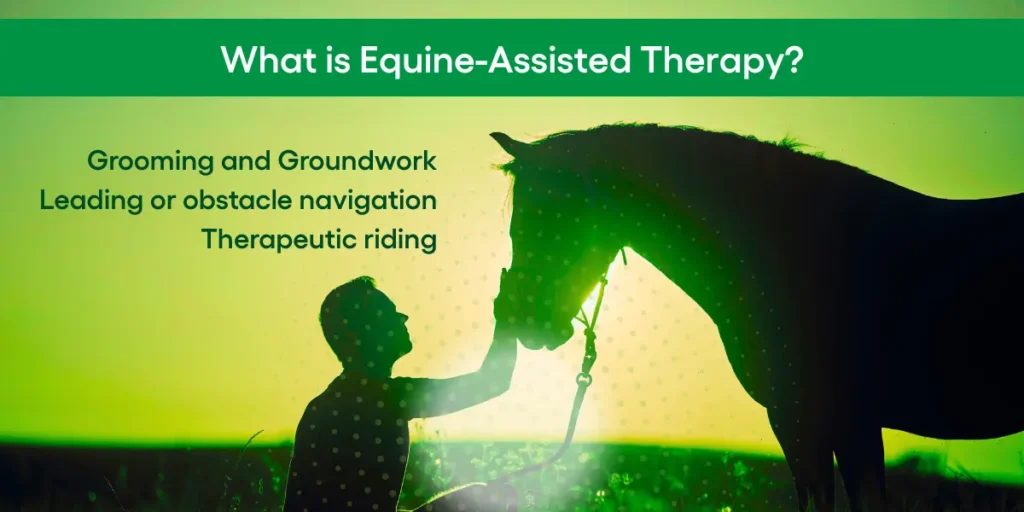
Equine-assisted therapy is a clinically guided intervention in which clients interact with horses as part of a therapeutic process. Sessions may involve:
- Grooming and groundwork
- Leading or obstacle navigation
- Therapeutic riding (when appropriate)
These activities are intentionally designed to support insight, emotional regulation, communication, and trust. Organizations such as the Equine-Assisted Growth and Learning Association (EAGALA) have established professional standards to ensure ethical and effective practice.
Why Horses Are Effective in Therapy
Horses are prey animals with heightened sensitivity to human emotion and body language. This makes them uniquely effective in therapy because they:
- React honestly to emotional states
- Encourage presence and mindfulness
- Reinforce boundaries and trust
- Help clients recognize emotional patterns
These qualities are especially valuable in trauma and addiction recovery, where emotional awareness and regulation are central to healing.
Equine-assisted therapy combined with standard care significantly improved emotion regulation, self-efficacy, and perceived self-esteem.

Celebrities Supporting Equine-Assisted Therapy
While equine-assisted therapy is rooted in clinical practice and research, public support from well-known figures has played a meaningful role in expanding awareness and acceptance of this therapeutic approach. Celebrities who advocate for equine-assisted therapy—whether through personal experience, professional involvement, or philanthropic support—help spotlight the emotional, psychological, and rehabilitative benefits of working with horses.
Selena Gomez
Selena Gomez has openly discussed participating in equine-assisted therapy during residential treatment for mental health challenges. While she has not released clinical details, multiple interviews and reporting confirm that working with horses was part of her structured therapeutic environment, not a casual hobby.
Gomez has described equine therapy as grounding—helping her slow down, become more emotionally present, and reconnect with herself during recovery. These outcomes align with clinical findings showing that equine-assisted therapy can reduce emotional dysregulation, anxiety, and depressive symptoms.
Gomez’s experience has helped normalize alternative and experiential therapies, particularly for younger audiences navigating mental health treatment.
Matty Healy
Matty Healy has been candid about his history of substance use disorder and recovery. In interviews discussing rehab, Healy confirmed that equine-assisted therapy was part of his treatment experience, describing how working with horses helped him confront emotional patterns linked to addiction.
Equine therapy is increasingly used in addiction treatment because horses respond immediately to emotional states—making avoidance, manipulation, or emotional suppression difficult. This mirrors core goals in substance use recovery: accountability, emotional awareness, and behavioral change.
Healy’s experience reflects how equine-assisted therapy is often used alongside evidence-based addiction treatment, not as a replacement.
Kaley Cuoco
Kaley Cuoco represents a different—but equally credible—connection to equine-assisted therapy. Rather than just being a therapy participant, Cuoco is a certified equine therapy and adaptive riding instructor.
She has completed professional training and worked with therapeutic riding programs designed to support individuals with:
- Physical disabilities
- Emotional and behavioral challenges
- Mental health conditions
Cuoco’s involvement reinforces that equine-assisted therapy is not a fringe practice—it is a structured, skill-based intervention with trained professionals.
Princess Diana
Princess Diana was a well-documented advocate for therapeutic horseback riding and equine-assisted rehabilitation programs, particularly for individuals with disabilities and trauma histories.
While she did not publicly identify as a therapy participant, Diana frequently visited and supported equine-based therapeutic centers, helping legitimize these programs long before animal-assisted therapy became mainstream.
Princess Diana’s advocacy helped bring visibility and credibility to equine-assisted approaches worldwide.
FAQs About Equine-Assisted Therapy
Is equine-assisted therapy evidence-based?
Equine-assisted therapy is considered an adjunctive, evidence-supported intervention. Research demonstrates benefits for emotional regulation, anxiety, PTSD, and engagement in treatment, though it is typically used alongside traditional therapies rather than as a stand-alone treatment.
Is equine therapy the same as horseback riding?
No. Equine-assisted therapy is clinically guided and goal-oriented. While some programs include riding, many focus on groundwork and interaction. Recreational riding alone does not qualify as therapy.
Can equine-assisted therapy help with addiction recovery?
Yes, emerging research suggests equine-assisted therapy may support addiction recovery by improving emotional insight, accountability, and treatment engagement—especially when combined with evidence-based substance use treatment.
Who facilitates equine-assisted therapy?
Sessions are typically led by a licensed mental health professional working alongside a certified equine specialist. This dual-professional model ensures both emotional safety and ethical animal care.
Is equine-assisted therapy suitable for everyone?
Not always. Equine-assisted therapy may not be appropriate for individuals with severe allergies, certain physical limitations, or extreme fear of animals. A clinical assessment is essential before participation.
Why do celebrities gravitate toward equine-assisted therapy?
Celebrities often seek therapies that are immersive, private, and experiential. Equine-assisted therapy offers emotional depth, minimal verbal pressure, and a strong mind-body connection—qualities that appeal to individuals under chronic stress or public scrutiny.
Is Equine-Assisted Therapy Right For You?
The stories of Selena Gomez, Matty Healy, Kaley Cuoco, and Princess Diana show that equine-assisted therapy is not a wellness fad—it is a structured, research-supported therapeutic approach with growing recognition in mental health and addiction treatment.
While celebrity experiences bring visibility, the true value of equine-assisted therapy lies in its ability to foster emotional awareness, regulation, and meaningful behavioral change—guided by science, not speculation.
Southeastern Recovery offers a comprehensive, patient-centered equine-assisted therapy program. If you are interested in learning more, reach out to our team for more information.
Sources
Diaz, Liam, et al. “Equine-Assisted Services for Individuals with Substance Use Disorders: A Scoping Review.” Substance Abuse Treatment, Prevention, and Policy, vol. 17, no. 81, 14 Dec. 2022, pmc.ncbi.nlm.nih.gov/articles/PMC9749232/.
Diehl, Bob. “1975 Singer Says Horse Helped Him Kick Heroin Addiction.” Audacy, 10 Aug. 2018, www.audacy.com/blogs/bob-diehl/1975-singer-says-horse-helped-him-kick-heroin-addiction.
Furness, Hannah. “Meghan Markle Hails Horses’ ‘Meditative’ Qualities as She Embraces Queen’s Love of Animals.” The Telegraph, 25 Feb. 2019, www.telegraph.co.uk/royal-family/2019/02/25/meghan-markle-hails-horses-meditative-qualities-embraces-queens/.
Post, Chris. “Kaley Cuoco ‘Horses Around’ With ‘The Force’.” Inquisitr, 4 Oct. 2015, www.inquisitr.com/kaley-cuoco-horses-around-with-the-force.
Souilm, Nagwa. “Equine-Assisted Therapy Effectiveness in Improving Emotion Regulation, Self-Efficacy, and Perceived Self-Esteem of Patients Suffering from Substance Use Disorders.” BMC Complementary Medicine and Therapies, vol. 23, no. 363, 13 Oct. 2023, doi.org/10.1186/s12906-023-04191-6.
Stinson, Annakeara. “What Is Equine Therapy? Here’s How The Approach Helped Selena Gomez During Her Time In Rehab.” Elite Daily, 1 Dec. 2017, www.elitedaily.com/p/what-is-equine-therapy-heres-how-the-approach-helped-selena-gomez-during-her-time-in-rehab-6761259.