Equine therapy for addiction is more than a supplement to traditional care. For many people in treatment, it becomes a turning point — a way to connect with something meaningful, process trauma, and regain control over their lives in an environment that feels safe, honest, and judgment-free.
At Southeastern Recovery Center in Charlotte, NC, we understand that recovery is about more than just stopping substance use. It’s about rediscovering who you are, rebuilding trust, and finding healthier ways to cope with life’s challenges. Whether you’re new to treatment or seeking a fresh approach after previous attempts, equine-assisted therapy can be a transformative experience unlike any other.

Equine therapy, also known as equine-assisted therapy or EAT, is a form of experiential therapy where individuals engage in structured interactions with horses. These activities, like grooming, feeding, haltering, leading, and even observing horses, are facilitated by licensed mental health professionals and equine specialists who guide the process and help clients reflect on their emotions, behaviors, and relational patterns.
Unlike traditional talk therapy, equine therapy offers real-time feedback. Horses are incredibly intuitive animals that respond honestly to human energy and behavior. If you’re feeling anxious, guarded, or angry, the horse will respond accordingly, providing insight into your inner world that you may not even be fully aware of.
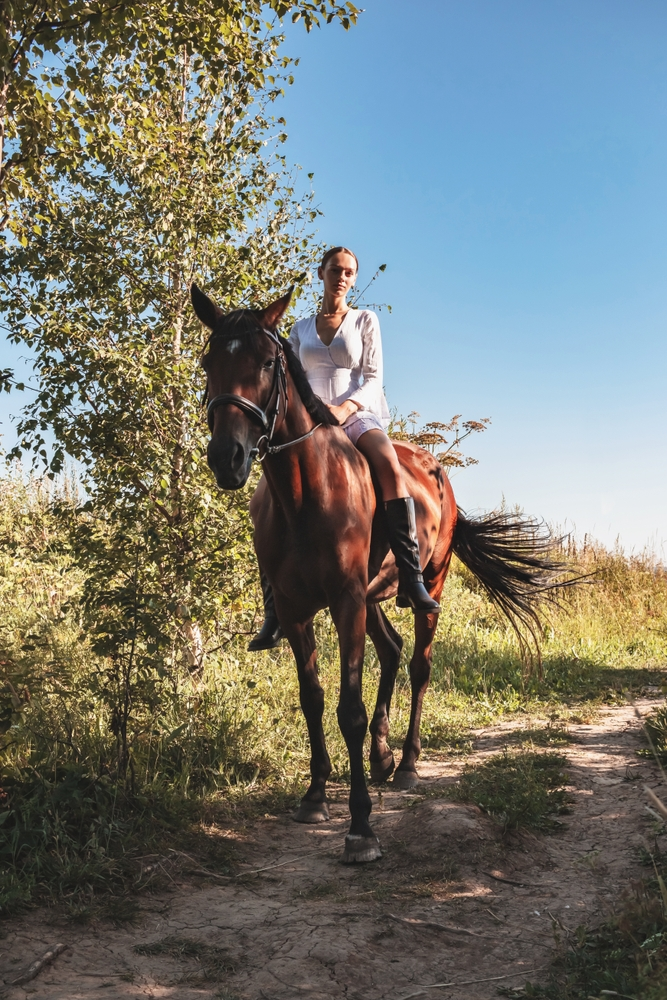
Importantly, this isn’t about horseback riding. The goal of equine therapy is not horsemanship; it’s healing. It’s about creating a safe and emotionally responsive space where clients can develop key skills for recovery like emotional regulation, communication, trust-building, and boundary-setting.
Addiction often stems from deep emotional wounds, trauma, unmet needs, and broken relationships. Traditional therapies can address these challenges intellectually, but equine therapy for addiction adds a physical and emotional layer to the healing process. A 2023 study showed that equine-assisted therapy significantly improved emotional regulation and interpersonal functioning in individuals with substance use disorders.
Horses are highly attuned to their environment and pick up on nonverbal cues. They don’t lie, judge, or pretend. That means clients receive immediate, honest feedback from their equine partner, helping them become more aware of their emotional patterns, how they relate to others, and what triggers certain behaviors.
Some unique benefits of equine therapy include:
Emotional awareness – Clients begin to recognize their feelings as they arise, often more clearly than in a therapy room.
Stress and anxiety reduction – Simply being around horses has been shown to reduce cortisol levels and promote relaxation.
Building trust and empathy – Horses require calmness, patience, and respect, mirroring healthy human relationships.
Improved self-esteem – As clients master small tasks like haltering or brushing a horse, they begin to rebuild confidence and a sense of competence.
Enhanced nonverbal communication – Clients learn to become more mindful of their body language and the energy they bring into interactions.
Horses make unusually good therapy partners because of the kind of animal they are. They’re prey animals, which means over millions of years they’ve evolved to read body language, breathing, and the emotional state of everyone in their environment. It’s a survival skill. They have to know fast whether a predator (or a stressed-out human) is in the area, and they have to act on that information.
In a therapy setting, that biology turns into something useful. The horse responds to what’s actually happening inside you, not the version of yourself you’re showing the world. If you walk in shut down or holding tension you haven’t acknowledged, the horse picks up on it. That kind of feedback is hard to argue with, and it’s hard to get from another person sitting across from you in an office chair. The horse is not going to pass judgment, which is why some people fear speaking to humans in some cases, thinking they are going to be judged.
The effects are also measurable in the body. Peer-reviewed reviews of equine-assisted services have documented decreases in cortisol (the body’s primary stress hormone) and increases in oxytocin and serotonin during and after sessions. Lower cortisol means a calmer nervous system. Higher oxytocin and serotonin mean better mood, less anxiety, and a stronger sense of social connection. Those are exactly the states that tend to be hard to access in early recovery.
Substance use changes the brain’s stress and reward systems, often leaving people in a kind of chronic dysregulation that quietly fuels relapse. Equine therapy gives the nervous system another way to regulate itself, alongside medication, individual counseling, and group work. It isn’t a replacement for any of those. It’s another tool pointed at the same goal.
Equine therapy can be especially valuable for people who:
For people with anxiety or panic disorders, the work is grounding in the most literal sense. You’re focused on a present, breathing animal in front of you, and there isn’t much room left for the rumination loops that drive anxious thinking.
Depression often involves a slow withdrawal from sensation and connection. Being outside, doing something physical, the oxytocin and serotonin response we mentioned earlier, plus simply being around another responsive animal: those are real and underrated parts of mood support.
PTSD can be one of the harder things to treat with talk therapy alone, especially when traditional therapy itself feels intrusive or unsafe. Horses are nonverbal and nonjudgmental, and for trauma survivors they often open up pathways for processing that words alone cannot reach.
Eating disorders involve a fractured relationship with the body. The body-awareness and embodied-presence work that comes naturally in equine therapy supports rebuilding that relationship over time.
ADHD doesn’t disappear when you’re trying to guide a horse through an exercise, but you also can’t half-pay-attention to a 1,200-pound animal. The work tends to demand the same kind of sustained focus and clear communication that medication and behavioral therapy are trying to build.
Equine therapy works best when it’s part of a comprehensive plan that addresses substance use and any co-occurring conditions together. That’s what’s known as dual-diagnosis or integrated treatment.
At Southeastern Recovery Center, we don’t offer one-size-fits-all treatment. Every person who walks through our doors has a different story, a different history, and a different path to healing. That’s why we customize every care plan, blending evidence-based therapies with holistic services, including equine therapy for addiction treatment.
These complementary services help individuals work through the underlying issues that fuel addiction while building healthy coping skills that last.
People often use these three terms like they mean the same thing, but they don’t. The differences matter for what you’ll actually be doing, who’s leading the session, and whether your insurance will cover any of it.
Equine-assisted psychotherapy is what we do at Southeastern Recovery Center. It’s psychotherapy with horses involved. A licensed mental health professional leads the session, and the focus is on what therapy is always focused on: emotions, behavior, trauma, relationships, communication. Most of it happens on the ground, not on the horse’s back.
Equine-assisted learning isn’t therapy. It uses horses to teach skills like leadership, communication, or teamwork, often in business or coaching settings. There’s no diagnosis being treated, no clinician required, and the outcomes people are after are skill-building rather than symptom reduction.
Therapeutic riding is a recreational and physical practice. People with physical disabilities or limited mobility sometimes use it as a form of exercise or sensory engagement. It can have psychological benefits, but it isn’t psychotherapy.
When someone in addiction treatment says “equine therapy,” they almost always mean the first one. That’s the form a licensed clinician oversees, the form that addresses what’s underneath substance use, and the form that’s typically billable to insurance.
Most people coming into addiction treatment have heard of cognitive behavioral therapy or group therapy. Equine therapy isn’t a replacement for those. It works alongside them, often reaching the parts of recovery that traditional approaches struggle to access. We often find clients get excited about equine therapy, as many have never tried it, let alone heard of it.
| Therapy Type | Setting | Format | Often Used For |
|---|---|---|---|
| Equine Therapy | Off-site partner farm (Triple Play Farms in Rowan County, NC) | Ground work with horses, herd observation, and structured therapeutic tasks led by a licensed clinician | Trauma processing, emotional regulation, trust-building, and communication that doesn’t rely on words |
| Cognitive Behavioral Therapy (CBT) | Clinical office | Identifying thought patterns, behavioral exercises, and between-session practice | Recognizing and shifting cognitive distortions, building concrete behavior-change skills |
| Group Therapy | Clinic group room | Peer sharing, group dynamics, and structured topics led by a facilitator | Reducing isolation and shame, peer accountability, learning from shared experience |
| Breathwork | Quiet clinical or private space | Guided breathing techniques and somatic awareness practices | Anxiety and panic, releasing trauma stored in the body, nervous-system regulation |
In practice, most clients work with several of these at once. A typical week at Southeastern Recovery Center can include CBT for cognitive work, group therapy for connection, breathwork for nervous-system regulation, and equine therapy for the kind of relational and emotional work that’s hard to do in a clinical office. Each modality reaches a different part of recovery, and using them together is what makes integrated treatment work.
We believe that effective, compassionate treatment should be accessible. Equine therapy for addiction treatment is available as part of many of our customized programs at Southeastern Recovery Center, and we offer several payment options to make this possible for more people.
Insurance Coverage – Many major insurance providers now recognize the value of alternative therapies, especially when they are part of a licensed addiction treatment program. Depending on your plan, your insurance may cover some or all of the costs associated with equine therapy.
Self-Pay Options – If you don’t have insurance or prefer not to use it, we offer straightforward self-pay rates and the ability to customize your treatment length based on your needs and budget.
Financing Plans – To ease the financial burden, Southeastern Recovery Center partners with reputable healthcare financing services that offer flexible payment plans. This allows you to begin treatment without delay and pay over time in manageable installments.
This is usually the first practical question people ask, and the short answer is: most of the time, yes, with one caveat.
Equine-assisted psychotherapy is a clinical mental-health service led by a licensed clinician. When it’s part of a structured addiction treatment program (especially an in-network or covered level of care like residential, partial hospitalization, or intensive outpatient), it’s generally billable under mental-health benefits the same way any other psychotherapy session would be. At our program, our team verifies your coverage, and if you admit to our program, your insurance will cover equine therapy as part of your treatment plan.
What insurance usually doesn’t cover is recreational therapeutic riding, the practice we mentioned above. That isn’t a clinical service.
Southeastern Recovery Center is in-network with Blue Cross Blue Shield of North Carolina, and we accept all other major insurance carriers to cover the cost of treatment. The fastest way to find out exactly what your plan covers is to call us. Our admissions team can verify your benefits confidentially, usually the same business day, and walk you through what’s covered and what (if anything) you’d be responsible for out of pocket.
Your equine therapy experience will vary depending on your goals and comfort level, but typical sessions include:
Meeting and observing the horse
Learning how to safely interact and communicate
Participating in guided tasks such as grooming or leading
Reflecting with your therapist on what happened during the session
Exploring how your responses mirror experiences in real life
Many clients are surprised at how much they learn, not just about the horse, but about themselves.
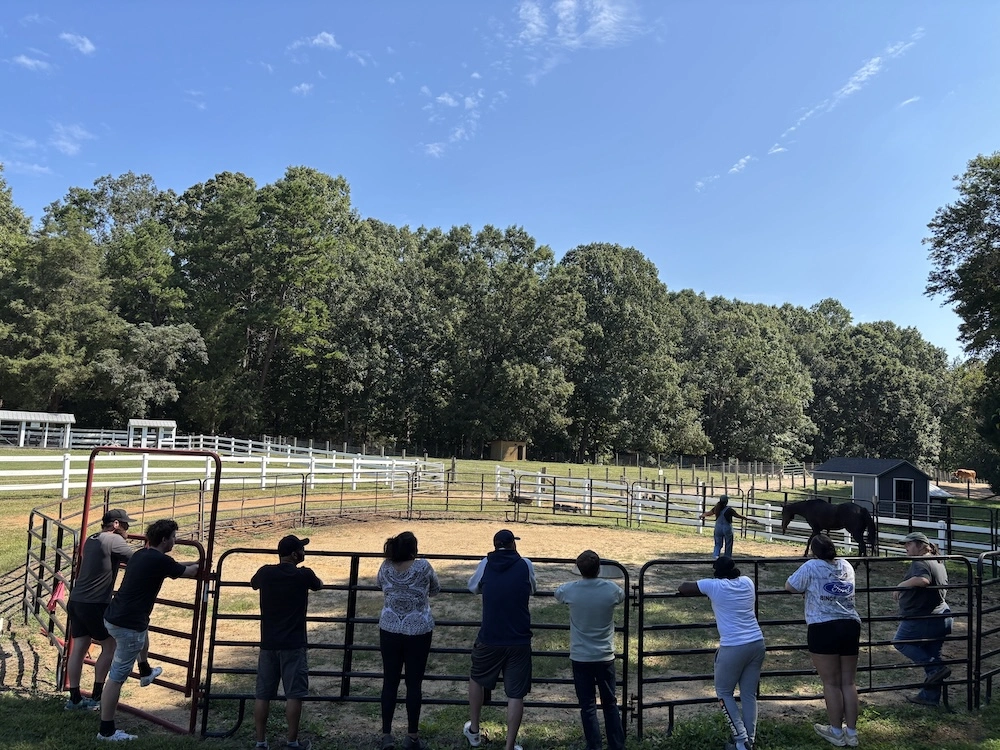
Our equine therapy program runs in partnership with Triple Play Farms in Rowan County, NC, about 35 minutes north of our Charlotte clinical building. Once a week, clients in our programs travel together to the farm and participate in supervised equine therapy sessions at a calm, professional working stable.
We deliberately run this off-site. Stepping out of the clinical environment changes the whole texture of the day. You’re outside, there’s space, and you’re working with an animal that doesn’t care what your last drug test said. For a lot of our clients, that change in setting is part of why this kind of therapy lands the way it does.
Equine therapy at Southeastern Recovery Center runs every Tuesday from 1:00 PM to 3:30 PM. Sessions are two and a half hours, which gives clients enough time for the drive to Triple Play Farms, the actual therapeutic work, and the trip back to our Charlotte clinical building.
The weekly cadence is intentional. Recovery work benefits from rhythm and predictability, especially in early treatment when consistency is one of the few things that feels reliable. Knowing that every Tuesday afternoon is dedicated to equine therapy gives clients a recurring anchor in their treatment week, and it gives the therapeutic work itself a chance to build on what came before instead of starting over from scratch.
Equine therapy at Southeastern Recovery Center is led by Natalia, LCAS (Licensed Clinical Addictions Specialist), our equine therapist. She structures every session around clinical goals specific to each client’s treatment plan, whether that’s emotional regulation, processing trauma, building trust, or working on communication skills. Natalia partners with the team at Triple Play Farms, who handle the day-to-day care of the horses and make sure every interaction is safe and appropriate for therapeutic work.
LCAS is a North Carolina state license for clinicians who specialize specifically in substance use disorders. That means the person leading our equine therapy is qualified not just in equine work, but in the clinical realities of addiction recovery.
“While I was at Southeastern Recovery Center, the equine therapy program was definitely one of the biggest highlights for me. I enjoyed a lot about the program, but there was just something different about working with the horses. It gave me a sense of peace and helped me get out of my head for a while. I didn’t expect it to have such a big impact on me, but it really became an important part of my recovery. I looked forward to it every week and would honestly recommend it to anyone considering treatment.”
— John C., Southeastern Recovery Center alumnus
No experience is necessary. Most of our clients have never worked with horses before. We guide you through every interaction in a safe, supportive environment.
Not typically. Most equine therapy sessions focus on groundwork—activities like brushing, leading, and observing. While riding may be introduced in specific therapeutic scenarios, it’s not required or expected.
Yes. All sessions are supervised by trained professionals, and safety is our top priority. We choose well-trained, gentle horses for therapeutic work, and all clients are instructed on how to safely interact with them.
Absolutely. Equine therapy is especially useful for individuals dealing with anxiety, depression, trauma, or emotional dysregulation in addition to addiction. Our dual diagnosis care team ensures that your mental health and substance use concerns are addressed together.
Sessions typically run for 45 to 60 minutes, and many clients attend once or twice per week during treatment. The duration will depend on your care plan and individual goals.
It depends on whether it’s part of a covered treatment program (which is how most clients access it here) or paid as a standalone service. When it’s bundled into an in-network or insurance-covered program, what clients actually pay out of pocket is usually much less than they’re expecting. The fastest path to a real number for your situation is to verify your benefits with our admissions team.
Most of the time, yes, when it’s delivered as equine-assisted psychotherapy by a licensed clinician within a covered level of care. We’re in-network with Blue Cross Blue Shield of North Carolina and accept all other major insurance carriers. Recreational therapeutic riding (which is different from what we offer) typically isn’t covered.
Our equine therapy program runs at Triple Play Farms in Rowan County, NC, about 35 minutes north of our Charlotte clinical building. Sessions are held every Tuesday from 1:00 PM to 3:30 PM. Clients in our programs travel together to and from the farm.
Sessions are led by Natalia, LCAS, our equine therapist, working in partnership with the experienced staff at Triple Play Farms.
Equine therapy (also called equine-assisted psychotherapy) is a clinical mental-health service led by a licensed clinician, addressing emotional and psychological challenges. Equine-assisted learning is educational, focused on skills like communication or leadership. Therapeutic riding is a recreational and physical practice. What we offer is the first one: a clinical psychotherapy modality that uses horses as therapeutic partners.
At Southeastern Recovery Center in Charlotte, NC, we’re here to guide you through that healing process. If you’re ready to experience the power of equine therapy for addiction, reach out to us today. We’ll help you find the right treatment plan, verify your insurance, and take the first step toward a brighter, more grounded future.
We serve Charlotte and the surrounding communities, including Matthews, Concord, Huntersville, Gastonia, and the broader Mecklenburg County area.
Call us or complete our online form to speak with an admissions specialist. Healing is possible, and it can begin with the gentle presence of a horse.
Southeastern Recovery Center is accredited by The Joint Commission and licensed by the State of North Carolina. The Joint Commission Gold Seal of Approval is the most rigorous accreditation in U.S. healthcare, and it’s the same standard applied to hospitals and major medical centers. State licensure is what’s required to operate in North Carolina; Joint Commission accreditation is the level above that.
For families and clients, that combination matters because it’s an outside, independent confirmation that the care we provide, including our equine therapy program, meets clinical, ethical, and safety standards beyond what’s required just to keep the doors open.