Veterans are at an increased risk to develop drug or alcohol addictions as well as mental health disorders due to their experiences. These are individuals being placed in stressful, extreme situations for prolonged periods of time. It’s only natural that this would occasionally produce adverse effects.
At Southeastern Recovery Center in Charlotte, North Carolina, we help veterans identify and treat drug and alcohol addictions as well as mental health disorders such as anxiety, PTSD, and depression. Our certified program is designed to help veterans not only address the symptoms they are suffering from, but to understand the underlying causes and develop the necessary coping mechanisms they need for a healthier life.
Who Counts as a Veteran? Veterans or any individuals who served in the military, Navy, Air Force, or aerospace.
Why is the Mental Health of Veterans a Concern in North Carolina? Veterans are statistically more likely to suffer from mental health disorders and substance abuse disorders.
How Is Veterans Rehab Delivered in North Carolina? Treatment for veterans rehab is both scientific and compassionate.
How Can Families Help Veterans that Need Rehab? Families can participate in treatment for veterans to improve their odds of recovery.
How to Choose the Best Veterans Rehab in North Carolina. Find rehab that is accredited and makes use of holistic treatment.
How Treatment Works at Southeastern Recovery Center. Southeastern Recovery Center focuses on therapeutic care and ongoing support.
Why Choose Southeastern Recovery Center. Southeastern Recovery Center will personalize the treatment plan to each veteran.
Frequently Asked Questions About Veterans Rehab Treatment. Learn the commonly asked questions about veterans rehab treatment.

The United States Department of Veterans Affairs (VA) office deems a veteran to be a “person who served in the active military, naval, air, or space service, and who was discharged or released therefrom under conditions other than dishonorable.”
This broad definition also includes individuals who enlisted in the service but may not have necessarily been placed on the front lines or stationed in other countries. Still, all service members are individuals who agree to serve our country, and as such, are more than deserving of proper consideration and care when it comes to any mental health disorders or substance use disorders they may have developed.

While veterans are often acknowledged and thanked for their service, especially while in uniform, this is only a surface level consideration for these individuals. The struggles they may be facing internally, relating to mental health or physical addictions, are not so easily defined and remedied.
When we look at the stats relevant to North Carolina in particular:
Veterans are statistically more likely to experience issues with mental health disorders or substance abuse. Yet they are not proportionately catered to in order to support them in the same manner that they supported our country. If you or someone you know is a veteran struggling with mental health or substance use, it’s important to be aware that help is available and treatment is absolutely possible.

At Southeastern Recovery Center,
Our approach to treating veterans is both scientific and compassionate. We realize that veterans may have a variety of underlying factors leading up to needing rehab. This is why our goal is fully comprehending what they’re experiencing, and equipping them with the tools they’ll need to cope with their condition. We do this through offering a variety of treatments:
Whether you’re coming to us from Fayetteville or from Raleigh, know that all patients receive the same comprehensive, personalized care to guide the path towards a healthier life.
These quick stats summarize the scale of veteran mental health need in North Carolina. This covers veteran population size, suicide-risk comparisons, highest-risk age groups, and common suicide methods. Figures come from North Carolina’s Violent Death Reporting System (NC-VDRS, 2019–2023) and statewide veteran demographic reporting.
| Snapshot (NC + veterans) | Useful statistic (credible source) | Why it matters (1 line) | Practical takeaway for the reader |
|---|---|---|---|
| Who is considered a “veteran”? | Legal definition: a veteran is a person who served in the “active military, naval, air, or space service” and was discharged “under conditions other than dishonorable.” Cornell Law – 38 USC §101(2) | Clarifies who qualifies for veteran-focused support/resources. | If you served (even outside combat), your experience and symptoms still count—seek an assessment. |
| How many veterans live in North Carolina? | ~619,000 veterans live in NC (about ~8% of the state’s population). NCIOM | The need is widespread—veteran services matter across the whole state. | Normalize getting help: you’re not alone, and veteran care is relevant statewide. |
| Where are veterans concentrated (counties)? | Top counties by veteran count include Wake, Cumberland, Mecklenburg, Onslow, Guilford, Forsyth, Buncombe, New Hanover, Durham, Gaston. NCIOM | Helps families see this is a community-level issue, not isolated. | If you’re searching for help near major NC hubs, veteran-focused care is in demand—plan ahead and call early. |
| Veteran violent deaths & suicide (NC-VDRS, 2019–2023) | Of 11,632 violent deaths (age 18+) with veteran status available, 1,602 (13.8%) occurred among veterans; 82.6% of veteran violent deaths were suicides. NCDHHS fact sheet (PDF) | Suicide is the dominant driver within veteran violent deaths in NC. | Treat suicide risk as a medical urgency—don’t “wait and see” if warning signs appear. |
| Suicide rate gap (veterans vs non-veterans, 2019–2023) | Average suicide rate: 41.3 per 100,000 (veterans) vs 15.5 per 100,000 (non-veterans) = 2.7× higher. NCDHHS fact sheet (PDF) | Quantifies the elevated risk—this is not a small difference. | If you’re a veteran with depression/PTSD/substance use, choose care that actively screens and treats suicide risk. |
| Highest-risk age group (NC veterans) | Veterans ages 18–34: 97.0 per 100,000 suicide rate; 6.2× the non-veteran rate in the same age group. NCDHHS fact sheet (PDF) | Younger veterans may need earlier, faster intervention. | Families: take “I’m fine” at face value less—support a professional consult sooner rather than later. |
| Most common suicide methods (NC veterans, 2019–2023) | Firearm: 76.8% of veteran suicides; Hanging: 13.9%; Poisoning: 5.8%. NCDHHS fact sheet (PDF) | Method mix informs safety planning at home. | If risk is present, prioritize lethal-means safety (secure/remove firearms, lock meds) alongside treatment. |
Veterans can often feel alone in their struggles, especially if they feel disconnected from those who have shared in their life experiences–whether that be due to location changes or loss of life. This is why it’s important for them to receive support from friends and family.
Families in Charlotte and throughout North Carolina can help veterans they believe need support for their mental health or struggles with substance abuse by:
At Southeastern Recovery Center, we firmly believe that friends and family are a core component of the healing process. We’re more than happy to accommodate families that want to be part of an individual’s journey towards stronger mental health.
Finding the best rehab for veterans in North Carolina requires a look at various factors such as the types of addictions they treat (such as opioids or alcohol) and the mental health disorders they’re able to help manage. Here are some key factors to consider:
At Southeastern Recovery Center, we meet all of these criteria and more. Our focus on integrity, compassion, and clinical excellence has made us one of North Carolina’s most trusted rehab providers for veterans.

From your first phone call to the day you graduate from treatment, our team provides step-by-step support to veterans.
Our mission is simple: to provide the highest level of mental health rehab possible so that every client leaves stronger, healthier, and ready to thrive.
Veterans do not need different kinds of rehab that non-veterans necessarily, but they should receive rehab that takes into account their individual experiences. This is why personalized rehab plans are our focus at our Charlotte facility.
Veterans are more at risk for mental health disorders or drug and alcohol addiction because of the extremely stressful situations that they’re put in. Dealing with combat, weapons, and death is extremely impactful, as is the mere possibility of coming in contact with them.
In general it is not hard for veterans to get into rehab, so long as they are aware of the rehabilitation center options in their area.
Yes, you can force a veteran to attend rehab in North Carolina, because North Carolina has involuntary commitment laws.
Southeastern Recovery Center is different in its veterans rehab because we combine medical expertise, individualized care, and compassion, offering detox, therapy, and aftercare under one roof in Charlotte, NC.
If there’s an overdose or immediate danger, call 911 right away. If you need urgent, confidential support, Veterans can contact the Veterans Crisis Line by dialing 988 and selecting 1, or text 838255
SAMHSA’s National Helpline is free, confidential, and available 24/7/365 to provide treatment referral and information for individuals and families facing mental and/or substance use disorders: 1-800-662-HELP (4357). If you are looking for availability at Southeastern Recovery Center, we do have room for you. Please contact us at 704-644-8078, use our chat function to get in touch with someone, or check your insurance to see if you qualify.
Many Veterans benefit from treating substance use and co-occurring mental health conditions together, because depression and PTSD can be closely connected with substance use. Ask about an integrated plan that addresses both; therapy, skills, relapse prevention, and coordinated mental health support.
Common evidence-based approaches include CBT (cognitive behavioral therapy) and motivational interviewing, and some programs use contingency management (incentives tied to recovery behaviors). The “best fit” depends on the Veteran’s substance(s), triggers, trauma history, and goals, and is customized to every individual that seeks addiction treatment at Southeastern Recovery Center.
MAT combines FDA-approved medications with counseling/therapy to reduce cravings, stabilize recovery, and lower overdose risk. VA describes medication options for opioid use disorder (including methadone, buprenorphine, and extended-release naltrexone) and alcohol use disorder options (including naltrexone and others).
Detox can help manage acute withdrawal safely, but by itself it’s usually not enough for lasting recovery. Ongoing treatment (therapy, skills, MAT when appropriate, and aftercare) typically improves outcomes and reduces relapse risk.
Most recovery centers use a step-down approach: withdrawal management (detox) → residential/inpatient (when needed) → partial hospitalization (PHP) / intensive outpatient (IOP) → outpatient + aftercare. The safest level depends on medical risk, substances used, and home environment, and is custom to every individual that walks through the doors of Southeastern Recovery Center.
In general, consider a higher level of care when there are severe withdrawal risks, repeated relapse, unsafe living conditions, or co-occurring mental health symptoms (like PTSD/depression) that make sobriety hard to maintain without structure. Southeastern Recovery Center can guide you in the process, reach out today.
Length of care varies by severity, history, and goals. Many people do best with treatment that continues beyond detox and extends into outpatient/aftercare. Research indicates at least three months in treatment is associated with significantly reduced or stopped drug use, with longer durations often improving outcomes. Here at Southeastern, we have an initial 30-day and 45-day addiction treatment program that could last up to 90 days. Reach out for more information.
Yes. Continuing care can include outpatient therapy, recovery coaching, peer support, and a plan for triggers, cravings, and high-risk situations. VA includes “continuing care and relapse prevention” among its substance use services.
Many programs try to offer same-day or next-day assessments when safety is a concern. Ideally, treatment should be available “the moment you are ready,” because delays can cause people to drop off before they enter care. Reach out to Southeastern Recovery Center to see if you qualify and check for availability. Our empathic team is here to help you get on the road to addiction recovery.
A common best practice is: bring IDs/insurance cards, a medication list, and practical clothing. For a full list, get in touch with one of our team members.
Avoid alcohol-containing products, weapons, and unapproved medications when entering addiction treatment centers.
Our service area includes Charlotte, North Carolina and all of the surrounding cities (Concord, Asheville, Matthews, Rock Hill, Gastonia, Mecklenburg County, and all other towns and cities in the area). But ultimately, Southeastern Recovery Center serves all of North Carolina, whether you are traveling for PHP or IOP, or are interested in our virtual IOP program where you can experience recovery services from anywhere. We help facilitate out-of-state individuals who are seeking help at Southeastern Recovery Center. Give us a call or get in touch to see what options are available to you.

At Southeastern Recovery Center, we believe that veterans deserve proper care in exchange for their service, and that recovery is more than sobriety. To us, recovering from drug and alcohol addiction or mental health disorders is about rebuilding life with purpose and clarity. Our Charlotte-based facility provides a safe, welcoming space where veterans can focus fully on healing.
We serve individuals from Charlotte, Concord, Gastonia, Huntersville, and throughout North Carolina who are seeking trusted, compassionate care for mental health disorders.
Our experienced team, state-of-the-art facility, and commitment to personalized care make us a leading choice for North Carolinian veterans.
If you or a loved are struggling with mental health or drug addiction, please reach out to our team today. Many treatment centers take a one-size-fits-all approach when treating veterans which isn't effective...At SERC, we understand that each client has their own story which led them to seeking help. We put emphasis on individualized care, tailoring treatment based on the specific needs of each client.

Reach Out For Help! ⮕

Create A Recovery Plan! ⮕

Begin The Healing Process! ⮕
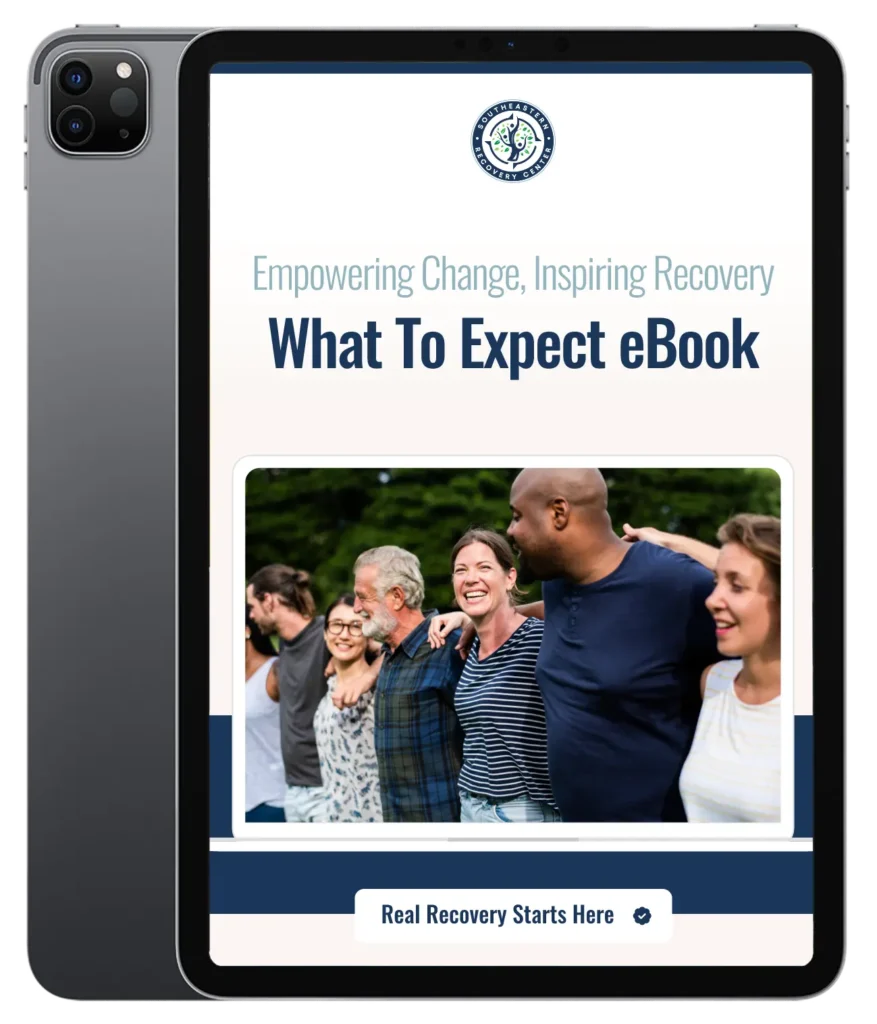
If you or a loved one are interested in learning more about what to expect when getting drug and alcohol or mental health rehab, please fill out our brief form and download the eBook. You can also give our admissions team a call & we would be happy to answer any questions you may have. Help is only a call away!
![Southeast (2) [Recovered]-07 2](https://serecoverycenter.com/wp-content/uploads/2023/08/Southeast-2-Recovered-07-2.webp "Southeast (2) [Recovered]-07 2")