
What Hobbies Can I Replace Drinking Alcohol With?

You can replace drinking alcohol with hobbies that support physical health, creativity, relaxation, learning, and social connection. At Southeastern Recovery Center, we encourage individuals in recovery to explore activities that bring structure, purpose, and enjoyment without relying on substances. Replacing drinking with meaningful hobbies helps reduce cravings, manage stress, and build a fulfilling sober lifestyle.

Table of Contents

Full Color Logo No Text

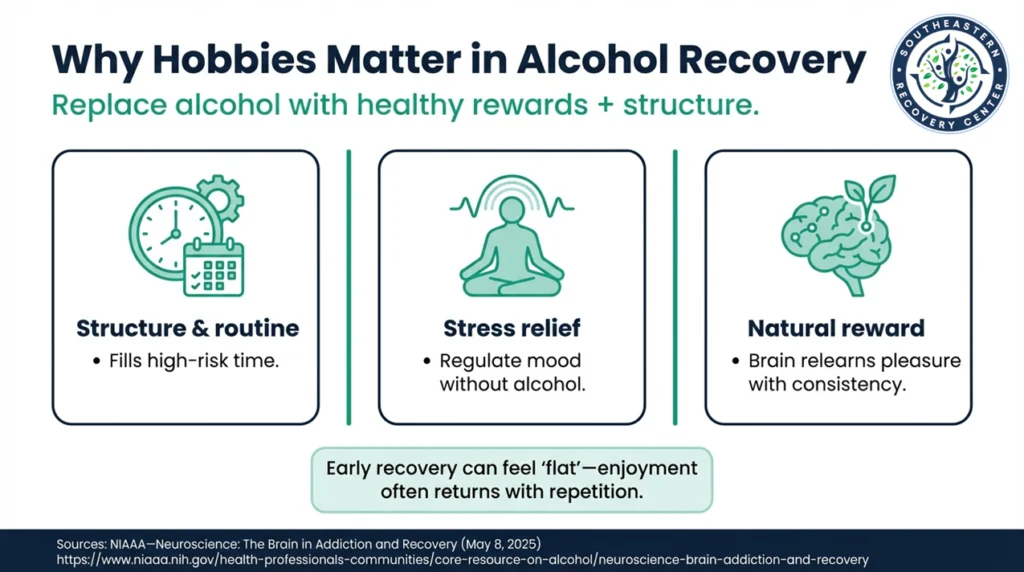
Why are hobbies important in recovery?

Alcohol often becomes a way to cope with stress, boredom, or emotional discomfort.

Hobbies help by:

Over time, hobbies help rewire the brain’s reward system.

why hobbies matter in alcoholic recovery infographic

What physical hobbies can replace drinking?

Physical activity is one of the most effective replacements for alcohol use.

Examples include:

  • Walking, hiking, or running
  • Yoga or stretching routines
  • Strength training or fitness classes
  • Swimming or cycling

Movement reduces stress hormones and improves sleep and energy levels.

4 people of diverse backgrounds walking outside for outdoor therapy as addiction treatment

What creative hobbies help in recovery?

Creative outlets allow emotional expression without substances.

Popular creative hobbies include:

  • Drawing, painting, or crafting
  • Writing or journaling
  • Playing music or singing
  • Photography or design

These activities help process emotions and improve focus.

What relaxing hobbies reduce the urge to drink?

Some hobbies calm the nervous system and reduce cravings.

Relaxing options include:

  • Meditation or mindfulness practices
  • Reading or listening to audiobooks
  • Gardening
  • Cooking or baking

Relaxation-based hobbies are especially helpful in early recovery.

group of 6 people in addiction recovery meditating with a meditation leader

What social hobbies can replace drinking?

Many people associate alcohol with social connection.

Healthy social alternatives include:

  • Support groups or recovery meetings
  • Volunteering
  • Group fitness classes
  • Clubs or community groups

Connection is a key protective factor in recovery.

What skill-building hobbies support long-term recovery?

Learning new skills builds confidence and purpose.

Examples include:

  • Learning a language
  • Taking online courses
  • Woodworking or DIY projects
  • Learning to cook nutritious meals

Skill-building hobbies reinforce personal growth.

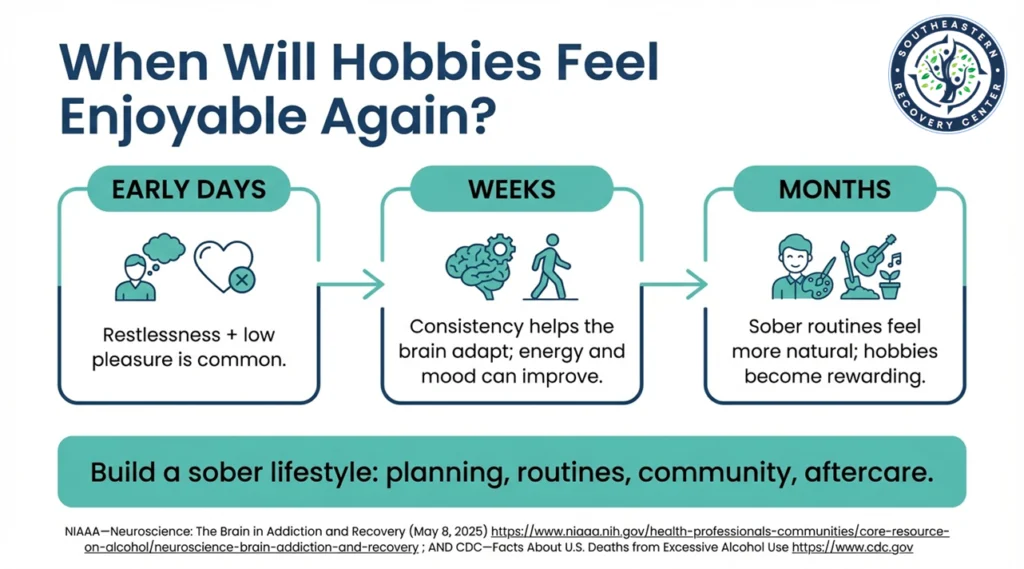
How long does it take for hobbies to feel enjoyable?

Enjoyment may take time as the brain adjusts.

Early recovery often involves:

  • Reduced pleasure from activities
  • Frustration or restlessness

With consistency, the brain relearns how to experience pleasure naturally.

When will hobbies feel enjoyable again after I stop drinking infographic

How does Southeastern Recovery Center support lifestyle change?

At Southeastern Recovery Center, recovery planning includes building a healthy daily life.

Support may include:

Recovery is about building a life you want to stay present for.

A supportive message from Southeastern Recovery Center

Replacing alcohol does not mean giving something up. It means creating space for activities that support your health, peace, and growth. At Southeastern Recovery Center, we believe that discovering new hobbies is an important step toward lasting recovery and a more fulfilling life.
Sources
National Institute on Alcohol Abuse and Alcoholism. “Neuroscience: The Brain in Addiction and Recovery.” National Institute on Alcohol Abuse and Alcoholism, 8 May 2025, https://www.niaaa.nih.gov/health-professionals-communities/core-resource-on-alcohol/neuroscience-brain-addiction-and-recovery. Accessed 20 Jan. 2026.
North Carolina Department of Health and Human Services. “How Alcohol Affects Our Health and Communities in North Carolina.” NC DHHS Division of Public Health, 21 July 2025, https://www.dph.ncdhhs.gov/blog/2025/07/21/how-alcohol-affects-our-health-and-communities-north-carolina. Accessed 20 Jan. 2026.
Centers for Disease Control and Prevention. “Facts About U.S. Deaths from Excessive Alcohol Use.” Centers for Disease Control and Preventionhttps://www.cdc.gov/alcohol/facts-stats/index.html. Accessed 20 Jan. 2026.