After 30 days of treatment in Charlotte, NC, Southeastern Recovery Center offers structured aftercare and alumni support that helps individuals stay connected, supported, and accountable as they transition back into daily life. Continued care is a critical part of recovery, especially during the first year after treatment when relapse risk is highest. Southeastern Recovery Center combines community-based alumni programming with evidence-informed recovery principles to support long-term sobriety.

Addiction is a chronic condition, and recovery does not end when residential treatment concludes.
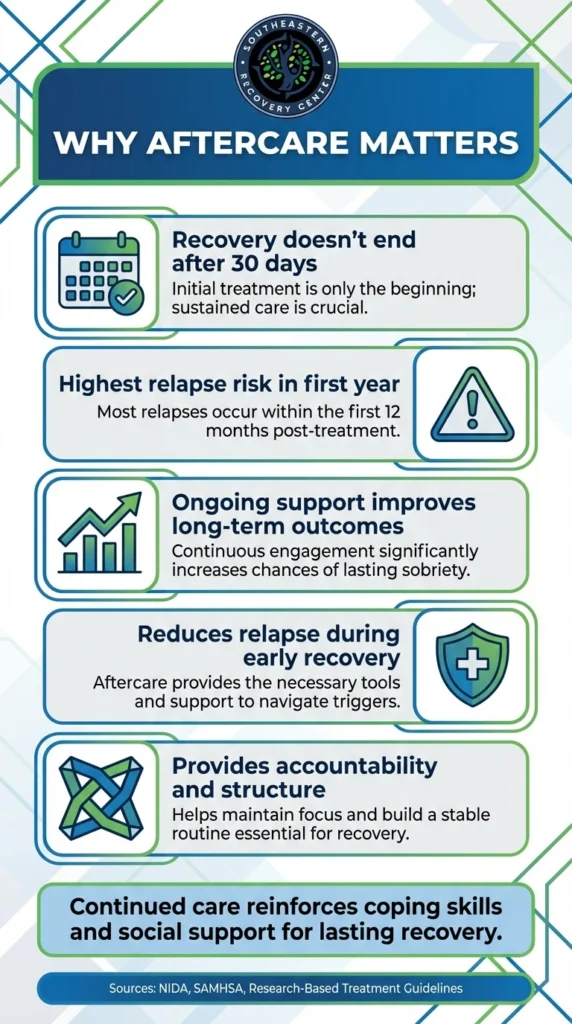
According to the National Institute on Drug Abuse, individuals who remain engaged in ongoing recovery support are significantly more likely to maintain long-term sobriety than those who leave treatment without aftercare. The Substance Abuse and Mental Health Services Administration also emphasizes that continuing care improves outcomes by reinforcing coping skills and social support.
Aftercare helps by:
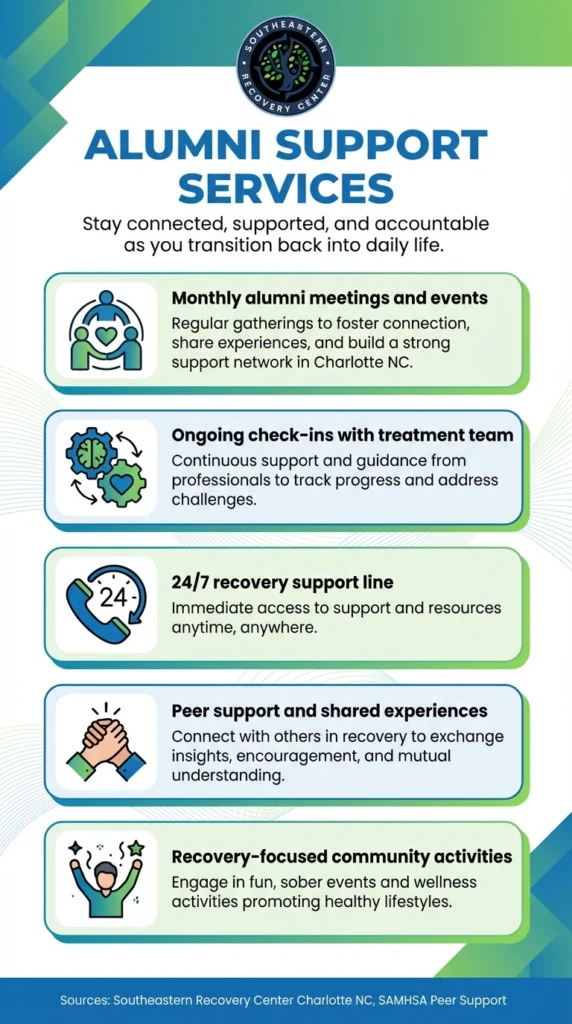
Southeastern Recovery Center provides alumni and aftercare services that focus on connection, accessibility, and community involvement.
Alumni Meetings and Events
Former clients are invited to attend monthly alumni meetings and recovery-focused events. These gatherings help individuals stay connected to peers who understand the challenges of sobriety and provide encouragement through shared experience.
Ongoing Check-Ins and Support
Alumni are encouraged to stay in touch with the treatment team and recovery community as they navigate life after treatment. Continued connection can help reinforce the tools learned during the initial 30 days.
24/7 Recovery Support Line
Southeastern Recovery Center offers around-the-clock access to support, recognizing that cravings and emotional stress do not follow a schedule. Immediate access to help can prevent small challenges from becoming setbacks.
Research consistently shows that addiction recovery outcomes improve when individuals participate in ongoing support programs.
The National Institute on Drug Abuse reports that long-term recovery often requires multiple layers of care, including peer support and community engagement. Alumni programs help bridge the gap between structured treatment and independent living by maintaining accountability and emotional support.
At Southeastern Recovery Center, aftercare planning begins before treatment ends so clients leave with a clear recovery roadmap.
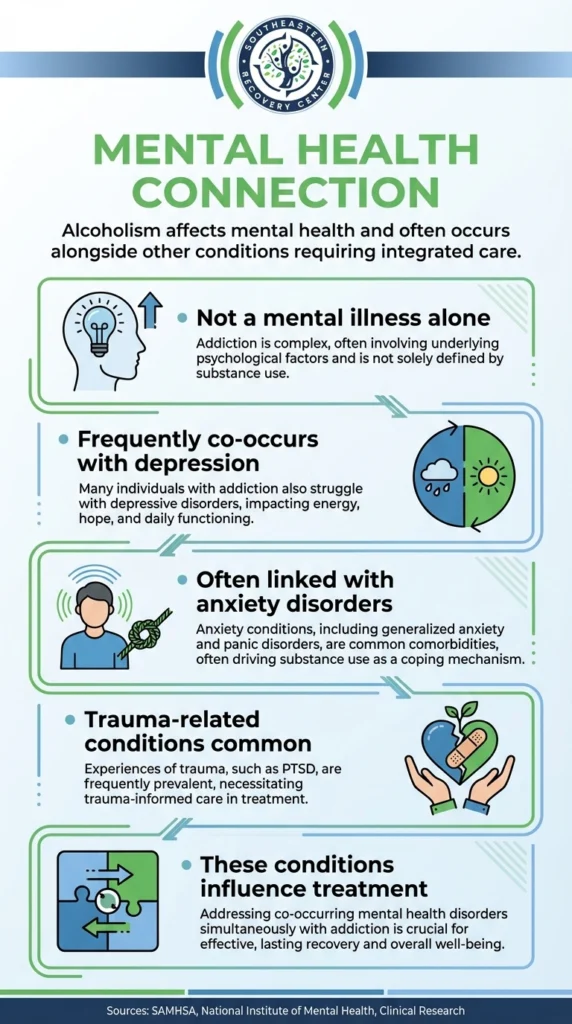
Isolation is one of the most common relapse triggers. Alumni programs help counter this by fostering belonging and connection.
According to SAMHSA, peer support services play a key role in recovery by promoting hope, responsibility, and shared understanding. Southeastern Recovery Center’s alumni community creates space for individuals to celebrate milestones, learn from challenges, and remain engaged in recovery-focused relationships.
Southeastern Recovery Center views recovery as a lifelong process rather than a fixed treatment timeline. By offering alumni engagement, peer connection, and continued access to support, the center helps individuals build stability and confidence long after their initial 30 days of treatment. Aftercare is not an add-on but a continuation of care designed to support lasting recovery in Charlotte and beyond.
Sources
National Institute on Drug Abuse. Principles of Drug Addiction Treatment: A Research-Based Guide,
National Institutes of Health,
https://nida.nih.gov/research-topics/principles-drug-addiction-treatment-research-based-guide.
Substance Abuse and Mental Health Services Administration. Recovery and Recovery Support,
U.S. Department of Health and Human Services,
https://www.samhsa.gov/find-help/recovery.
Southeastern Recovery Center. Alumni & Aftercare – Drug & Alcohol Rehab | Charlotte, NC,
https://serecoverycenter.com/alumni-for-addiction-treatment/.
Southeastern Recovery Center. Drug & Alcohol Rehab in Charlotte, North Carolina,
https://serecoverycenter.com/addiction-treatment-north-carolina/.