Drugs and alcohol are dangerous substances, but in many respects they’re also normalized in our society. College students get to experience this first hand, with special occasions being made of their 21st birthdays, peer pressure to drink and even partake in illicit drugs looking at every party, and events like college football, picnics, or days always being accompanied by a cooler filled with beer.
This sheer pervasiveness of drugs and alcohol around college students creates an environment that makes it easy for an individual to develop a substance use disorder. But just because your environment is less than conducive towards sober living doesn’t mean a student has to suck, to drug use, dependence, or addiction. And this post will prove it, presenting a strategy guide for how sober or sobriety-seeking students can remain sober despite being surrounded by drugs and alcohol.
Article Preview:
Why Do College Students Try to Stay Sober at School? College students may try to remain sober at school because of their awareness of how easily substance use disorders can develop.
How Are College Students Tempted to Do Drugs? College students are tempted to do drugs through environment and peer pressure.
How College Students Can Avoid Drugs and Alcohol. College students can avoid drugs and alcohol by making their conversion known, being comfortable saying no, and seeking out sober activities around campus.
When the Sober Playbook Isn’t Enough. If a college student develops a drug or alcohol addiction, they should seek immediate help from a rehab facility like Southeastern Recovery Center.
Frequently Asked Questions about The Strategy Guide for the Sober (and Seeking-Sobriety) Student. Learn frequently asked questions about staying sober as a college student.
Why Do College Students Try to Stay Sober at School?
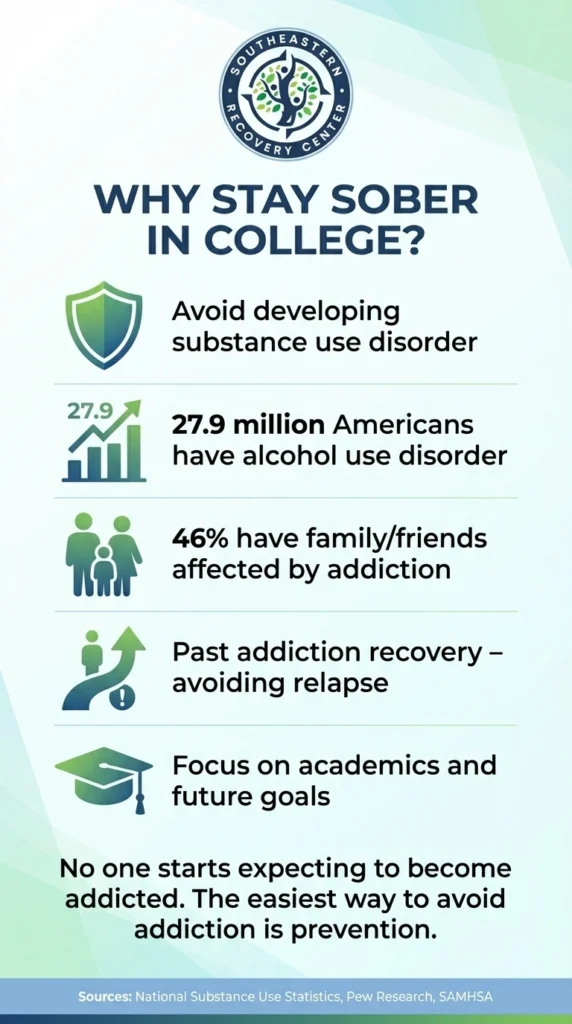
There are plenty of reasons why college students would try to stay sober at school despite the reputation colleges have for being party places. The first reason is that an individual may be wary of the fact that it’s incredibly easy to develop a substance use disorder. Even alcohol, the most normalized drug in American society, has resulted in an estimated 27.9 million Americans aged 12 and older suffering from alcohol use disorder. No one starts using substances expecting to grow dependent or even addicted to them. But the easiest way for college students to avoid developing an addiction is to avoid consuming drugs or alcohol in the first place.
Another reason a college student might want to avoid drugs or alcohol is that they may have already had adverse encounters, either directly or indirectly, with the substances. This can manifest in them having family members who have struggled with drug addiction. Pew research has shown that 46% of US adults have family members or close friends who are either currently or have been addicted to drugs in the past. Watching someone struggle with addiction up close and personal can be enough for someone to swear off substance use.
In some cases, the college student themselves might have struggled with drug addiction in the past. In that case, they’re well within their rights to avoid the temptation in the future, even if this means avoiding different substances than the one they were initially addicted to.
At Southeastern Recovery Center, our Charlotte, North Carolina location is visited by people of all ages from across the state. The way the drugs seep into lives are many and varied, but ultimately everyone has the capability to use a personalized treatment plan to recover from drug addiction and remain sober, even college students.
How Are College Students Tempted to Do Drugs?
There are two primary factors that tempt college students to do drugs or alcohol:
- Environment. Having drugs and alcohol readily available around them.
- Peer pressure. Watching friends and acquaintances partake in drugs and alcohol, or being directly pressured to consume drugs or alcohol by said friends.
Let’s imagine you’re a North Carolinians college student attending UNC. Over the course of a week, you may be invited to:
- A classic UNC tailgate
- A lake day over at Lake Johnson Park
- An off-campus house party
- A frat/sorority party
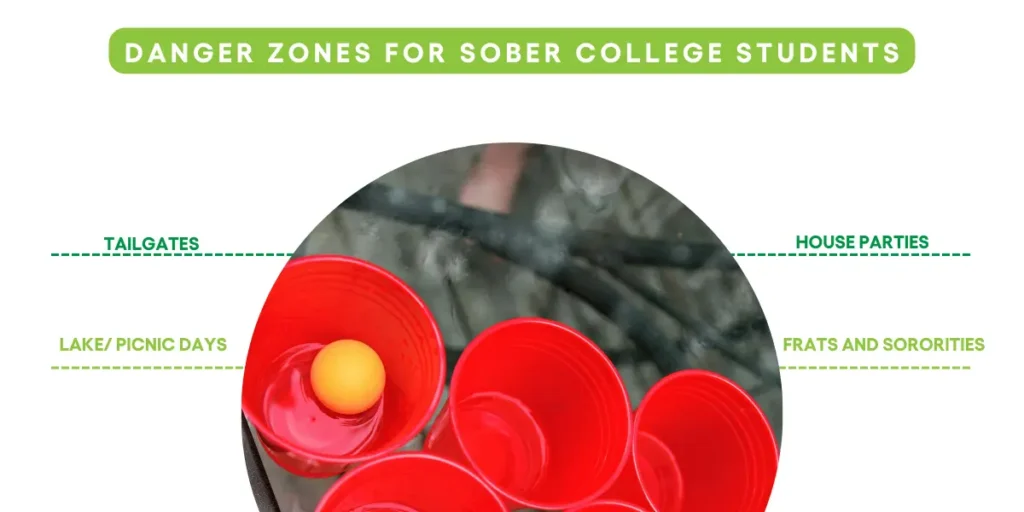
What are you going to see at each of these events? Coolers filled with beer, games built around drinking like beer pong and King’s cup, and probably a crowd of people gathered around someone as they all scream “chug, chug, chug!”
Even this only addresses the pervasiveness of alcohol around college students. It doesn’t touch on people disappearing into bathrooms and coming back out rubbing their noses, or little baggies being passed around at the corner of a party. It’s easy to understand how the average North Carolinian college student might find themselves tempted to partake in drugs or alcohol.
Even a college student’s attempts to extricate themselves from these drug-filled environments can come at the cost of friendships with people who have no issue spending time around the substances. Ironically, an individual who isolates themselves in order to avoid being around these substances may find themselves struggling mentally, which can also lead them to turn to drugs or alcohol in order to self medicate.
How College Students Can Avoid Drugs and Alcohol
The first step in college students staying sober is to anticipate these circumstances where drugs and alcohol are present. Bars, picnics, spring break, road trips and more all present opportunities for college students away from parental supervision to indulge themselves. This should be expected that many of them will take advantage of these opportunities, blissfully unaware of the potential dangers associated with substance abuse.
Sober and sobriety-seeking college students can avoid drug and alcohol usage by:
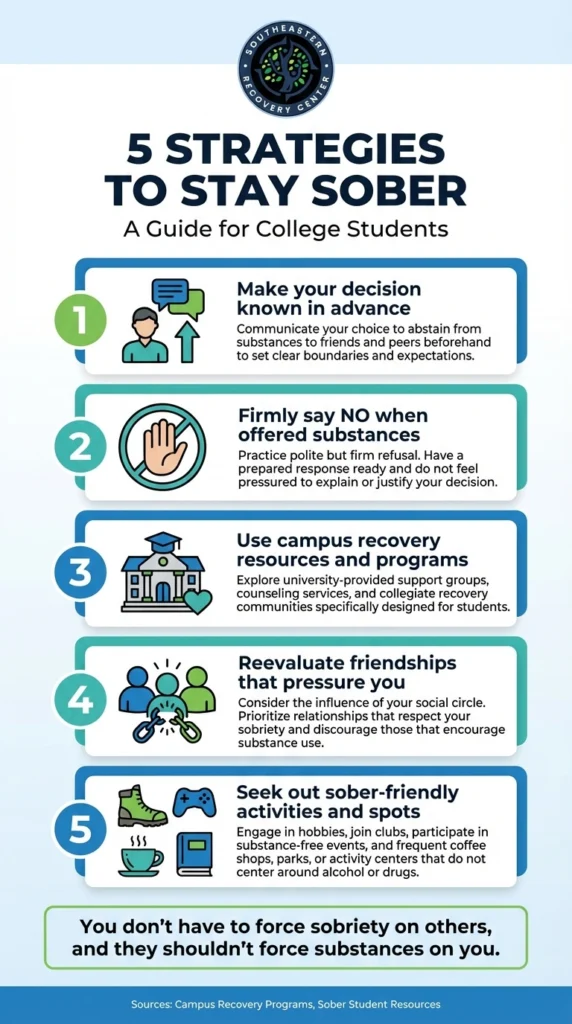
1. Letting people know in advance that you’re not comfortable with partaking in drugs and alcohol yourself. You can soften the blow of sharing this information by making it clear that you don’t mind if other people indulge themselves around you. The same way you wouldn’t want to force your habit (or non-habit) of drinking or doing drugs on them, you prefer if they didn’t force their habit of drinking and doing drugs on you. Sharing this disposition ahead of time will allow whoever you’re attending these events with to both accept this knowledge and potentially spread it to other attendees, reducing the odds of you being peer pressured.
2. Firmly saying no if presented with drugs or alcohol while at events. If an individual who is not aware of your disposition offers you drugs or alcohol, kindly but firmly decline to partake. If said individual insists, you may have to remove yourself from the conversation. Some individuals may not understand or respect your decision to remain sober. In those cases, the easiest solution may be to leave their presence.
3. Utilizing campus resources. Some colleges make accommodations for sober college students or college students are in recovery. For example, UNC offers the Carolina Recovery program, which is facilitated by expert staff and fosters a belonging through substance free recreational vents such as tailgates, spring break, and laser tag. This kind of counter-programming presents an opportunity for sober college students who still enjoy themselves, and you can even bring along your friends to show them away to have fun without partaking in drugs or alcohol.
4. Reevaluating friendships with individuals who insist on drug and alcohol usage. This step is a tough one, but may prove necessary if people who you believed to be friends persist in infringing on your refusal to drink or do drugs. Peer pressure and environment play major roles in individuals’ drug or alcohol usage. If your environment becomes unsafe by allowing certain individuals within it, the best solution may be to cut them out of your life.
5. Seeking out sober-friendly spots around your campus or state. If having fun without drugs or alcohol in the mix proves impossible for your fellow college students on campus, it may be time to expand your search. There are plenty of activities that enforce sober participation that you may be able to partake in instead in order to find fun and relief away from school work. For example, Charlotte, North Carolina activities such as pretzel breaking, live shows, and even nonalcoholic brewery crawls.
When the Sober Playbook Isn’t Enough
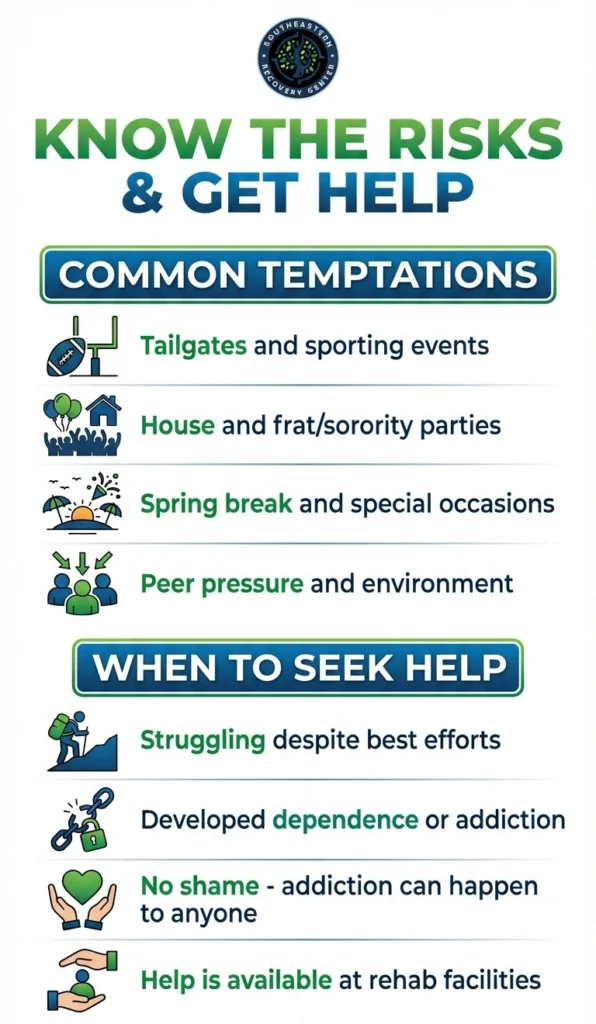
Ultimately, in some cases this sober playbook may not be enough. Pervasiveness of drugs and alcohol around a college campus may lead a college student to developing a dependence or addiction despite the best efforts. But that’s no reason to feel shame or guilt or to believe yourself to be a failure. The fact that drug use is baked into facets of American society means that anyone could succumb to addiction at any time. What’s important is reaching out for help when you need it. Resources like Southeastern Recovery Center in North Carolina exist to provide personalized drug and alcohol addiction treatment to any and all, even college students.
Frequently Asked Questions about The Strategy Guide for the Sober (and Seeking-Sobriety) Student
Why would a college student not want to drink or do drugs?
A college student would avoid drinking or doing drugs if they wanted to avoid risking developing a substance use disorder.
Why do college students do drugs?
College students do drugs primarily because of their environment and peer pressure not only presenting plenty of opportunity for making it seem as if doing drugs as part of fitting in socially.
What sort of college events have drugs and alcohol present?
Condiments that have drugs and alcohol present include tailgates, Lake days, house parties, and special occasions such as birthdays and spring break.
How can college students avoid drugs and alcohol?
College students can avoid drugs and alcohol by making it clear they don’t want to partake, firmly saying no if offered, utilizing campus resources, or avoiding people who keep trying to get them to do drugs and alcohol.
Sources:
UNC Student Wellness “Carolina Recovery Program.” Student Wellness, University of North Carolina at Chapel Hill, studentwellness.unc.edu/substance-use-services/carolina-recovery-program/.
Pew Research Center Gramlich, John. “Nearly Half of Americans Have a Family Member or Close Friend Who’s Been Addicted to Drugs.” Pew Research Center, 26 Oct. 2017, www.pewresearch.org/short-reads/2017/10/26/nearly-half-of-americans-have-a-family-member-or-close-friend-whos-been-addicted-to-drugs/.
American Addiction Centers “Addiction Statistics: Drug & Alcohol Use Demographics.” American Addiction Centers, 17 Jan. 2024, americanaddictioncenters.org/rehab-guide/addiction-statistics-demographics.