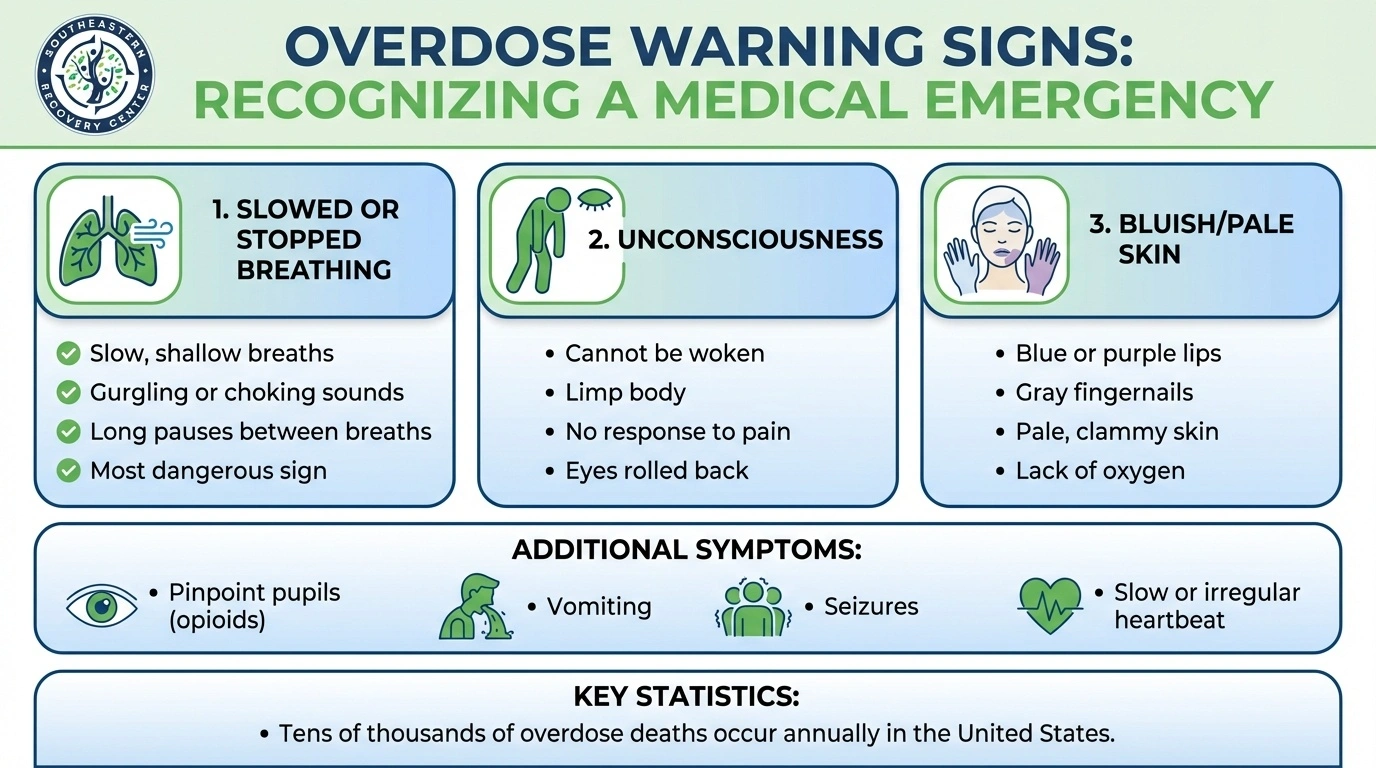
Three major warning signs a person may have overdosed are slowed or stopped breathing, unconsciousness or inability to wake up, and bluish or pale skin.
An overdose is a medical emergency. Recognizing the signs quickly can save a life. Whether the substance involved is opioids, alcohol, or another drug, early intervention significantly increases survival rates.
At Southeastern Recovery Center in Charlotte, NC, we emphasize overdose education because knowing what to look for can make the difference between life and death.
Below are the three most critical warning signs.

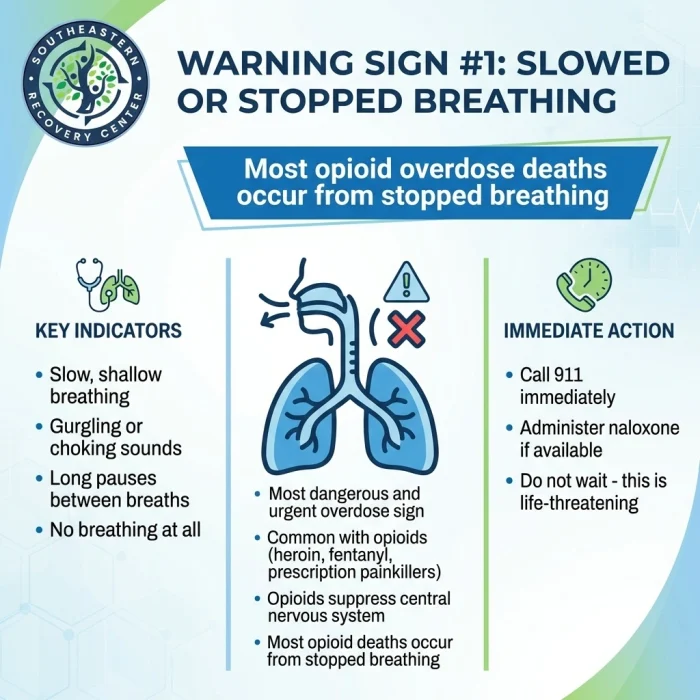
Breathing problems are the most dangerous and urgent sign of an overdose, especially with opioids.
Signs include:
Opioids such as heroin, fentanyl, and prescription painkillers suppress the central nervous system. According to the Centers for Disease Control and Prevention, most opioid overdose deaths occur because breathing slows or stops entirely.
If someone is not breathing or breathing irregularly, call 911 immediately.
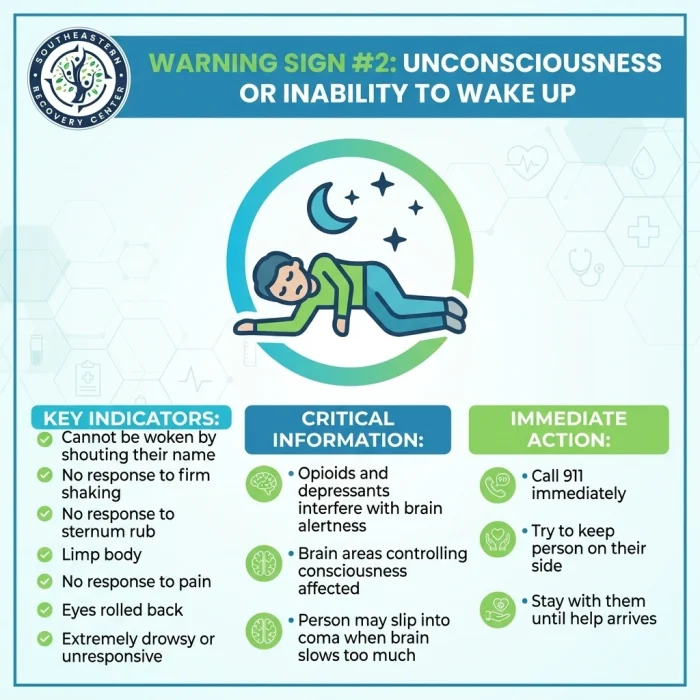
If a person cannot be woken by shouting their name, shaking them firmly, or performing a sternum rub, this is a serious warning sign.
Other indicators include:
The National Institute on Drug Abuse explains that opioids and other depressants interfere with brain areas that control alertness and consciousness. When the brain slows down too much, a person may slip into a coma.
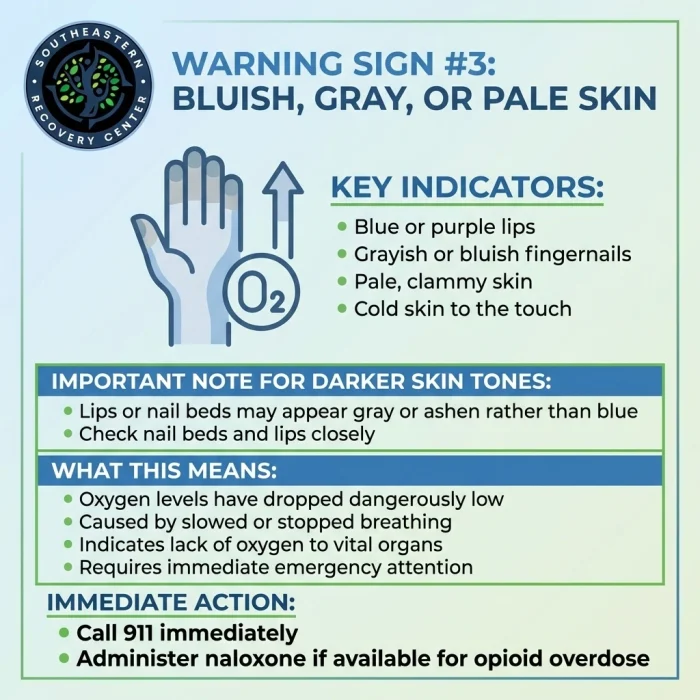
When oxygen levels drop due to slowed breathing, the skin may change color.
Watch for:
In individuals with darker skin tones, the lips or nail beds may appear gray or ashen rather than blue.
This change in color indicates a lack of oxygen and requires immediate emergency attention.
While the three signs above are the most critical, additional symptoms may include:
The Substance Abuse and Mental Health Services Administration recommends calling emergency services anytime an overdose is suspected, even if you are unsure.
Many states, including North Carolina, have Good Samaritan laws that protect people who call for emergency help during an overdose situation.
If you’re recognizing these signs in yourself, please know that your life is worth saving. There is no judgment here—only a team of experts ready to provide the immediate medical and emotional support you need to reach a safer place. Reach out to us now; we are ready to help you heal.
Seeing the warning signs of an overdose is terrifying, but your quick action can change everything. We are here to partner with you in this critical moment, offering the professional intervention and long-term recovery path your loved one needs to survive and thrive.
In a crisis, the last thing you should worry about is paperwork. We provide rapid insurance verification within 24 hours and clear guidance on available care, so you can move quickly from recognizing the danger to securing the life-saving treatment that your or a loved one deserves.
According to the Centers for Disease Control and Prevention, tens of thousands of overdose deaths occur annually in the United States, with opioids being the primary driver.
Education, access to treatment, and early intervention save lives.
At Southeastern Recovery Center in Charlotte, we focus on helping individuals break the cycle of addiction before it escalates to life-threatening consequences. Treatment programs address both substance use and underlying mental health factors that contribute to relapse risk.
If you or someone you love is struggling with substance use, seeking help early can prevent overdose and long-term harm.
Sources
Centers for Disease Control and Prevention. “Understanding the Opioid Overdose Epidemic.” CDC, www.cdc.gov/drugoverdose.
National Institute on Drug Abuse. “Drug Overdose Death Rates.” National Institutes of Health, www.nida.nih.gov.
Substance Abuse and Mental Health Services Administration. “Opioid Overdose Prevention Toolkit.” U.S. Department of Health and Human Services, www.samhsa.gov.