How do Charlotte’s restaurant workers wind down after a long day at work? Despite the fact that hospitality workers such as bartenders and waiters are literally around drinks throughout their shift, American media and society doesn’t highlight many other ways to relax other than getting a drink. And so, even restaurant workers might fall prey to the trap of drinking to help deal with the stress of serving people’s whims and fighting for tips day after day.
The problem is that workers in the service industry have higher than average access to alcohol, which makes them more susceptible to developing an addiction to alcohol.
At Southeastern Recovery Center, our Charlotte, North Carolina location had been visited by individuals looking for addiction help for bartenders. The problem that these individuals face is navigating the need to earn wages versus the temptation of alcohol that native to their environment. In this post, we’re going to tackle how even bartenders in NC can get the help for alcohol addiction that they need.
Article TL;DR: Restaurant workers are more at risk to develop alcohol addiction due to the pressures of their job and their access to alcohol. In order to protect Charlotte’s community, North Carolinians need to look out for the mental health state of waiters and bartenders and help them find healthier coping mechanisms to manage stress, anxiety, and peer pressure.
Article Preview:
Why Do Service Industry Workers Drink? Service industry workers drink to reduce stress, to self medicate, and because their environment is surrounded by alcohol.
The Role Environment Plays in Alcohol Addiction for Waiters and Bartenders. Access and prevalence of alcohol and the environment around waiters and bartenders makes them more likely to drink.
Why is Service Industry Addiction Recovery Important to Consider in Charlotte, North Carolina? The service industry is the backbone of North Carolina’s economy and community, which means the mental health of our bartenders and waiters impacts everyone.
Addiction Help for Bartenders. Addiction help for bartenders to come from accredited treatment centers that have experience tackling associated mental health disorders and teach long-term coping mechanisms.
FAQs about Hospitality & The ‘After-Hours’ Trap: Recovery for Charlotte’s Restaurant Workers. Learn answers to frequently asked questions around the use of alcohol in restaurant workers.
Why Do Service Industry Workers Drink?
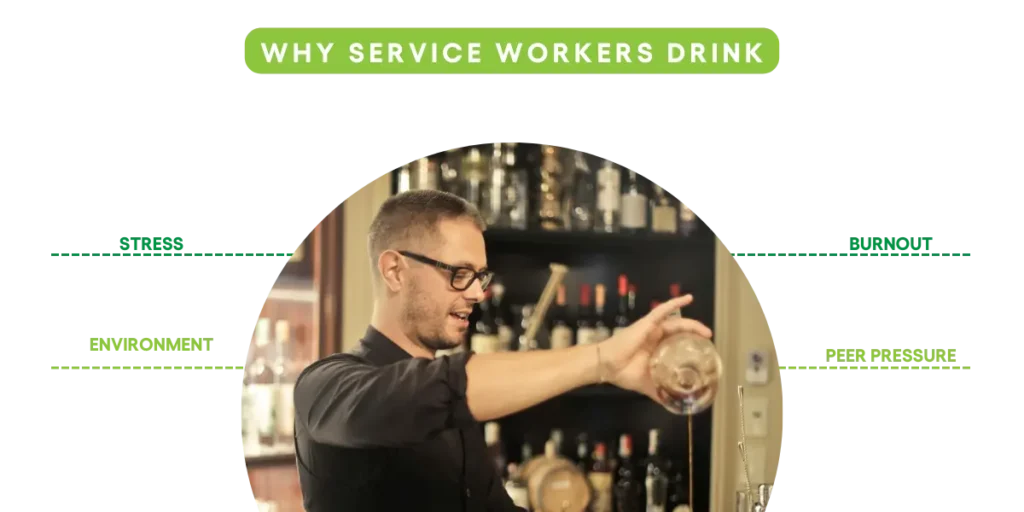
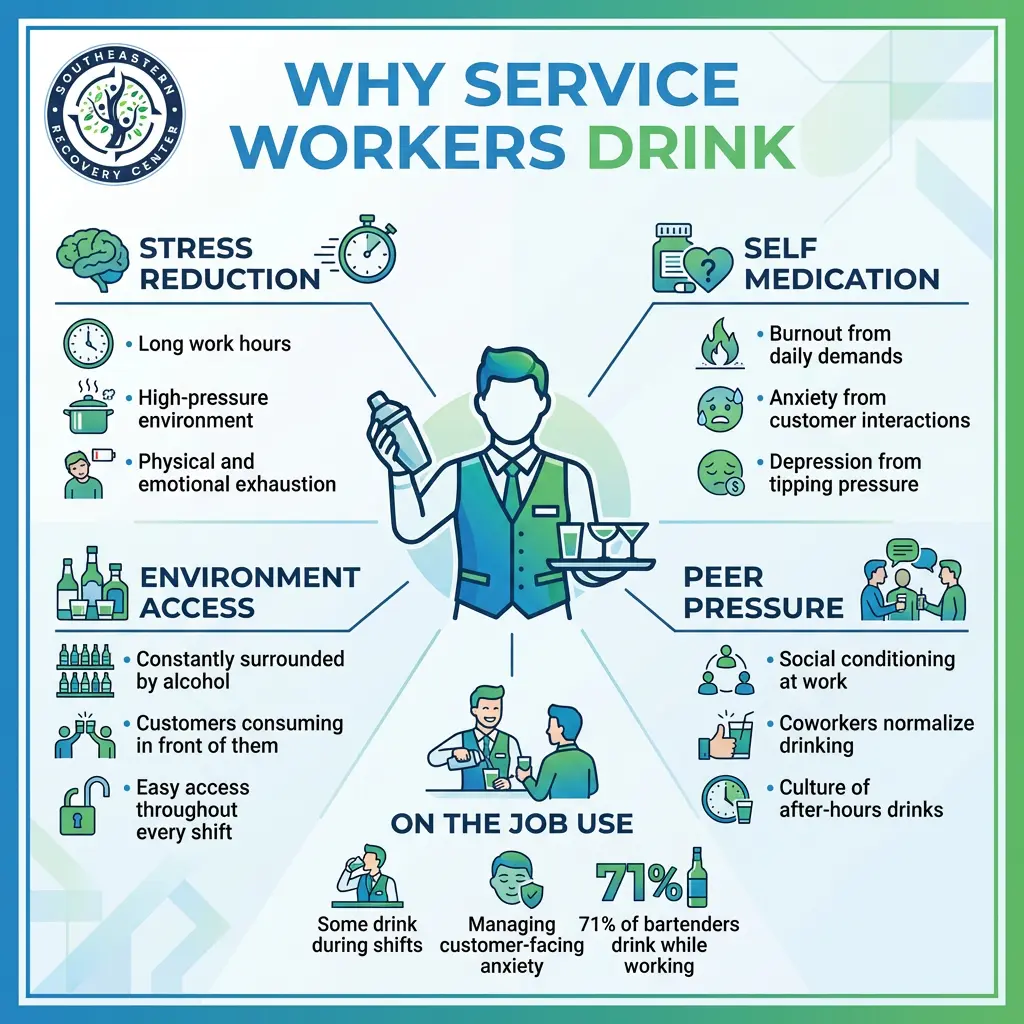
When it comes to tackling alcohol addiction, it’s important to address the underlying causes that lead to service industry workers needing recovery help in the first place. Service industry workers drink for several different reasons:
- To help reduce stress after long work hours
- To self medicate for burnout
- Because they have easy access to alcohol in their environment
- Because of peer pressure and social conditioning
In some cases, waiters and bartenders might even drink while on the job in order to help manage their anxiety and stress while on the clock. Service industry workers have a front-facing job, which means that they navigate direct interactions with customers. A negative mood (or even just a perceived negative mood) can result in them getting in trouble with their employers.
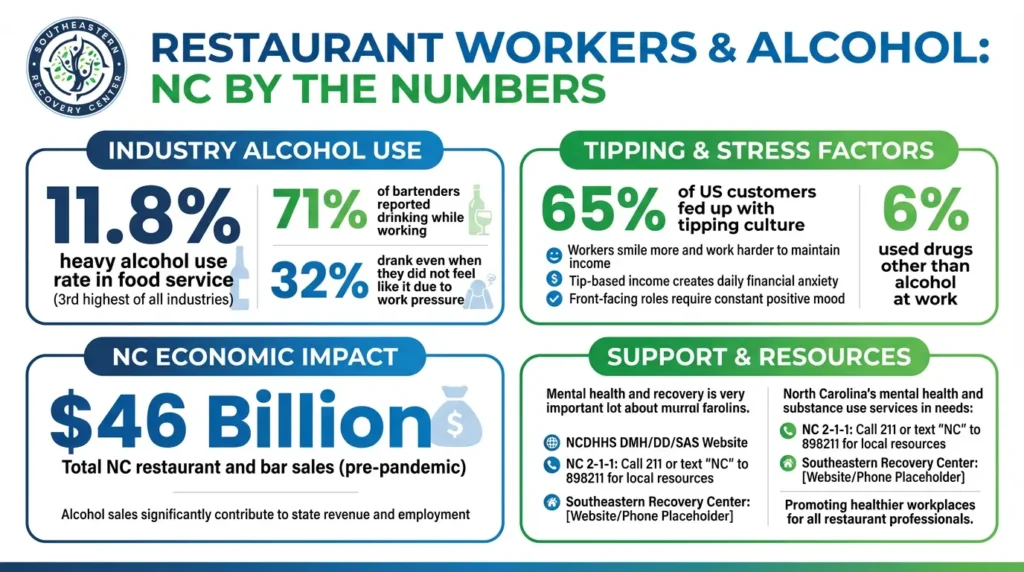
Additionally, waiter and bartender earnings are tied to tips. With tipping fatigue on the rise across the United States (65% of customers saying they’re fed up with tipping), service workers have to work harder and smile more to try to keep their income up. To that end, a drink or two or three might make sense in their minds as a way to help ensure they remain friendly.
According to a report released by the Substance Abuse and Mental Health Services Administration (SAMHSA), the food service industry has the third highest levels of heavy alcohol use among adults at a rate of 11.8%.
The Role Environment Plays in Alcohol Addiction for Waiters and Bartenders
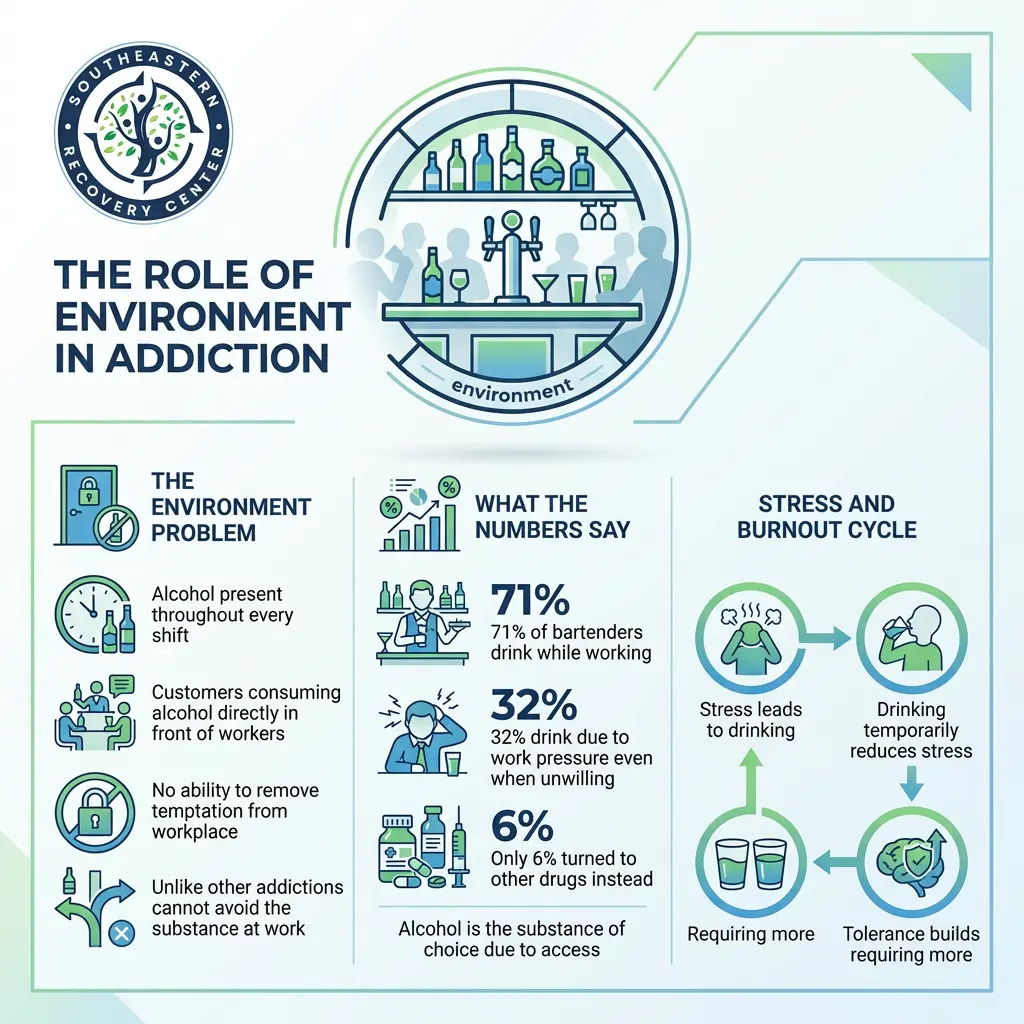
At Southeastern Recovery Center, we consistently stress the role that environment plays in our patients’ efforts to recover from drug or alcohol addiction. Not having illicit substances around your home or work environment is an easy step to reduce temptation. Unfortunately, bartenders and waiters looking for addiction help do not have this luxury.
Service industry workers are constantly surrounded by alcohol. Additionally, they cater to people directly consuming that alcohol, which adds an added layer of temptation. It is notable that while stressed bartenders could, theoretically, resort to all manner of drugs to try to self medicate, a study found that 71% bartenders reported drinking while working, while only 6% used any drugs other than alcohol at work.
Environment and ease of access are the major factors that lead to waiters and bartenders grabbing a glass of wine or a can of beer rather than seeking out healthier methods of coping with stress, burnout, and anxiety. In the same study previously mentioned, 32% of bartenders reported drinking even when they didn’t feel like it, specifically due to pressure at work.
Why is Service Industry Addiction Recovery Important to Consider in Charlotte, North Carolina?
The mental health of service industry workers in Charlotte South and/uptown restaurant scene is important for all of us to consider as a community.
- Service sectors account for 72% of total US employment and the number of employees in service providing industries has grown faster than employment and goods producing industries since 2005.
- Leisure and hospitality are critical components of tourism, which is a significant economic driver for North Carolina’s economy. Leisure and hospitality have added more than 105,000 jobs since January 2013.
- In 2025, North Carolina’s eating and drinking places were projected to contribute $46.58 billion in direct economic output to the state economy.
Service industry workers are the backbone of North Carolina, which means supporting them is the same as supporting ourselves. When bartenders and waiters fall into the trap of drinking and subsequently develop alcohol addiction, it’s for the benefit of our community if they’re able to find easy access to addiction help in NC.
Addiction Help for Bartenders
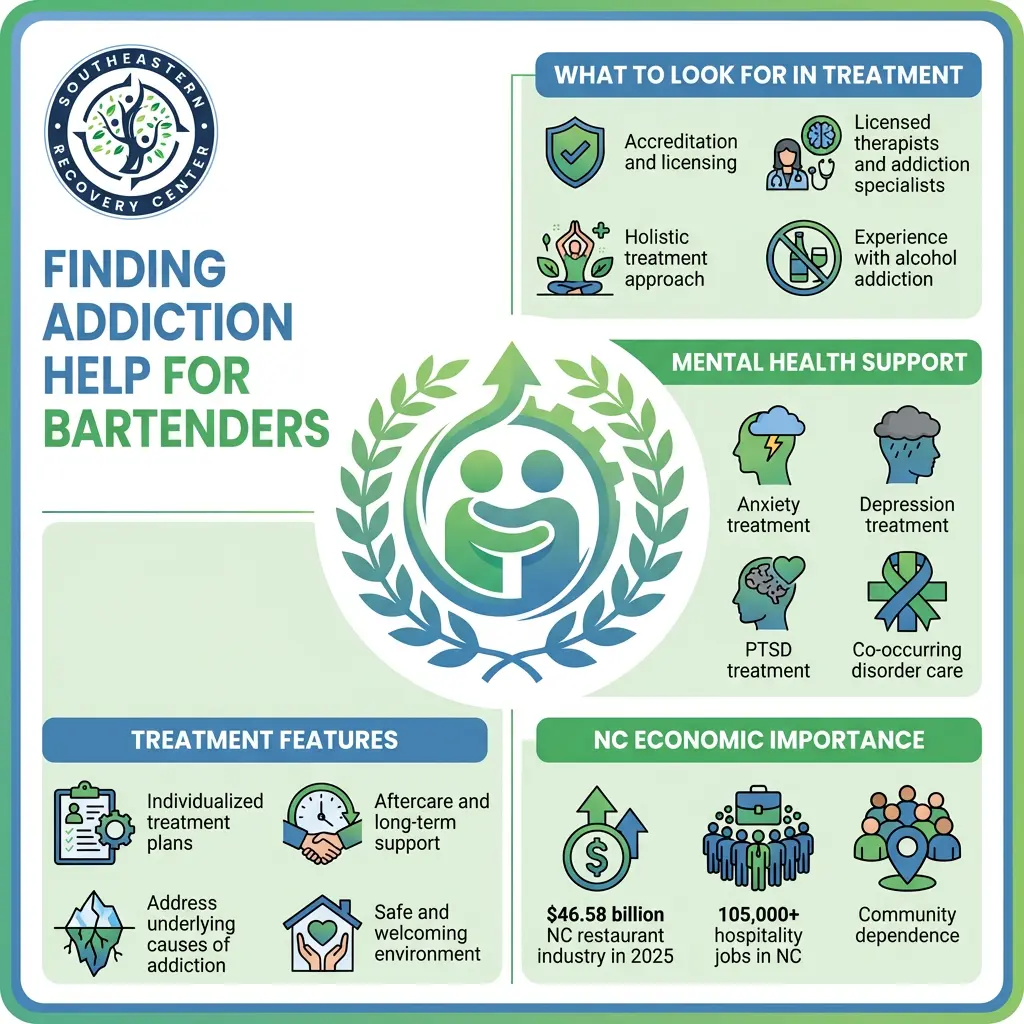
Whether you’re a bartender looking for addiction help and recovery or simply know someone in need, the first step is figuring out the best treatment center in Charlotte, NC. Key factors look for include:
- Accreditation
- Licensed therapists and addiction specialists
- Holistic treatment
- Experience with alcohol addiction as well as associated mental health disorders (anxiety, depression, PTSD)
- Individualized treatment plans
- Aftercare and long-term support
- Addressing any drug or alcohol dependencies or addictions that may have developed as a result of poor mental health
At Southeastern Recovery Center, we meet all of these criteria and more. Our focus is on holistic treatment that addresses the underlying factors that lead to needing treatment for anxiety in the first place. Our Charlotte-based facility provides a safe, welcoming space where restaurant workers can focus fully on long-term treatment.
Click here to learn more.
FAQs about Hospitality & The ‘After-Hours’ Trap: Recovery for Charlotte’s Restaurant Workers
Why do restaurant workers drink?
Restaurant workers drink to cope with stress, to self medicate for anxiety, and due to their environment having ease of access and pressure to consume alcohol.
How common is drinking in the service industry?
The service industry has the third highest rate of alcohol usage among all industries.
Is it possible for bartenders and waiters to remain sober while on the job?
Yes, it’s possible for bartenders and waiters to remain sober while on the job if they follow healthy coping mechanisms to deal with stress.
How can restaurant workers find the best service industry addiction recovery services?
Restaurant workers can find the best service industry addiction recovery services by looking for treatment facilities that are accredited, have experience with alcohol addiction as well as associated mental health disorders, and provide aftercare and long-term support.
Sources:
Popmenu Inc. “77% of Consumers Say Tipping in the U.S. Has Become Ridiculous, according to Popmenu’s Annual Study.” Prnewswire.com, Cision PR Newswire, 8 Oct. 2025, www.prnewswire.com/news-releases/77-of-consumers-say-tipping-in-the-us-has-become-ridiculous-according-to-popmenus-annual-study-302577741.html.
Bush, Donna, and Rachel Lipari. “Substance Use and Substance Use Disorder by Industry.” Samhsa.gov, 16 Apr. 2015, www.samhsa.gov/data/sites/default/files/report_1959/ShortReport-1959.html.
Tutenges, Sébastien, et al. “Drunken Environments: A Survey of Bartenders Working in Pubs, Bars and Nightclubs.” International Journal of Environmental Research and Public Health, vol. 10, no. 10, 11 Oct. 2013, pp. 4896–4906, https://doi.org/10.3390/ijerph10104896.
Ledden, Nicholas. “How Important Is the Services Sector to the U.S. Economy?” @Stlouisfed, Federal Reserve Bank of St. Louis, 11 Feb. 2026, www.stlouisfed.org/open-vault/2026/feb/how-important-is-the-services-sector-to-the-us-economy.
“From Beaches to Mountains: A Look at NC’s Tourism Industry Employment Growth since 2013.” Nc.gov, 12 May 2023, www.commerce.nc.gov/news/the-lead-feed/beaches-mountains-look-ncs-tourism-industry-employment-growth-2013.
ECONOMIC CONTRIBUTIONS of the RESTAURANT & FOODSERVICE INDUSTRY. https://restaurant.org/getmedia/38be6814-e5a2-4bc6-a089-1894da89f30d/nc_econ_impact_study.pdf