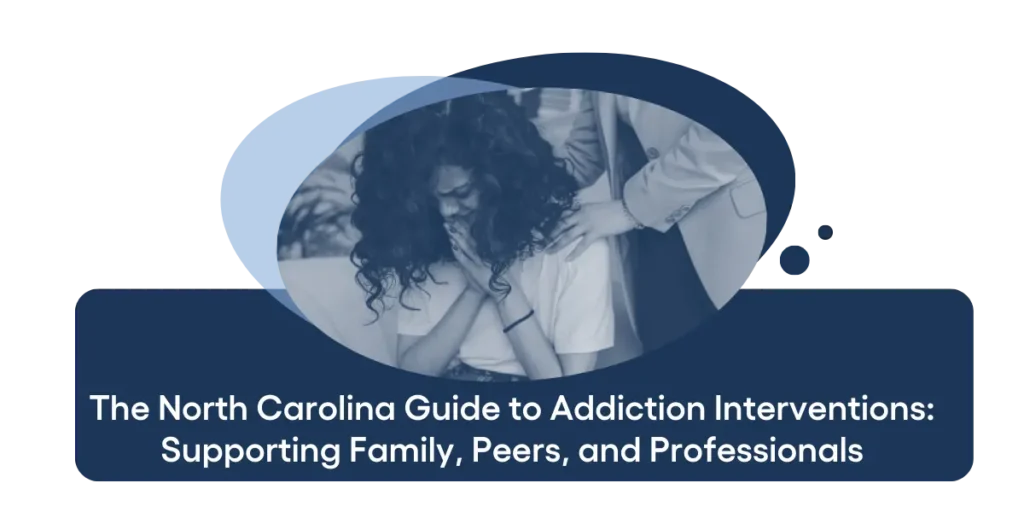
Addiction interventions are growing in popularity across North Carolina. Due to increasing awareness of the prevalence of mental health disorders and substance use disorders in NC and the United States at large, family, peers, and professionals are beginning to take notice when individuals suffer around them. The result is people being more proactive in intervening on behalf of individuals suffering from drug or alcohol addiction or mental health disorder such as PTSD, anxiety, or depression.
Still, there is a right and a wrong way to go about addiction intervention in order to have the most likely chance of succeeding.
In this post, we’re going to provide a guide for how addiction interventions can best be handled while taking into account the different context and scenarios in which they might take place. Our goal is to arm North Carolinians with the tools they need to look out for each other when it comes to supporting mental health and general well-being in our community.
Summary: Addiction interventions are a way for North Carolinians to be more involved in helping individuals suffering from substance use disorders get the help they need. That said, the relationship a person has with an addict will affect how they should go about staging an intervention for drug or alcohol addiction.
Article Preview:
Signs of Addiction. Signs of addiction include using drugs or alcohol inappropriate times, inability to limit intake, and inability to cease use overall.
The Prevalence of Addiction in North Carolina. Addiction is an ongoing battle in North Carolina, with thousands losing their lives each year.
How Addiction Interventions Can Help. Addiction interventions can help the 76% of individuals that need drug addiction treatment and do not receive it.
The Main Types of Addiction Interventions. Family interventions, friend and peer interventions, and workplace/colleague interventions all have slightly different tactics should be taken.
Other Types of Addiction Interventions. Other types of addiction interventions have to balance between being effective and being invasive, but it’s possible.
FAQs about The North Carolina Guide to Addiction Interventions: Supporting Family, Peers, and Professionals. Learn answers to frequently asked questions about addiction interventions.
Signs of Addiction
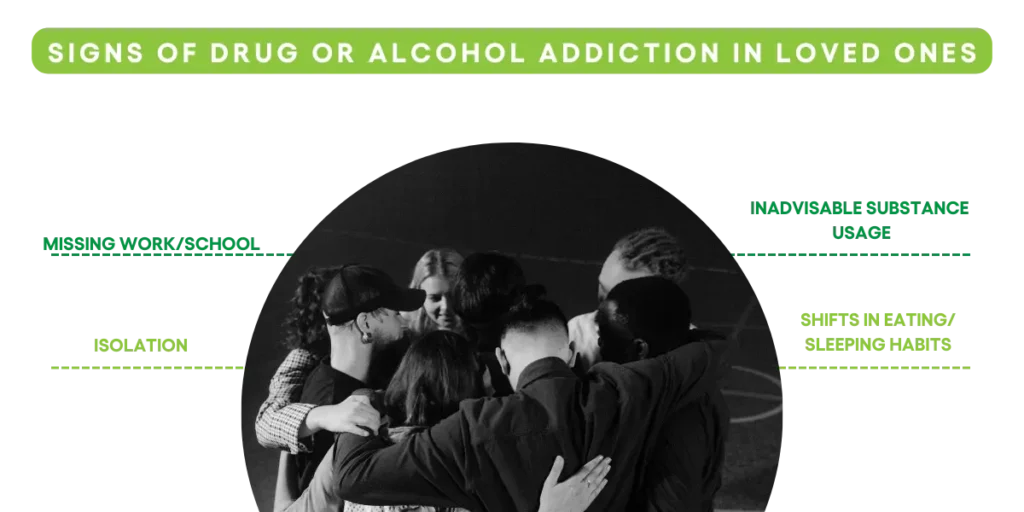
In order to stage an intervention for drug or alcohol addiction, individuals have to be able to recognize the signs of addiction in the first place. While physical symptoms may vary depending on the type of drug or alcohol being abused by an individual, there are certain behavioral signs that point to addiction:
- Using drugs or alcohol at inappropriate or even dangerous times (such as while driving or while combining different substances that may interact)
- Missing work or school due to their use of drugs or alcohol
- Inability to limit their intake of drugs or alcohol
- Inability to cease their intake of drugs or alcohol, even when setting a goal to do such
- Withdrawing from social situations (isolation)
- Shifts in their eating or sleeping habits
- Changes to their physique (sudden weight loss or weight gain)
- Increased irritability
At Southeastern Recovery Center, our Charlotte, North Carolina location is visited by people from across the state who exhibit the above symptoms and more. Paying close enough attention to an individual’s regular routine can be enough to spot such symptoms, but some drug and alcohol abusers may put in more of an effort to hide their struggles.
If you suspect that a peer, coworker, or family member is privately suffering from addiction, the best way to get them to open up to you is to foster an environment of understanding and openness. You’re not judging an individual for their struggles, nor do you want them to think that struggling with addiction is a sign of some sort of failure on their part. You’re just concerned for their well-being and aiming to help them find healthier ways of living.
Treatment facilities like Southeastern Recovery Center can help individuals address the underlying life factors that lead to addiction in the first place.
The Prevalence of Addiction in North Carolina
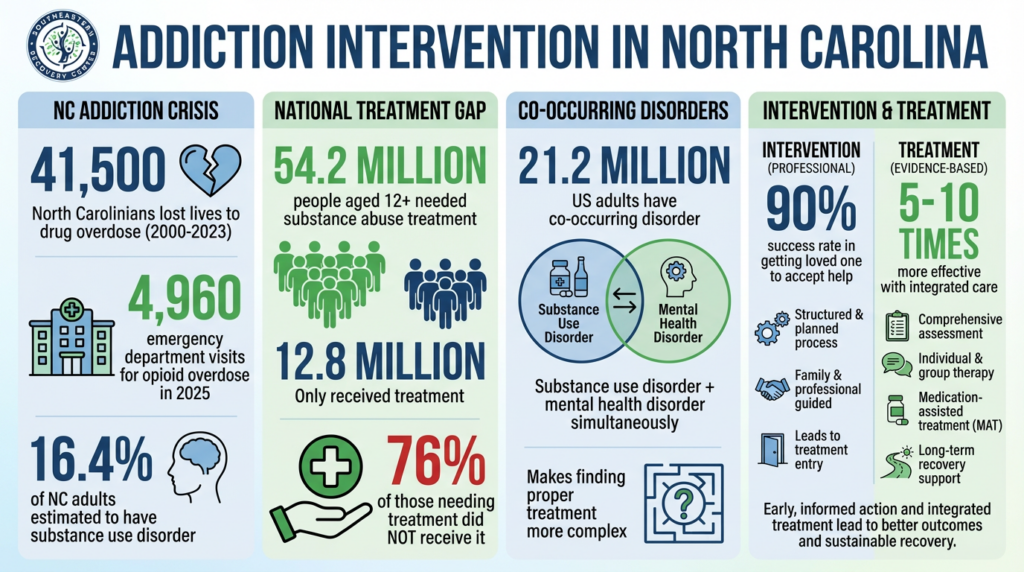
The stats on addiction in North Carolina are dire, highlighting the need for individuals to be more proactive and spotting signs of addiction in their communities. When we look at the data:
- More than 41,500 North Carolinians lost their lives to a drug overdose between 2000 and 2023.
- In 2025, North Carolina recorded 4960 emergency department visits related to opioid overdoses.
- 16.4% of adults in North Carolina were estimated to have a substance use disorder.
- Approximately 21.2 million adults in the U.S. have a co-occurring disorder, which is when an individual suffers from both a substance use disorder and a mental health disorder at the same time. The combination can make it difficult for individuals to find proper treatment.
Individuals suffering from substance use disorders build up a tolerance towards drugs and alcohol over time, which requires them to increase their dosage in order to feel the effects they’re used to. Doing so will increase their odds of suffering from an overdose, which in some cases can lead to death.
Addiction interventions are important because they help individuals realize that they’re not alone while they’re suffering from substance use disorders. Not only do they have friends, family, and peers that are willing to support them, but there are also medical professionals at treatment centers like Southeastern Recovery Center that can help them find healthy ways to recover from addiction. Additionally, we regularly make use of group therapy, helping our patients connect with individuals who have experienced and overcome similar addiction struggles.
How Addiction Interventions Can Help
According to the National Center for Drug Abuse Statistics, 54.2 million people aged 12 and older needed substance abuse treatment, but only 12.8 million actually received treatment. This means that 76% of individuals that need drug addiction treatment did not receive the help they need.
Addiction interventions are an opportunity for North Carolinians to help these individuals suffering from substance use disorders find treatment. Whether these individuals don’t seek treatment because of shame and guilt or because they’re not aware of the treatment options that exist, staging an addiction intervention can help turn their lives around.
The Main Types of Addiction Interventions
At Southeastern Recovery Center, we personalize drug and addiction treatment for each individual. Similarly, addiction interventions will have to be personalized depending on the circumstances and relationship that you have with the individual you’re intervening on behalf of. Below are some of the most common types of treatment and how they should be approached.
Family Interventions
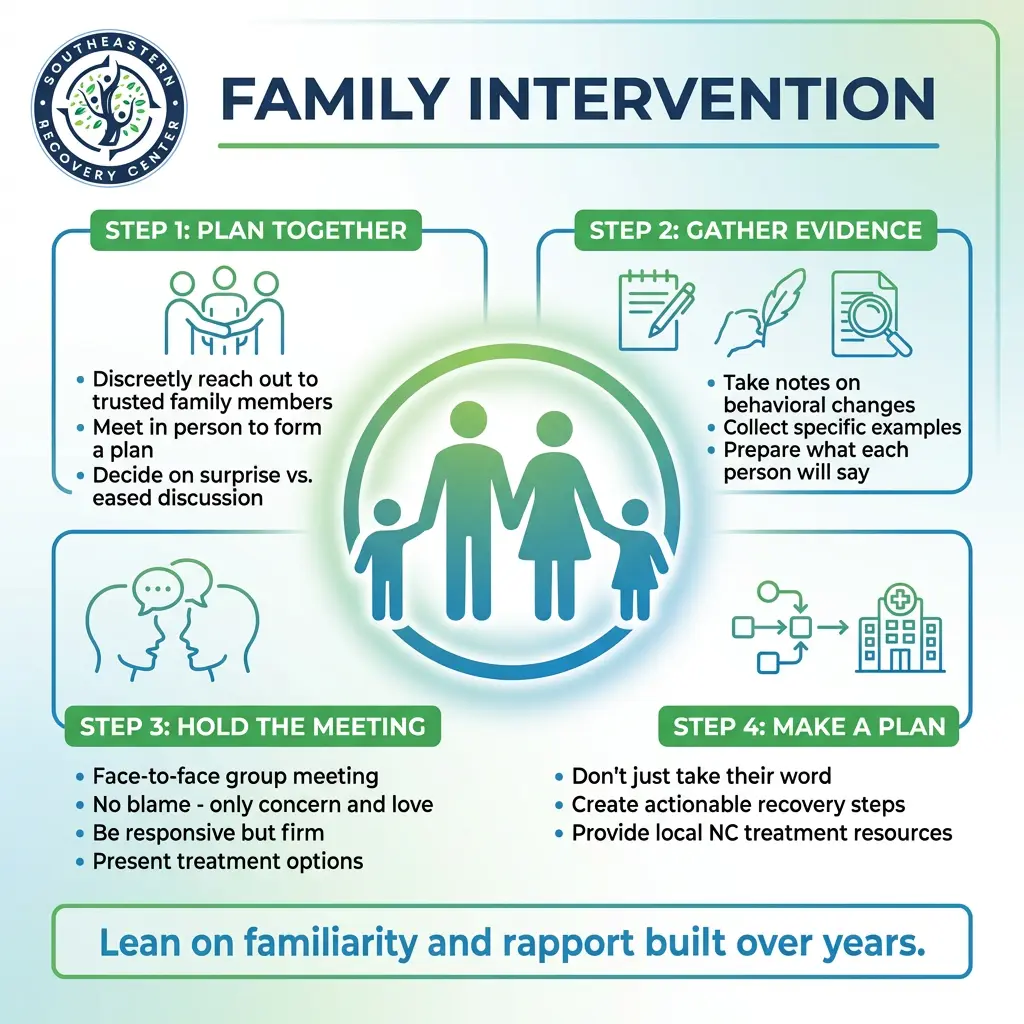
For Family interventions, the best approach is to lean on the familiarity and rapport that you’ve built with an individual over the years. Discreetly reach out to other family members that you know can be trusted and form a plan. Ideally, you’ll meet in person and stage a group meeting with the individual you’re all worried about, face-to-face.
Note: a surprise intervention can immediately put an individual on the defensive. Consider carefully if this is the best option, or if you’d be better served easing them into a more normal discussion.
Family members should gather information and take notes on what they plan to say. An individual may not believe that they are suffering from addiction, so presenting evidence can help make your case.
At the time and venue of your choosing, the family will approach the loved one about their substance use. During the meeting, it should be made as clear as possible that no one in the family is blaming the individual, that you’re all concerned, and that you just want the best for them. Be responsive yet firm in wanting them to make changes in their life. If they agree, don’t just take them for the word, but make a plan for recovery with actionable steps.
It can also help to have information ready to present, such as brochures and website links for local treatment centers in North Carolina.
Friend/peer Interventions
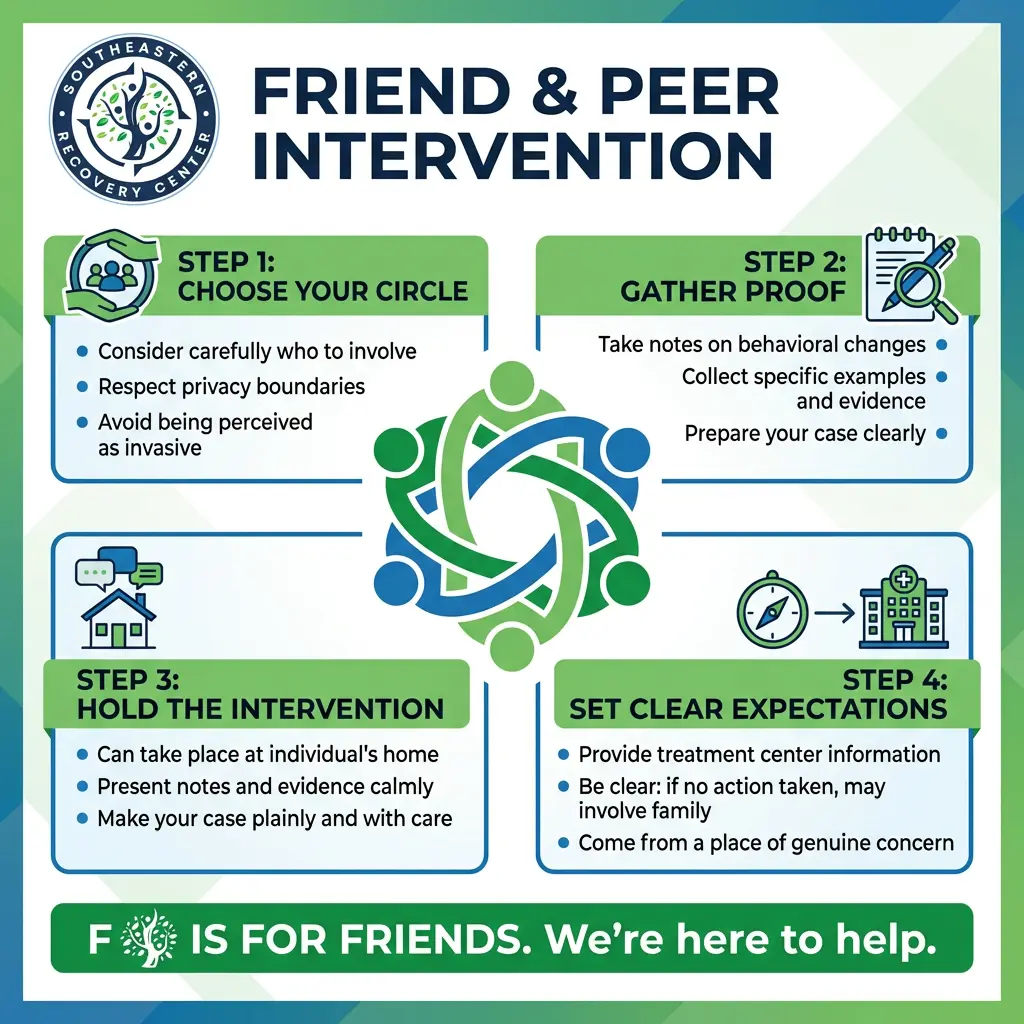
Friend and peer interventions may have a level of formality that isn’t necessarily as present in family interventions. Friends and peers that want to stage an intervention will have to take care as to whether they want to involve an individual’s close circle. Doing so may be perceived as invasive depending on your own relationship with those individuals.
Friend and peer interventions can take place at an individual’s house. Attendees should attempt to gather proof and make notes, though it’s possible that the individual receiving the intervention may have enough of a distance from the hosts of the intervention to make use of plausible deniability.
Still, present the notes and evidence you have, and make it your case plainly. Provide information and links to treatment centers, and possibly make clear that if the individual does not take steps to correct their behavior, you may reach out to their family for assistance in trying to help them make better decisions in their life.
Workplace/colleague Interventions
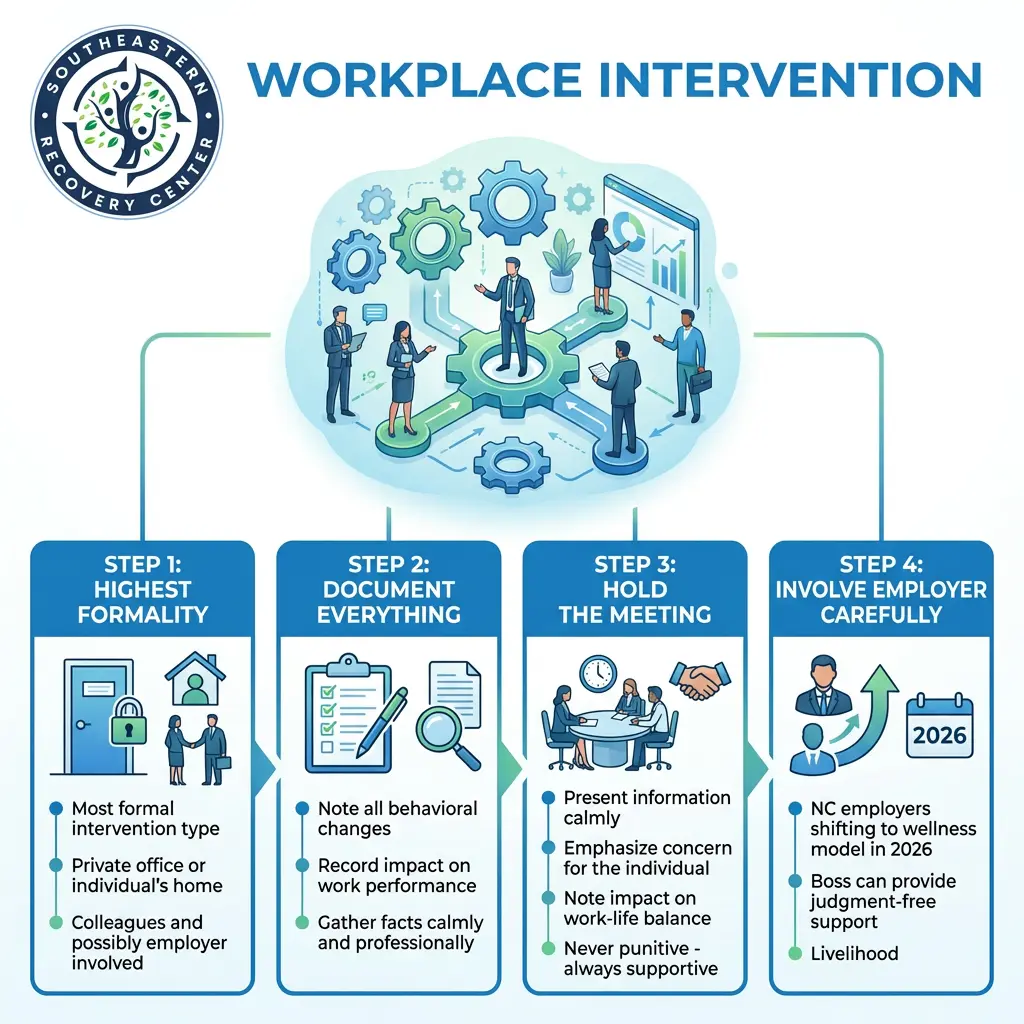
Addiction interventions hosted by colleagues have the highest degree of formality, but that does not mean they are less likely to succeed. In fact, the fact that an individual’s wages and livelihood may be at risk might make them more amenable to intervention.
These addiction interventions may be hosted at the workplace in a private office or at an individual’s house. The planners of the intervention should gather facts and make notes to present their information as calmly as possible. Any behavioral changes should be noted to provide evidence that an individual’s use of substances hasn’t gone under the radar.
Emphasize concern for the individual. Note the impact on their work-life balance. Try to make a plan with the individual for what they’re going to do to turn their life around. Provide information for treatment centers around North Carolina for addiction.
It’s possible that bosses can be looped into an addiction intervention without cost to the individual. North Carolina employers in 2026 have started to shift towards a health and wellness model rather than purely punitive drug-free policies. If you and the individual in question work in such a place, having the boss around to provide judgment-free support can make an individual feel more comfortable pursuing treatment for their struggles.
Other Types of Addiction Interventions
For other addiction intervention types, such as for fellow frat or sorority members, or schoolmates, the broad strokes remain the same: gather support in the form of others that care for the individual, combine information and take notes, and then open a dialogue with the person while making sure it’s clear you’re not judging them. The goal is to not put them on the defensive in order to ensure that your words and affection are heard and felt.
Addiction intervention is not an action taken by people looking to judge or control an individual. It’s taken by those who care about an addict’s well-being. So long as this is communicated carefully and effectively, the person who needs help with their substance use disorder is more likely to respond well.
FAQs about The North Carolina Guide to Addiction Interventions: Supporting Family, Peers, and Professionals
What are some signs of addiction?
Signs of addiction include using drugs and alcohol at inappropriate times, missing school or work due to the substance use, and inability to limit intake of drugs or alcohol.
How many North Carolinians have lost their lives to drug overdose?
41,500 North Carolinians lost their lives to drug overdose between 2020 and 2023.
How many Americans need substance abuse treatment?
In 2023, 54.2 million people aged 12 and older needed substance abuse treatment.
Should the approach to addiction intervention vary depending on the relationship to an addict?
Yes, your approach to addiction intervention should vary depending on your relationship to an addict.
Sources:
NCDHHS. “North Carolina Overdose Epidemic Data | Division of Public Health.” Ncdhhs.gov, 2022, www.dph.ncdhhs.gov/programs/chronic-disease-and-injury/injury-and-violence-prevention-branch/north-carolina-overdose-epidemic-data.
Littlehales, Alex. “WRAL Investigates: Opioid Overdoses, Fentanyl Deaths Decrease for Second Straight Year in Triangle.” WRAL.com, WRAL, 17 Feb. 2026, www.wral.com/news/investigates/opioid-overdoses-fentanyl-deaths-decrease-2026-triangle. Accessed 20 Feb. 2026.
Substance Abuse and Mental Health Services Administration. 2024 Companion Infographic Report. www.med.unc.edu/fammed/nctac/wp-content/uploads/sites/1256/2025/09/2024-nsduh-companion-report.pdf.
National Center for Drug Abuse Statistics. “NCDAS: Substance Abuse and Addiction Statistics [2020].” National Center for Drug Abuse Statistics, 2025, drugabusestatistics.org/.