
These days, awareness is spreading about the dangerous relationship that exists between dopamine and tech usage across North Carolina and the United States at large. Algorithms and short-form content are collaborating to create an almost inescapable dopamine loop that leads to adults scrolling endlessly. The result is what can only be described as tech addiction.
At Southeastern Recovery Center, our concern is all things behavioral health, including various forms of addiction and recovery. Due to this, we feel the need to tackle the concept of digital sobriety in NC and the U.S. at large. This guide will help instruct individuals who are concerned with reaching and maintaining digital sobriety, escaping the need to scroll in order to maintain a healthy relationship with the internet.
Summary: Digital sobriety is an increasingly important concept in North Carolina as the tech industry continues to grow in our state. Individuals need to know how to recognize tech addiction and when to work with medical professionals to ensure their use of the internet is healthy overall.
Article Preview:
What is Digital Sobriety? Digital sobriety is the idea of minimizing and controlling your tech usage to be more intentional with how their time is spent on the Internet.
Why is Digital Sobriety an Important Concept in North Carolina? North Carolina is ranked among the top 10 states for tech industry employment growth, which means the internet is increasingly relevant to our lives.
The Potential Implications of Tech Addiction. Tech addiction impacts dopamine pathways, emotional sensitivity, and decision-making abilities.
What Are the Symptoms of a Tech Addiction? Symptoms of tech addiction include compulsively checking the Internet, preoccupation with being online, and hiding or lying about Internet usage.
How Tech Addiction Works. Tech addiction works by individuals first getting trapped in a dopamine loop and struggling with at-home digital detoxes, which is why they may need clinical recovery help instead.
FAQs about Digital Sobriety in NC: Understanding the Dopamine Loop and Tech Addiction in Adults. Get answers to frequently asked questions about digital sobriety and tech addiction.
What is Digital Sobriety?
Digital sobriety has two accepted definitions depending on the context. For our purposes, digital sobriety refers to the idea of minimizing and controlling your tech usage, becoming more intentional with how your time is spent on the internet. This is paired with an understanding of the various digital forces competing for your attention, including addictive algorithms and dopamine surges associated with social media likes.
Another definition of digital sobriety refers to the impact of technology on the environment. However, we’re more concerned with the impact of technology on the individual.
Why is Digital Sobriety an Important Concept in North Carolina?
Digital sobriety is a concept that is relevant to North Carolinians because tech usage is becoming increasingly integrated into our lives. When we take a look at the data:
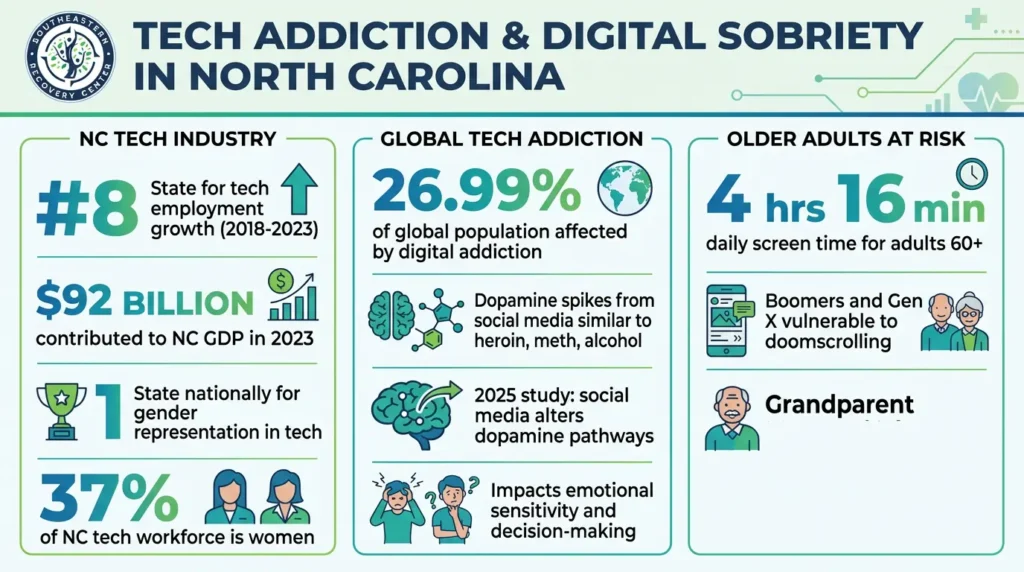
- Data taken from 2018 to 2023 marked North Carolina as the #8 state in total tech industry employment growth.
- The same report also showed that the tech industry contributed $92 billion to North Carolina’s GDP in 2023.
- The North Carolina Technology Association (NC TECH) also released a 2026 report that marked out North Carolina as the #1 state nationally for gender representation and technology, thanks to women making up 37% of our state’s tech workforce.
- North Carolina is actively working to increase access to technology across the state by “closing the digital divide,” thanks to initiatives such as the Interagency Digital Equity Funding Program committing $9.9 million towards supporting the state.
North Carolina is all in on embracing technology. For the vast majority of people, increased access to technology will bring with it convenience and an improved quality of life. But unfettered access to the internet will also result in more adults developing tech addiction.
The Potential Implications of Tech Addiction
- Tech addiction is defined as an addiction to various forms of online activities including social media, gaming, and gambling. Many of these websites thrive on user activity and thus intentionally designed themselves to be as addictive as possible. In a way, these websites are almost like digital drugs. And just like drugs, they can have long-term impacts on brain function. A 2025 study found that frequent engagement with social media platforms alters dopamine pathways, increases emotional sensitivity, and even compromises decision-making abilities.
- Current estimates show that 26.99% of the general global population may be affected by at least one subtype of digital addiction.
At Southeastern Recovery Center, our Charlotte, North Carolina location is regularly visited by people from all walks of life seeking treatment for drug and alcohol addiction or mental health disorders. The one factor that the vast majority of our patients have in common is daily usage of the Internet.
Not enough people are aware of the potential side effects of daily scrolling. This is why we’re now aiming to be at the forefront of North Carolinians understanding the dopamine loop and tech addiction.
What Are the Symptoms of a Tech Addiction?
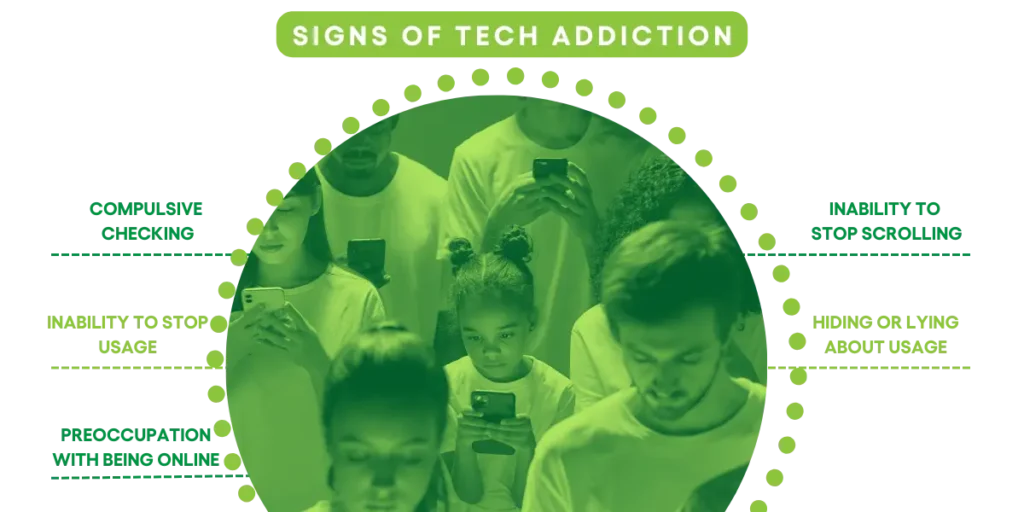
If you or a loved one have concerns about whether or not an individual has a tech addiction, here are a few warning symptoms to look out for:
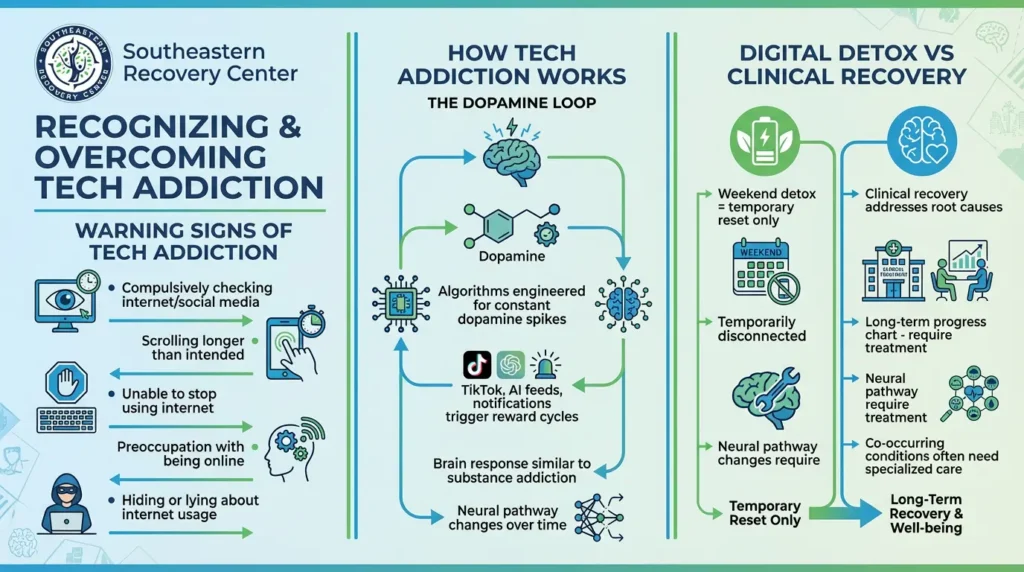
- Compulsively checking the internet (social media platforms, emails, notifications)
- Scrolling on the internet longer than intended
- Inability to cease using the internet
- Preoccupation with being online
- Hiding or lying about internet usage
While the specific digital platform an individual may be addicted to can vary, the above are a few general warning signs that someone’s beginning to develop an addiction to technology.
How Tech Addiction Works
Understanding what makes an individual susceptible to tech addiction starts with knowing how it develops. There are three main components that North Carolinians need to be aware of when it comes to grappling with tech addiction.
The Dopamine Loop
Tech addiction starts with the dopamine loop, which is the foundation of algorithmic addiction. TikTok, AI-driven feeds, and social media notifications are engineered to trigger constant dopamine spikes in individuals. This can result in the release of large amounts of dopamine in a manner not unlike heroin, meth, or alcohol.
Digital Detox vs. Clinical Recovery
Once an individual realizes that they’re developing a tech addiction, they may seek techniques to curb their reliance on the Internet. While many people will opt for a weekend “digital detox,” or a camping trip in the Blue Ridge Mountains, this is only a temporary reset. In order to actually combat tech addiction, it needs to be treated as seriously as drug or alcohol addiction. This means addressing the underlying causes, changes in neural pathways, and even taking into account co-occurring mental health issues such as anxiety and depression.
This is why using proven techniques such as cognitive behavioral therapy can help an individual achieve digital sobriety. Cognitive behavioral therapy is a psychological treatment that helps individuals change their thinking patterns and behavioral patterns, allowing them to cope without daily tech usage.
The Hidden Struggle of Older Adults
Many people may believe that tech addiction is only a possible threat for Gen Z. But this is false. In 2019, the Pew Research Center found that people 60 and older “now spend more than half of their daily leisure time, four hours and 16 minutes, in front of screens.” These numbers have only increased since then, and are likely to continue rising over time.
Boomers and Gen Xers are increasingly vulnerable to social media isolation, doomscrolling, and even the “grandparent loop” where they compulsively check for family updates on Facebook. While many social media platforms were built to foster connection between individuals, the social media algorithms that feed all the generations constant images of happy families can result in deeper loneliness and mental health disorders such as anxiety and depression.
Tech addiction hijacks brain centers, but like all forms of addiction, we at Southeastern Recovery Center firmly believe that anyone is capable of defeating it. With proper awareness, assistance for medical professionals, and altered behaviors, digital sobriety can equip individuals to use but not abuse the Internet.
FAQs about Digital Sobriety in NC: Understanding the Dopamine Loop and Tech Addiction in Adults
What is digital sobriety?
Digital sobriety is the process of minimizing and controlling your tech usage.
How big is the tech industry in North Carolina?
North Carolina was ranked as the number eight state in total tech industry employment growth and the tech industry contributed $92 billion to North Carolina’s GDP.
Does tech addiction impact the brain?
Yes, because the Internet is designed to deliver dopamine hits to make an individual use platforms more, tech addiction can impact dopamine pathways.
Are Gen Z the only demographic that has to worry about tech addiction?
No, every demographic is susceptible to tech addiction, even boomers and Gen X.
Sources:
NC Tech Association. North Carolina State of Technology 2025 Industry Report. https://www.nctech.org/_files/_pdf/talent/NC%20Tech%20State%20of%20the%20Technology%20Industry%20Report%202025.pdf
Fleming, Andrea. “North Carolina’s Tech Industry Shows Staying Power in 2026 Report.” WRAL.com, WRAL, 14 Feb. 2026, www.wral.com/business/technology/nctech-state-of-tech-2026.
NCDIT. IT’S TIME to CLOSE the DIGITAL DIVIDE in NORTH CAROLINA. https://broadbandusa.ntia.gov/sites/default/files/2023-06/State_and_NTIA_Update_-_Denny.pdf
De, Debasmita, et al. “Social Media Algorithms and Teen Addiction: Neurophysiological Impact and Ethical Considerations.” Cureus, vol. 17, no. 1, 8 Jan. 2025, pp. 1–7, assets.cureus.com/uploads/review_article/pdf/304975/20250108-892444-bcvzs5.pdf, https://doi.org/10.7759/cureus.77145.
Meng, Shi-Qiu, et al. “Global Prevalence of Digital Addiction in General Population: A Systematic Review and Meta-Analysis.” Clinical Psychology Review, vol. 92, no. 92, Mar. 2022, p. 102128, https://doi.org/10.1016/j.cpr.2022.102128.
Goldman, Bruce. “Addictive Potential of Social Media, Explained.” Stanford Medicine News Center, 29 Oct. 2021, med.stanford.edu/news/insights/2021/10/addictive-potential-of-social-media-explained.html.
Livingston, Gretchen. “Americans 60 and Older Are Spending More Time in Front of Their Screens than a Decade Ago.” Pew Research Center, 18 June 2019, www.pewresearch.org/short-reads/2019/06/18/americans-60-and-older-are-spending-more-time-in-front-of-their-screens-than-a-decade-ago/.