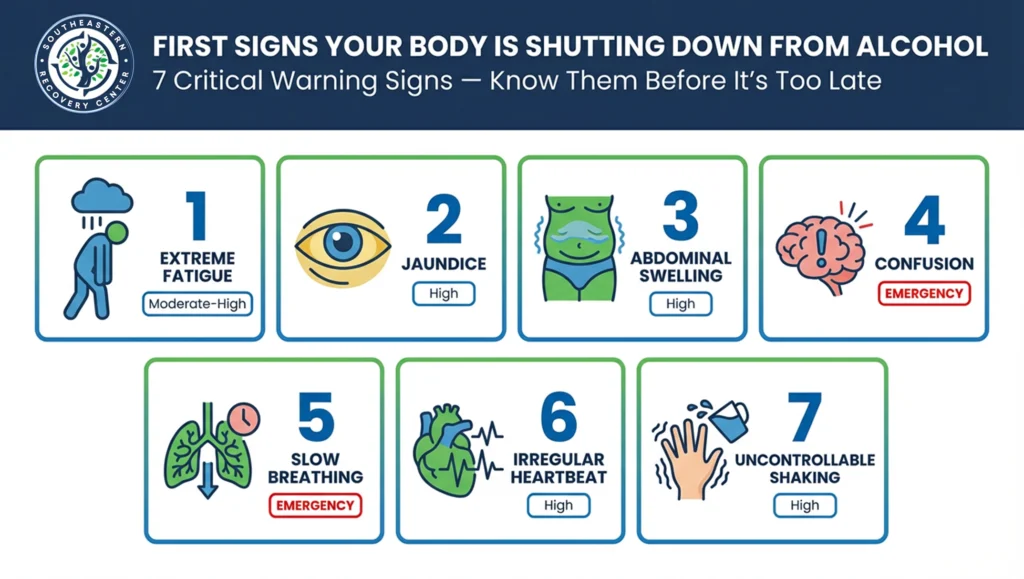
The first signs your body may be shutting down from alcohol include severe fatigue, confusion, jaundice, swelling in the abdomen or legs, slowed breathing, and significant changes in heart rate or consciousness.
When alcohol use becomes chronic and heavy, it can move beyond causing discomfort and begin triggering organ failure. These warning signs often appear gradually but can escalate quickly. Recognizing them early can be life-saving.
At Southeastern Recovery Center in Charlotte, NC, we emphasize education around advanced alcohol-related health risks because many people underestimate how quickly serious medical complications can develop.
Below are the earliest and most critical signs that alcohol is causing systemic shutdown.

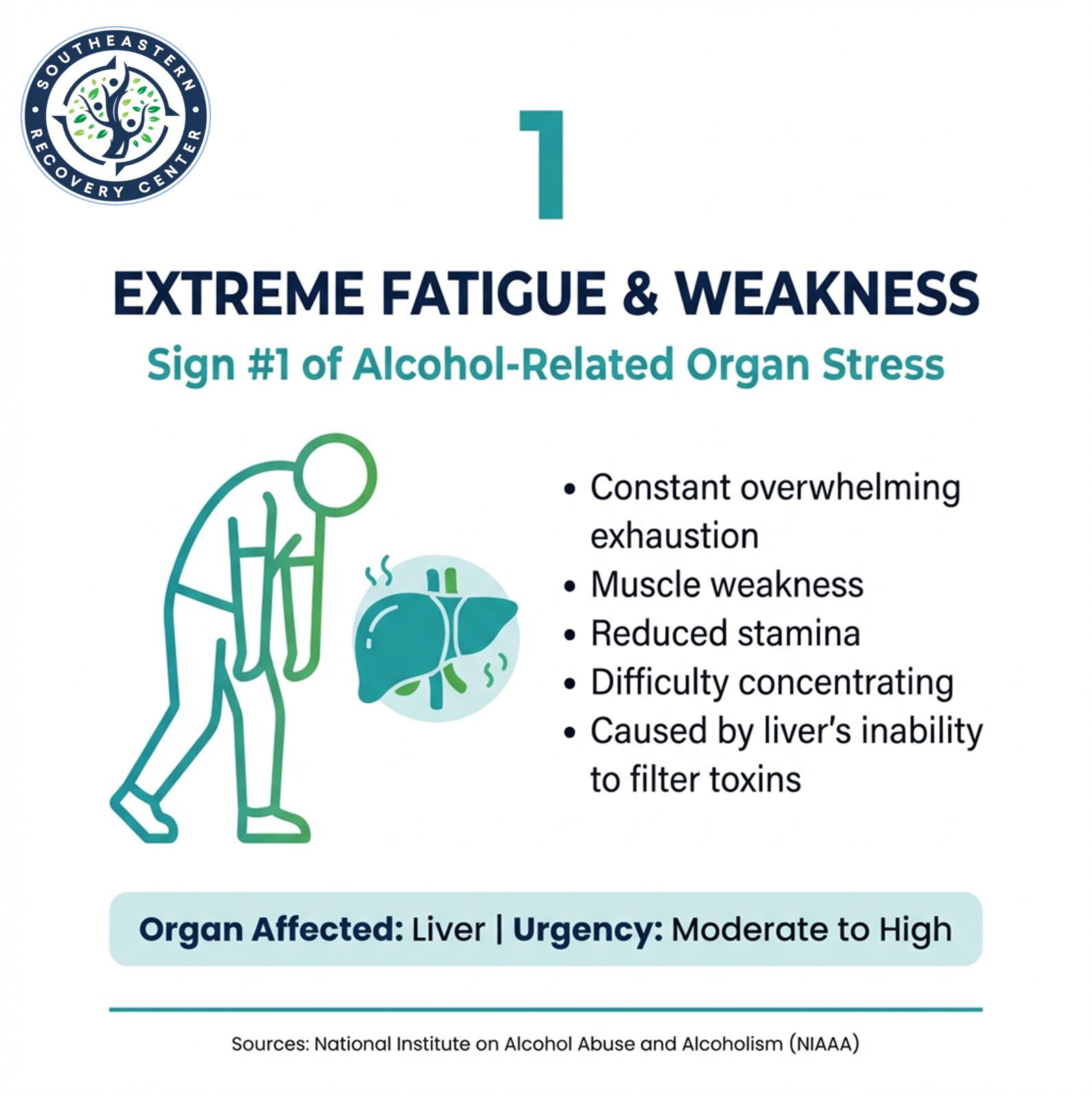
Persistent, overwhelming fatigue is often one of the earliest indicators of serious organ stress.
When the liver becomes damaged, it can no longer effectively filter toxins from the bloodstream. This buildup leads to:
According to the National Institute on Alcohol Abuse and Alcoholism, alcohol-related liver disease can progress silently before severe symptoms appear.
Fatigue alone does not confirm organ failure, but when combined with other symptoms, it becomes more concerning.
Jaundice is one of the clearest visible signs of liver dysfunction.
When the liver cannot properly process bilirubin, a yellow pigment builds up in the bloodstream. This causes:
Jaundice often signals advanced liver inflammation or cirrhosis. At this stage, immediate medical evaluation is critical.

As liver function declines, fluid can accumulate in the abdomen, a condition known as ascites.
Symptoms may include:
Ascites typically indicates significant liver scarring and impaired circulation through the liver.

When toxins build up in the bloodstream due to liver failure, they can affect brain function. This condition is called hepatic encephalopathy.
Warning signs include:
The Mayo Clinic explains that severe liver dysfunction can impair brain function and become life-threatening without treatment.
Sudden confusion in someone with heavy alcohol use should be treated as a medical emergency.

Alcohol suppresses the central nervous system. In advanced cases or during alcohol poisoning, breathing may become dangerously slow.
Warning signs include:
The Centers for Disease Control and Prevention notes that alcohol poisoning can depress breathing and heart rate to fatal levels.
If breathing is slow or irregular, call emergency services immediately.

Chronic alcohol use increases the risk of cardiomyopathy, a condition where the heart muscle weakens and struggles to pump blood effectively.
Early warning signs include:
Long-term heavy drinking can lead to heart failure if untreated.

Advanced liver disease increases pressure in blood vessels, which can cause varices in the esophagus or stomach. These fragile veins may rupture.
Warning signs include:
This is a medical emergency requiring immediate hospital care.

Alcohol leads to systemic failure by impacting multiple organ systems simultaneously. Over time, repeated exposure leads to:
When several systems begin failing at once, the body struggles to maintain basic functions such as circulation, detoxification, and oxygen delivery.
The National Institute on Drug Abuse explains that chronic substance use disrupts critical brain and body systems, increasing risk of severe medical complications.
Call 911 or go to the emergency room if someone experiences:
Do not wait to see if symptoms improve on their own.
Early-stage damage such as fatty liver may be reversible with complete abstinence and medical care. However, advanced cirrhosis, heart failure, or internal bleeding may cause permanent damage.
The earlier treatment begins, the greater the likelihood of preventing full organ failure.
At Southeastern Recovery Center in Charlotte, we help individuals intervene before medical crises develop. Treatment includes:
Recovery is not only about sobriety. It is about restoring physical stability and preventing life-threatening complications.
The first signs your body may be shutting down from alcohol include jaundice, confusion, abdominal swelling, slowed breathing, and severe fatigue. These symptoms indicate serious organ stress and require immediate attention.
Alcohol-related organ failure is preventable with early intervention. If you or a loved one is experiencing warning signs, seeking professional help can save a life.
If you are noticing these physical changes in yourself, please believe that your life is incredibly valuable and worth fighting for. You are not alone in this moment. Our compassionate specialists are standing by to offer the medical care and emotional strength you need to stabilize and find safety. Please reach out to us today so we can begin the healing process together.
Watching someone you love face the physical toll of addiction is incredibly painful, but your decision to step in can be the turning point they need. We are ready to work alongside you during this urgent time, providing the professional intervention and long-term recovery support your loved one needs to reclaim their life. Let us help you guide them toward a brighter, healthier future.
Every moment counts. The last thing you need is a complicated process. We prioritize your peace of mind by providing quick insurance confirmation and straightforward advice on the best care available. We’re here to help you move quickly from today’s worries to the security of life-saving treatment. You deserve the best possible care, and we are here to ensure you get it.
Sources
Centers for Disease Control and Prevention. “Alcohol and Public Health.” CDC, www.cdc.gov/alcohol.
Mayo Clinic. “Cirrhosis.” Mayo Foundation for Medical Education and Research, www.mayoclinic.org.
National Institute on Alcohol Abuse and Alcoholism. “Alcohol’s Effects on the Body.” National Institutes of Health, www.niaaa.nih.gov.
National Institute on Drug Abuse. “Drugs, Brains, and Behavior: The Science of Addiction.” National Institutes of Health, www.nida.nih.gov.