Cocaine is an extremely habit-forming stimulant that has devastating effects on both physical and mental health, requiring cocaine usage in Charlotte and across North Carolina to need immediate addressing. Not only does it elevate heart rate and blood pressure quickly, but it also undermines mental stability, affecting your emotional state and decision-making capabilities. The short-lived highs that come with using cocaine are typically succeeded by severe emotional lows, creating a relentless cycle of addiction.
At Southeastern Recovery Center, we take a more comprehensive approach to treating cocaine addiction than many traditional rehab programs in North Carolina. Our specialized treatment plan brings together proven medical treatments with holistic healing techniques.

An addiction to cocaine, also known as a cocaine dependence, is defined as a frequent use of cocaine to the point where an individual finds it difficult to cease using cocaine. This difficulty can come from physiological and mental changes in an individual’s brain and body that leads them to crave having the drug in their system.
Cocaine produces a positive impact on the mind and body rapidly – 5 to 30 minutes after ingestion. This quick effect makes it easy to get addicted to the feeling of increased alertness as well as the mood boost associated with cocaine.
This is why it’s critical that someone developing a dependence or addiction to cocaine receive medical guidance as soon as possible.
Cocaine use in North Carolina has been quietly rising, with 3.01% of residents aged 12 and older reporting past-year use in 2022-2023, nearly double the national average. The rise in overdose deaths and emergency calls across Mecklenburg County is largely driven by fentanyl being mixed into the cocaine supply, making what users believe to be a familiar drug a potentially lethal one. The data below captures the scope of the cocaine and stimulant crisis from Charlotte to the national level.
| Crisis Indicator | What the Data Shows | Geographic Scope |
|---|---|---|
| Past-year cocaine use rate (ages 12+, 2022-2023) | 3.01% of residents (approx. 273,000 people); adults 18+ rate: 3.15% [1] | North Carolina |
| Fatal overdose deaths (2023, all drugs) | 356 overdose deaths; rise largely driven by fentanyl mixed into cocaine and other street drugs [2] | Mecklenburg County |
| Overdose-related ED visits (2019-2024) | 12,313 total visits; polysubstance co-use including cocaine identified as compounding risk [3] | Mecklenburg County |
| NC overdose deaths (2023) | 3,520 deaths; 33 per 100,000 residents [4] | North Carolina |
| NC overdose deaths (2024, provisional) | 2,934 deaths; rate of 26.6 per 100,000 [5] | North Carolina |
| Cocaine-involved overdose deaths in the US (2023) | 29,449 deaths; up from 4,681 in 2011 (a 529% increase over 12 years) [6] | National |
| Cocaine-involved OD deaths also involving opioids (2021-2024) | 79.1% of cocaine OD deaths co-involved opioids [6] | National |
| Cocaine-involved OD deaths (2024, provisional) | Declined to approx. 22,174; down from 30,833 in 2023 [7] | National |
| US adults reporting past-year cocaine use (2024) | 1.5% of US adults aged 12+; approx. 5.0 million people [8] | National |
Sources [1] SAMHSA, 2022-2023 National Survey on Drug Use and Health: North Carolina State Tables – https://www.samhsa.gov/data/sites/default/files/reports/rpt56188/2023-nsduh-sae-state-tables_0/2023-nsduh-sae-state-tabs-north-carolina.pdf [2] Mecklenburg County Public Health, 200% Rise in Overdose Deaths Among Black and Hispanic Residents – https://news.mecknc.gov/mecklenburg-county-reports-200-rise-overdose-deaths-among-black-and-hispanic-residents [3] Mecklenburg County, Unseen Patterns: Overdose Data to Action StoryMap, 2019-2024 – https://storymaps.arcgis.com/stories/ef4734f504ce4a069824cba45a06cfc5 [4] USAFacts, Drug Overdose Deaths in North Carolina – https://usafacts.org/answers/how-many-drug-overdose-deaths-happen-every-year-in-the-us/state/north-carolina/ [5] NC Division of Public Health, North Carolina Overdose Epidemic Data – https://www.dph.ncdhhs.gov/programs/chronic-disease-and-injury/injury-and-violence-prevention-branch/north-carolina-overdose-epidemic-data [6] CDC MMWR, Drug Overdose Deaths Involving Stimulants, United States, January 2021-June 2024 – https://www.cdc.gov/mmwr/volumes/74/wr/mm7432a1.htm [7] CDC, Drug Overdose Deaths in the United States, 2023-2024 – https://www.cdc.gov/nchs/products/databriefs/db549.htm [8] SAMHSA, Release of the 2024 National Survey on Drug Use and Health – https://www.samhsa.gov/blog/release-2024-nsduh-leveraging-latest-substance-use-mental-health-data-make-america-healthy-again
When we look at cocaine consumption on a level local to North Carolina, there are some alarming statistics:
Cocaine misuse is slowly trending upwards even in North Carolina, which presents a danger to an individual’s ability to function normally in society. This is why it’s important for any individual who develops an addiction to immediately seek out rehab for cocaine.


The idea that you become addicted to cocaine after the first use is a myth. That said, cocaine is a quick-acting drug that boosts moods and increases energy, so its effects can be widely appealing.
Individuals may use cocaine as a means to self-medicate for depression or low moods. Then, cocaine can become a crutch for them. Every time they feel low, they go to using cocaine.
Before long, a dependence develops in the body where it adjusts how it produces chemicals because it assumes cocaine is going to be ever-present in the user’s body. This is what causes cocaine withdrawal symptoms when an addict tries to stop using cocaine.
It’s important to recognize the signs of a cocaine addiction to recognize a potential issue. Some common tells include:
If you recognize these signs of cocaine addiction, it’s important to seek help from a nearby rehab center in North Carolina for further guidance. Southeastern Recovery Center offers medical detox and therapy programs in Charlotte designed specifically for cocaine and other emerging addictions.

If an individual recognizes cocaine addiction in themselves and wants to cure it, it’s important to seek out medical guidance. Attempting to detox from cocaine at home can be dangerous due to cocaine withdrawal symptoms.
Instead, it is best to reach out to rehab centers in North Carolina for cocaine addiction. At Southeastern Recovery Center, we provide 24/7 monitoring and personalized guidance to ensure that our patients are as safe and comfortable as possible during rehab for cocaine addiction. You’ll also receive:
By addressing both the physical and psychological sides of detox, we help clients start their recovery on stable ground.
The most common symptoms of cocaine withdrawal are fatigue, headaches, body tremors, anxiety and depression, increased appetite, insomnia, and cravings for cocaine.
Withdrawal symptoms set in 1 to 3 days after the last cocaine use. This is sometimes referred to as a cocaine crash phrase. Symptoms include lethargy, depression, and anxiety.
By the time 4 to 7 days have passed, most of the symptoms of cocaine withdrawal have decreased in intensity. For some individuals, cocaine withdrawal can last one to two weeks.
Southeastern Recovery Center treats a wide variety of dependencies and addictions with the same level of structure, support, and customization – cocaine rehabilitation is no exception.
We specialize in providing personalized support for anyone who’s begun to seek out cocaine addiction treatments. Once you enter facility, you’ll experience:
Each treatment plan is personalized, ensuring that every client receives the care that fits their needs, goals, and pace.
Cocaine use disorder is among the hardest addictions to treat because there is currently no FDA-approved medication for it, leaving behavioral therapy as the sole evidence-based option. In North Carolina, where 3.01% of residents reported past-year cocaine use in 2022-2023 and stimulant-related overdose deaths are rising, the absence of pharmacotherapy combined with limited behavioral health capacity creates a compounding treatment gap. The data below shows the scale of unmet cocaine treatment need across Charlotte and the state.
| The Gap | How Wide the Gap Is | Scope |
|---|---|---|
| NC adults with a substance use disorder (2022-2023) | 1 in 6 adults; drug use disorder alone: 8.02% (approx. 728,000 people) [1] | North Carolina |
| FDA-approved medications for cocaine use disorder | Zero; no pharmacotherapy currently approved; CBT and behavioral therapy are the primary options [2] | National |
| NC past-year cocaine use rate (ages 12+, 2022-2023) | 3.01% of residents (approx. 273,000 people); adults 18+: 3.15% [1] | North Carolina |
| NC adults classified as needing SUD treatment (2022-2023) | 16.77% (approx. 1,521,000 people) needed treatment; most went without [1] | North Carolina |
| Cocaine-involved overdose deaths as share of all ODs (2021-2024) | 30.0% of all US overdose deaths involved cocaine during this period [3] | National |
| Fewer people receiving any SUD treatment (2024 vs. 2023) | 3.5% (10.2 million) received treatment in 2024, down from 4.6% (13.1 million) in 2023 [4] | National |
| NC counties designated as mental health shortage areas | 94 of 100 counties; cocaine treatment access mirrors the broader behavioral health gap [5] | North Carolina |
Sources [1] SAMHSA, 2022-2023 National Survey on Drug Use and Health: North Carolina State Tables – https://www.samhsa.gov/data/sites/default/files/reports/rpt56188/2023-nsduh-sae-state-tables_0/2023-nsduh-sae-state-tabs-north-carolina.pdf [2] PMC, Cocaine Use Disorder: Current Clinical Perspectives (2022) – https://pmc.ncbi.nlm.nih.gov/articles/PMC9451050/ [3] CDC MMWR, Drug Overdose Deaths Involving Stimulants, United States, January 2021-June 2024 – https://www.cdc.gov/mmwr/volumes/74/wr/mm7432a1.htm [4] SAMHSA, Release of the 2024 National Survey on Drug Use and Health – https://www.samhsa.gov/blog/release-2024-nsduh-leveraging-latest-substance-use-mental-health-data-make-america-healthy-again [5] NCIOM, Confronting North Carolina’s Behavioral Health Crisis: Access to Behavioral Health Issue Brief, 2025 – https://nciom.org/wp-content/uploads/2025/09/Access-to-behavioral-health-issue-brief-download.pdf

Southeastern Recovery Center is a long-term drug rehab facility. What this means to North Carolinians is that we believe that recovery from a cocaine addiction is a process, not a singular event.
We’re all about deploying a holistic approach to not just stop an individual’s intake of cocaine, but to make them feel as though they don’t need the drug at all. We achieve this through an approach to healing that addresses all layers of an individual: physical health, emotional health, spiritual health, and mental health.
Our holistic care includes:
Every holistic service we offer at our North Carolina rehab facility is backed by research and integrated into our clinical programming. There isn’t a technique we used that we don’t firmly believe will position an individual to defeat their cocaine addiction for good.
You know you need cocaine rehab if you find yourself taking cocaine or crack cocaine more than you intend to. This is especially true if you’ve tried to take less of the drug but are unable to.
People use cocaine because it’s a stimulant that makes them feel more mentally and physically alert. There is also a sense of increased energy and boosted confidence that comes with cocaine use. However, cocaine has several harmful effects as well, such as raising anxiety, causing heart problems, damaging the kidneys, and in some cases even causing death.
Yes, you can force someone to go to rehab for cocaine addiction in North Carolina, since this is one of a few states that has involuntary commitment laws. This legal process will place someone struggling with mental health or substance use in a NC rehab or treatment facility. However, the North Carolina Department of Health and Human Services outlines that this is designed for people who might hurt themselves or others, and is meant to be a life saving intervention.
Yes. We offer medically supervised detox to ensure a safe and supported withdrawal process before therapy begins.
Cocaine detoxes typically last 2 to 4 weeks, with the possibility of an individual suffering postacute withdrawal syndrome (PAWS). At each of these steps, we are here to provide personalized treatment that addresses both the mental and physical impacts of cocaine to guide an individual towards recovery.
Yes. We are fully licensed by the state of North Carolina and follow rigorous standards for safety and effectiveness.
Cocaine rehab tends to last somewhere from 30 to 90 days, though extreme cases can last several months. Our rehab center offers long-term support no matter how long your recovery journey happens to last.
Yes, and this is one of the most urgent reasons cocaine addiction requires immediate treatment. Cocaine is the most common cause of drug-related cardiac events in emergency rooms. It simultaneously raises heart rate, constricts blood vessels, and elevates blood pressure, creating a dangerous combination that can trigger heart attacks, arrhythmias, aortic dissection, and sudden cardiac death, even in otherwise healthy people in their 20s and 30s with no prior heart history.
Long-term cocaine use is associated with:
The cardiovascular risks do not disappear after stopping cocaine, but recovery significantly reduces ongoing damage. SERC’s medical team evaluates cardiovascular health as part of every clinical assessment, and treatment planning addresses the physical consequences of cocaine use alongside the addiction itself.
Cocaine-induced psychosis is a serious psychiatric consequence of cocaine use that affects up to 86% of people who struggle with cocaine at some point. It includes paranoid delusions, auditory or visual hallucinations, extreme suspicion of others, and erratic or dangerous behavior. Many people experiencing cocaine psychosis genuinely cannot distinguish what is real from what the drug has constructed.
The good news is that cocaine-induced psychosis typically resolves with sustained abstinence and proper clinical support. However, in people with underlying psychiatric vulnerabilities, it can persist or evolve into longer-term mental health challenges if left untreated.
At SERC, cocaine-induced psychosis is addressed as part of integrated dual diagnosis care. If psychiatric symptoms are present at intake, they are incorporated directly into the treatment plan through trauma-focused therapy, CBT, psychotherapy, and coordination with psychiatric specialists. You do not have to wait until the paranoia stops to get help. That is what treatment is for.
Cocaine hijacks the brain’s dopamine system in a way that makes quitting feel neurologically impossible, not just emotionally difficult. When cocaine is used, the brain is flooded with dopamine at levels it cannot produce naturally. Over time, the brain downregulates its own dopamine production and receptors, assuming cocaine will always be present. The result is that without cocaine, the brain cannot generate normal feelings of pleasure, motivation, or reward. This state, known as anhedonia, is one of the most misunderstood and underaddressed aspects of cocaine addiction.
This is why willpower alone almost never works with cocaine. It is not a character issue. It is a brain chemistry issue. The neural pathways that once made everyday life feel rewarding have been reshaped by the drug, and restructuring them requires time, support, and the right clinical environment.
SERC’s program is built specifically to address the neurological and psychological dimensions of cocaine dependence. CBT, trauma-focused care, experiential therapy, and holistic modalities all work together to help the brain begin rebuilding its natural reward circuitry.
Mixing cocaine and alcohol creates a third compound in the body called cocaethylene, and it is significantly more toxic than either substance alone. When cocaine and ethanol are consumed together, the liver metabolizes them into cocaethylene, a psychoactive compound with a longer half-life than cocaine and a substantially increased risk of sudden cardiac death, up to 18 to 25 times higher than cocaine used alone according to research published in PMC.
Cocaethylene also intensifies and extends the euphoric effects of both substances, which is why many people who use cocaine regularly also drink heavily. They are not just pairing two drugs. They are creating a third, more dangerous one. Research shows that nearly 60% of people with cocaine use disorder also have an alcohol use disorder.
SERC’s program treats polysubstance use, including cocaine and alcohol together, as a distinct clinical presentation with its own patterns, risks, and treatment considerations. Both substance use disorders are addressed simultaneously within the same treatment plan.
Yes. Snorting cocaine over time causes progressive damage to the nasal passages, cartilage, and septum, and it is one of the most physically visible consequences of cocaine use. Cocaine constricts blood vessels in the nasal lining, cutting off oxygen supply and killing tissue. Over time this leads to:
Some damage, particularly in its earlier stages, can partially heal with sustained abstinence. More advanced perforation may require surgical evaluation and repair once sobriety is established. The first step in either case is stopping cocaine use.
SERC’s treatment addresses cocaine addiction comprehensively, including the physical health consequences. Our clinical team conducts a full medical assessment at intake to identify and account for any physical health effects of cocaine use within each client’s personalized treatment plan.
Yes, and this is a growing and life-threatening reality that every cocaine user in North Carolina needs to understand. Drug overdose data cited by the CDC and peer-reviewed research confirm that illicitly manufactured fentanyl is increasingly found in the cocaine supply, sometimes unintentionally mixed during production and sometimes deliberately added to increase potency. Many cocaine users have no opioid tolerance whatsoever, making even a trace amount of fentanyl potentially fatal.
In North Carolina, cocaine-involved overdose deaths have more than doubled over the past decade. A significant portion of those deaths now involve fentanyl contamination. The drug being sold as cocaine may not be pure cocaine.
This is not a reason to wait before getting treatment. It is a reason to act immediately. SERC’s team provides overdose risk education and safety planning as part of every admission, and our medical staff is equipped to address polysubstance exposure during detox.
Yes. High-functioning cocaine addiction is still cocaine addiction, and the consequences always catch up eventually. Cocaine is disproportionately common among professionals, executives, and high-achievers because of how it initially enhances perceived energy, confidence, and focus. People in demanding careers often rationalize use as a performance tool for years before the cumulative neurological, cardiovascular, and professional damage becomes undeniable.
High-functioning cocaine users often delay seeking help because:
SERC’s IOP was specifically designed for clients who need to maintain work or family responsibilities during treatment. Confidentiality is protected under federal law, and SERC’s admissions team has helped many professionals navigate the logistics of treatment without derailing their careers. Cocaine addiction does not care how successful you appear on the outside. Getting help while things are still intact is always better than waiting until they are not.
Long-term cocaine use causes measurable structural and functional changes in the brain, but meaningful recovery is possible with sustained abstinence and proper support. Cocaine primarily affects the prefrontal cortex (responsible for decision-making and impulse control) and the brain’s limbic reward system. With prolonged use, the brain loses density of dopamine receptors, reduces natural dopamine production, and alters the neural pathways that govern motivation, pleasure, and judgment.
The practical consequences of this include:
The brain’s neuroplasticity means it retains the ability to rebuild and reorganize. Research shows that dopamine system functioning begins to improve with months of sustained abstinence, and many cognitive functions recover meaningfully over time. The speed and extent of recovery depends on the duration and severity of use, and on the quality of clinical and supportive care during that period.
SERC’s holistic and evidence-based program is designed with this recovery arc in mind. Every modality, from CBT to yoga to trauma-focused therapy, contributes to rebuilding what cocaine disrupted.
A cocaine binge is a pattern of using cocaine continuously over hours or days, taking dose after dose to sustain the high and avoid the crash, and it represents one of the most dangerous and compulsive patterns of cocaine use. Because cocaine’s effects wear off quickly, roughly 15 to 30 minutes for snorted powder, users frequently redose in rapid succession, which dramatically increases cardiovascular risk, psychosis risk, and the severity of the eventual crash.
Binge-pattern cocaine use is associated with:
SERC’s clinical assessment at intake specifically examines use patterns, including binge behavior, because the treatment plan for someone in a recurring binge cycle looks different from someone using daily at lower levels. CBT, Motivational Interviewing, and relapse prevention training all address the specific thoughts, triggers, and patterns that drive binge use.
Most people who are asking this question already know the answer, even if they are not ready to say it out loud. A few honest indicators that professional treatment is likely necessary:
The difference between someone who can stop on their own and someone who needs clinical support is not moral character or strength of will. It is the degree to which the brain’s chemistry and neural pathways have been reshaped by cocaine. If stopping feels neurologically impossible, it is because it functionally is, without the right support.
SERC’s admissions team offers a free, confidential clinical assessment. You do not have to decide anything before that call. You just have to make it.
Finding the right rehabilitation center in Charlotte, NC, or elsewhere in North Carolina, can feel overwhelming. Here are key factors to look for:
At Southeastern Recovery Center, we meet and surpass these criteria. We have a modern way of dealing with both dual diagnosis and addiction, leaving behind old methods. Our treatment combines proven therapy with holistic healing techniques, making sure every client gets the best care possible.
Our main goal is to help you recover for the long term, so you can leave our alcohol and drug rehab program with the skills and tools to avoid needing rehab again.

Cocaine is an extremely habit-forming stimulant that has devastating effects on both physical and mental health. Not only does it elevate heart rate and blood pressure quickly, but it also undermines mental stability, affecting your emotional state and decision-making capabilities. The short-lived highs that come with using cocaine are typically succeeded by severe emotional lows, creating a relentless cycle of addiction
At Southeastern Recovery Center (SERC), we go beyond just medical treatment by incorporating holistic practices into your recovery plan. These holistic elements are carefully integrated into a personalized treatment plan that’s tailored for you. The aim is not just to help you quit using substances, but to build your emotional resilience and equip you with the coping mechanisms you’ll need to maintain a life free from addiction.
Our mission is simple: to provide the highest level of care possible so that every client leaves stronger, healthier, and ready to thrive.
Cocaine addiction does not remain static when left unaddressed; it accelerates. Repeated use restructures the brain’s reward circuitry, progressively increasing the risk of psychosis, cardiovascular events, and fatal overdose, particularly as fentanyl contamination of the cocaine supply continues to rise across Mecklenburg County. The documented consequences below make clear why prompt entry into a medically supervised, dual-diagnosis program like Southeastern Recovery Center is critical for anyone struggling with cocaine dependence in North Carolina.
| What Goes Wrong | The Evidence | Where It Applies |
|---|---|---|
| Cardiovascular risk: heart attack | Cocaine use significantly associated with myocardial infarction (HR = 1.40); higher rates of STEMI (46.3% vs. 39.7%) and cardiogenic shock (13% vs. 4.4%) vs. non-users [1] | Clinical |
| Long-term cardiac damage | Dilated cardiomyopathy is the most common consequence of chronic cocaine use; leads to heart failure and valve defects [1] | Clinical |
| Coronary artery abnormalities | Cocaine users had 30.4% coronary artery aneurysm prevalence vs. 7.6% in non-users [1] | Clinical |
| Cocaine OD deaths with fentanyl co-involvement | 79.1% of cocaine OD deaths also involved opioids; fentanyl is the primary driver [2] | National |
| Rise in cocaine OD deaths (2011-2023) | Deaths increased 529% from 4,681 (2011) to 29,449 (2023) [2] | National |
| Co-occurring mental illness and SUD left untreated | 21.2 million Americans with dual diagnosis; 41.2% receive no treatment of any kind [3] | National |
| NC overdose deaths with co-occurring mental health condition | 1 in 4 NC overdose decedents had a documented mental health disorder [4] | North Carolina |
| Annual drug abuse cost in North Carolina | Greater than $6.8 billion in healthcare, lost productivity, and criminal justice costs [5] | North Carolina |
| SERC dual-diagnosis cocaine treatment | Addresses cocaine dependence and co-occurring depression, anxiety, and trauma via CBT, motivational interviewing, trauma-informed care, family therapy, and holistic wellness [6] | Charlotte/Concord, NC |
Sources [1] Kim and Rigney, Acute and Chronic Effects of Cocaine on Cardiovascular Health (PMC / International Journal of Molecular Sciences, 2019) – https://pmc.ncbi.nlm.nih.gov/articles/PMC6387265/ [2] CDC MMWR, Drug Overdose Deaths Involving Stimulants, United States, January 2021-June 2024 – https://www.cdc.gov/mmwr/volumes/74/wr/mm7432a1.htm [3] SAMHSA, Co-Occurring Disorders and Other Health Conditions, 2024 NSDUH Data – https://www.samhsa.gov/substance-use/treatment/co-occurring-disorders [4] NC Division of Public Health, North Carolina Overdose Epidemic Data – https://www.dph.ncdhhs.gov/programs/chronic-disease-and-injury/injury-and-violence-prevention-branch/north-carolina-overdose-epidemic-data [5] UNC School of Medicine, Costs of Alcohol and Drug Abuse in North Carolina – https://www.med.unc.edu/alcohol/education-prevention/alcoholism-and-alcohol-abuse/costs-of-alcohol-abuse/ [6] Southeastern Recovery Center, Cocaine Addiction Rehab, Charlotte NC – https://serecoverycenter.com/
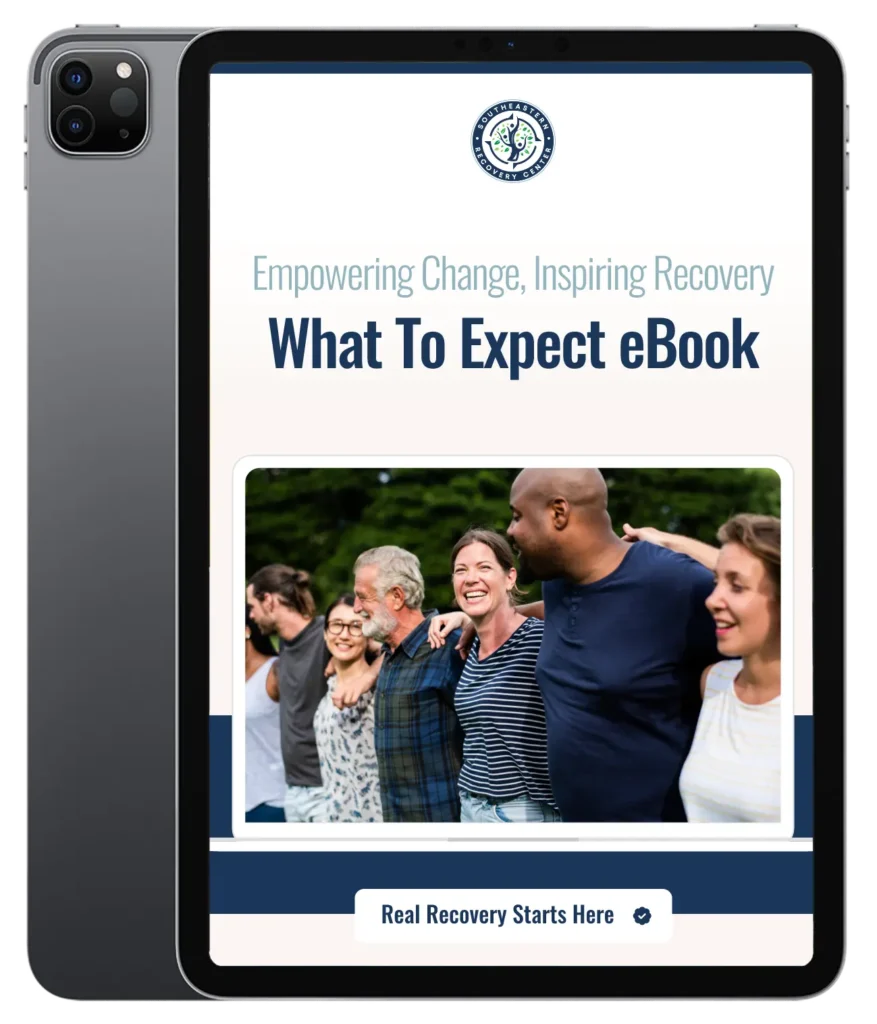
If you or a loved one are interested in learning more about what to expect when getting help for drug or alcohol addiction, please fill out our brief form and download the eBook. You can also give our admissions team a call & we would be happy to answer any questions you may have. Help is only a call away!
At Southeastern Recovery Center, we have a modern way of dealing with both dual diagnosis and addiction, leaving behind old methods. Our treatment combines proven therapy with holistic healing techniques, making sure every client gets the best care possible. Our main goal is to help you recover for the long term, so you can leave our alcohol and drug rehab program with the skills and tools to avoid needing rehab again.

If you or a loved are struggling with alcohol addiction, please reach out to our team today. Many treatment centers take a one-size-fits-all approach when treating addiction which isn't effective...At SERC, we understand that each client has their own story which led them to seeking help. We put emphasis on individualized care, tailoring treatment based on the specific needs of each client.

Reach Out For Help! ⮕

Create A Recovery Plan! ⮕

Begin The Healing Process! ⮕
![Southeast (2) [Recovered]-07 2](https://serecoverycenter.com/wp-content/uploads/2023/08/Southeast-2-Recovered-07-2.webp "Southeast (2) [Recovered]-07 2")