Depression is a growing concern across Charlotte and throughout North Carolina (and the rest of the United States). This mental health disorder produces an individual’s quality of life as they withdraw from friends and family and society become increasingly isolated to suffer alone. This is what makes depression such a debilitating disease for those who suffer from it.
At Southeastern Recovery Center in Charlotte, NC, we help identify and treat depression. Our certified program is designed to help individuals not only address the symptoms of depression, but to understand the underlying causes and develop coping mechanisms so that they can recover and enjoy improved mental health for the rest of their lives.
What is Depression? Depression is a mental disorder or mood disorder that creates a persistent feeling of sadness and disinterest, negatively impacting how an individual perceives and goes through their lives.
Why is Depression a Concern in North Carolina (and Charlotte?) Depression has been trending upwards statistically in North Carolina.
How Does Depression Start? Depression can start through changes in brain chemistry, alterations to diet, or from loneliness.
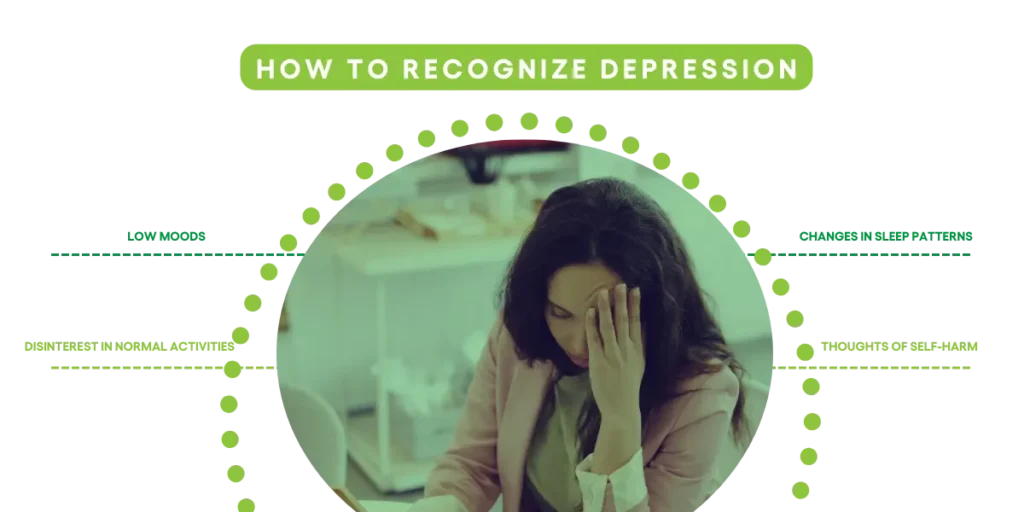
How to Recognize Depression. Signs of depression include sadness, fatigue, and thoughts of self-harm.
How long does depression last? Depression lasts anywhere from weeks to months to years.
How Is Depression Treated in North Carolina? Southeastern Recovery Center uses a mix of science and empathy to treat depression.
How Can Families Help Someone Suffering From Depression? Families can help someone suffering from depression by taking part in treatments and doing their own research into how depression rewires behavior.
How to Handle Depressive Episodes. Southeastern Recovery Center makes use of continued therapy, healthy coping strategies, and access to alumni networks to help individuals handle depressive episodes.
How to Choose the Right Depression Treatment Center in Charlotte. To find a depression treatment center in Charlotte, North Carolina, look for accreditation and experience with mental health rehab.
How Depression Treatment Works at Southeastern Recovery Center. Southeastern Recovery Center makes use of an intake assessment to create a personalized plan to help you with your depression treatment.
Why Choose Southeastern Recovery Center. Southeastern Recovery Center creates personalized treatment plans to serve patients from all over North Carolina, not just Charlotte.
Download Our Free eBook! Get a free e-book that teaches more about how treatment for depression and other mental health disorders is handled at Southeastern Recovery Center in Charlotte, North Carolina.
Frequently Asked Questions About Depression Treatment. Get answers to the most commonly asked questions about treating depression.

Depression is a mental disorder or mood disorder that creates a persistent feeling of sadness and disinterest, negatively impacting how an individual perceives and goes through their lives. Depression can cause an individual to feel less interested and enthusiastic in activities, friend and family relationships, and their career, leading to a cascade of negative effects.
Symptoms of depression can range from mild to severe. Additionally, an individual’s experience with depression can vary from day to day, one day feeling normal, one day feeling slightly lower, and then the next day feeling at the absolute lowest. Someone who hasn’t been formally diagnosed with depression might perceive these changes as normal mood swings and not the potential danger that they really are.
North Carolina’s reported depression rates have climbed steadily over the past decade and now exceed the national average, reflecting a growing burden that touches every age group in the state and the greater Charlotte area. The figures below draw on CDC surveillance data, NC state health reports, and federal population surveys to document how widespread depression has become locally and nationally. These numbers underscore why accessible, evidence-based depression treatment in Charlotte, NC is no longer a luxury but a public health necessity.
| Reported Depression Measure | Rate or Population Affected | Geographic Focus |
|---|---|---|
| NC adults who reported ever being diagnosed with depression in 2023 | 23.1%, surpassing the US national average of 22.0% [1] | North Carolina |
| NC adults diagnosed with depression in 2011 vs. 2023 | 17.5% in 2011, rising to 23.1% in 2023, a 32% relative increase over 12 years [1] | North Carolina |
| NC youth ages 12 to 17 currently living with depression | 128,000 youth [2] | North Carolina |
| NC high school students who seriously considered suicide in 2022, reflecting the severity of untreated depression among adolescents | 1 in 5 students [3] | North Carolina |
| NC adults experiencing mental illness annually (2025 NAMI estimate) | 1,804,000 adults experience mental illness each year in NC [2] | North Carolina |
| Mecklenburg County depression-related ED visits for the most recent full year | 894 depression-related emergency department visits recorded [4] | Mecklenburg County |
| US adults who reported a lifetime depression diagnosis in 2020 | 18.4%; age-standardized national prevalence was 18.5% [5] | National |
| US age group with the highest depression diagnosis rate | Adults ages 18 to 24, at 21.5%; lowest prevalence in those 65 and older at 14.2% [5] | National |
| Depression prevalence by sex among US adults | Women 24.0% vs. men 13.3% on an age-standardized basis [5] | National |
| Young adults ages 18 to 29 reporting depression symptoms during the COVID-19 pandemic (May 2021) | 36%, compared to 22% of those ages 40 to 49 and 15% of those ages 50 to 59 [6] | National |
| Youth ages 12 to 17 who experienced a major depressive episode in the past year (2024) | 15.4%, down from 18.1% in 2023, but still affecting more than 1 in 7 adolescents nationally [7] | National |
Sources: [1] NC BRFSS / Article-supplied NC DHHS depression diagnosis data (2023) – https://www.dph.ncdhhs.gov/ [2] NAMI North Carolina 2025 Data Sheet – https://www.nami.org/wp-content/uploads/2025/05/NorthCarolina-GRPA-Data-Sheet-8.5-x-11-wide.pdf [3] The Charlotte Observer / Mecklenburg County 2022 Community Health Data – https://www.charlotteobserver.com/news/local/article306015686.html [4] Mecklenburg County HNC2030 Scorecard – Clear Impact (2024) – https://embed.clearimpact.com/Scorecard/Embed/83747 [5] CDC MMWR – National, State-Level, and County-Level Prevalence Estimates of Adults with Depression (2023) – https://www.cdc.gov/mmwr/volumes/72/wr/mm7224a1.htm [6] American Psychiatric Association / CDC Household Pulse Survey (2021) – https://www.psychiatry.org/news-room/apa-blogs/the-economic-cost-of-depression-is-increasing [7] Mental Health America – The State of Mental Health in America 2025 – https://mhanational.org/the-state-of-mental-health-in-america/
The need to address mental health concerns is being increasingly recognized across the United States. This heightened awareness is being fueled by greater recognition of how many people are increasingly open about suffering from depression. Unfortunately, this also holds true in North Carolina.
When we zoom into NC in particular, the depression stats are alarming:
If you or someone you love in Charlotte, NC, is struggling with depression, it’s important to know that help is available and treatment is absolutely possible.

Unfortunately there is no one common way for depression to develop in an individual. Instead, a variety of underlying causes can lead to someone developing depression. These include things such as:
Because there are so many potential causes of depression, individuals have to be wary of their mental health on a day-to-day basis.
It can be difficult to recognize the signs of depression, especially because many of them are traits an individual will show from time to time. That said, seeing many of the symptoms all at once can be a signal that something is wrong. Here are common sides of depression:
If you notice these patterns in yourself or someone else, it’s time to seek professional mental health support. Southeastern Recovery Center offers treatment for depression in Charlotte that is personalized for each and every patient.

Depressive episodes vary in length, lasting anywhere from several weeks to months. That said, it’s important to understand the difference between a depressive episode and depression itself.
Clinical depression is a chronic disorder, meaning that it lasts for a long period of time spanning months or years. Meanwhile, depressive episodes are characterized as extended periods of a depressed mood.
At our Charlotte facility, patients experiencing a depressive episode will receive support and guidance to help with their symptoms.
At Southeastern Recovery Center, our approach to treating depression in ways both scientific and compassionate. We know that every individual’s underlying cause of depression will vary, so we want to equip our patients with the tools they need to fight this chronic condition. We do this through offering a variety of treatments:
Whether you’re coming to us from Fayetteville, Raleigh, Charlotte, Greensboro, Concord, or any other area in North Carolina, know that all patients receive the same comprehensive, personalized care to guide the path towards dealing with depression.
Despite being one of the most diagnosable and treatable mental health conditions, depression remains undertreated at every level of the care system, from adolescents in NC counties to working-age adults in Charlotte. The data below reveal that the problem is not simply a shortage of people seeking help; it is a structural gap in the quality and reach of treatment that leaves the majority of people with depression managing alone. Understanding this gap helps explain why structured, individualized programs near Mecklenburg County are essential.
| Gap in Depression Care | Depth of the Unmet Need | Geographic Focus |
|---|---|---|
| NC youth ages 12 to 17 diagnosed with depression who did not receive treatment | Nearly 2 out of 3, approximately 66%, received no treatment [1] | North Carolina |
| US adults with major depressive disorder who received any treatment in 2018 | Only 56% received treatment; the rate was essentially unchanged from 2010, showing no progress over eight years [2] | National |
| Share of people globally with depression who receive treatment | Approximately one-third (34.8%) receive treatment; roughly two-thirds remain untreated [3] | Global |
| Share of treated depression patients who received minimally adequate treatment | Only 40% of those in treatment received what researchers classify as minimally adequate care [3] | Global |
| US adults with mental illness who received treatment in 2024 | 52.1% of adults with any mental illness and 70.8% of those with serious mental illness received treatment [4] | National |
| For every $1 spent on direct depression treatment, additional indirect costs incurred | An additional $2.30 was spent on indirect costs, such as missed work and reduced productivity, for every $1 spent on treating depression directly [2] | National |
| Workplace costs as a proportion of total depression-related economic burden | Rose from 48% of all depression costs in 2010 to 61% in 2018, reflecting worsening occupational impact from undertreated depression [2] | National |
| Young adults ages 18 to 34 as a share of all US adults with depression | Nearly half (48%) of all adults with depression in 2018 were ages 18 to 34, up from 35% in 2010, yet treatment rates in this group remain low [2] | National |
| NC adults seeking depression care who face out-of-network referrals for mental health vs. primary care | NC residents are more than 7x more likely to be referred out-of-network for mental health care than for primary care, creating cost and access barriers unique to depression treatment [5] | North Carolina |
| Depression prevalence in those with less than a high school education vs. college graduates | 21.2% vs. 15.4%, confirming that socioeconomic disadvantage concentrates depression risk in populations with the least treatment access [6] | National |
Sources: [1] Bright Path Behavioral Health – Teen Mental Health Statistics North Carolina – https://www.brightpathbh.com/teen-mental-health-statistics-north-carolina/ [2] American Psychiatric Association – The Economic Cost of Depression Is Increasing (2022) – https://www.psychiatry.org/news-room/apa-blogs/the-economic-cost-of-depression-is-increasing [3] Lim et al. – Estimating the Global Treatment Rates for Depression: A Systematic Review and Meta-Analysis – ScienceDirect – https://www.sciencedirect.com/science/article/abs/pii/S0165032721009976 [4] NAMI – Mental Health By the Numbers (2024) – https://www.nami.org/mental-health-by-the-numbers/ [5] NAMI North Carolina State Fact Sheet (2021) – https://www.nami.org/wp-content/uploads/2023/07/NorthCarolinaStateFactSheet.pdf [6] CDC MMWR – National, State-Level, and County-Level Prevalence Estimates of Adults with Depression (2023) – https://www.cdc.gov/mmwr/volumes/72/wr/mm7224a1.htm
An individual’s depression can impact the entire family. At the same time, familial support can play a significant role in helping someone cope with their depressive episodes.
Families in Charlotte and throughout North Carolina can help by:
At Southeastern Recovery Center, we provide family programs that help loved ones rebuild trust, improve communication, and create a shared understanding of living with depression.
Depression itself lasts for months of years, as it is a chronic condition. That said, during this time an individual will experience depressive episodes where their mood is particularly bad for days, weeks, or months.
The difference between depression and a depressive episode is that depression is a chronic condition that lasts for months or weeks, while a depressive episode is a period of at least two weeks where an individual experiences a lower mood and disinterest.
Yes you can treat depression at home, but such methods are not likely to address the underlying root cause of your depression. This is why it’s advisable to seek out help from medical professionals instead.
No, there isn’t only one type of depression. Other types of depression include major depression, persistent depressive disorder, dysthymia, and bipolar disorder, among others.
Depression and substance use disorder co-occur at rates far higher than chance. According to SAMHSA’s 2024 National Survey on Drug Use and Health, 34.5% of the 61.5 million U.S. adults with any mental illness also had a substance use disorder that same year. In North Carolina, where depression rates exceed the national average, the overlap is especially pronounced.
Three overlapping pathways explain why:
Because the roots are intertwined, Southeastern Recovery Center assesses both conditions from the first clinical contact rather than treating them as separate problems.
Yes. Alcohol and many other substances can directly cause a depressive disorder, not simply trigger one that was already there. This is recognized in the DSM-5 as substance-induced depressive disorder, a clinically distinct diagnosis that requires its own treatment approach.
The mechanism is straightforward. Alcohol is a central nervous system depressant. Chronic use depletes serotonin, dopamine, and norepinephrine, the three neurotransmitters most directly linked to mood regulation. A 2023 meta-analysis in the American Journal of Psychiatry found that alcohol and drug dependence significantly increase the odds of a major depressive episode independent of any pre-existing mood disorder. Similar effects are documented for:
If a substance is causing your depression, stopping the substance is a necessary step in recovery, but it is rarely sufficient on its own. The brain needs time and clinical support to recalibrate.
The honest clinical answer is that it varies, and the direction matters for treatment planning. Research shows the relationship is bidirectional: depression often precedes substance use, but addiction can also generate depression in someone who had no prior mood disorder.
What the evidence suggests:
Clinically, the direction matters because it shapes the treatment priority, medication decisions, and therapy focus. At Southeastern Recovery Center, the intake assessment is designed specifically to untangle this sequence so your treatment plan targets the actual clinical picture rather than a generic protocol.
For most people in recovery, antidepressants are not only safe but clinically appropriate. The concern about medication in recovery typically centers on habit-forming substances, and antidepressants do not fall into that category.
The key distinctions:
What research does show is that untreated depression significantly raises the risk of relapse. Withholding an appropriate, non-addictive medication because of a vague concern about “being on something” can do more harm than help. Southeastern Recovery Center coordinates antidepressant management with your overall recovery plan so both conditions are addressed together under physician oversight.
This is one of the most clinically important questions in dual-diagnosis care, and it is also one of the hardest to answer quickly. Withdrawal from alcohol, opioids, stimulants, and benzodiazepines all produce symptoms that closely mimic major depression, including low mood, fatigue, sleep disruption, loss of motivation, and emotional numbness.
Withdrawal timelines by substance:
The clinical rule of thumb is that withdrawal-related depression tends to improve steadily with continued abstinence. Depression that persists beyond the expected withdrawal window, or that pre-dates substance use, is more likely to be an independent mood disorder requiring its own treatment.
Southeastern Recovery Center uses serial clinical assessments during and after detox to track the trajectory of your symptoms and determine whether a depressive disorder exists independent of withdrawal.
Not all depression is the same, and the type present alongside addiction has direct implications for how treatment is structured.
The three forms most commonly seen in dual-diagnosis patients:
Some individuals carry more than one of these simultaneously. Southeastern Recovery Center’s clinical intake distinguishes between these presentations because the treatment approach, including therapy modality, medication selection, and care intensity, differs meaningfully depending on which type is present.
Treating one condition while leaving the other untreated is one of the most reliable predictors of relapse and treatment failure in dual-diagnosis care. The two conditions reinforce each other at a neurological level, and each one actively undermines the treatment of the other when addressed in isolation.
What happens when only addiction is treated:
What happens when only depression is treated:
SAMHSA’s research is direct on this point: only 14.5% of the 21.2 million U.S. adults with co-occurring disorders receive integrated treatment. That gap is where most treatment failures happen. Southeastern Recovery Center treats both conditions together from the first appointment, not sequentially.
Yes. Unmanaged depression is consistently identified in the clinical literature as one of the most significant relapse triggers in substance use recovery. The relationship is direct: low mood reduces distress tolerance, impairs decision-making, weakens motivation for recovery behaviors, and reactivates the learned association between emotional pain and substance use.
How Southeastern Recovery Center addresses relapse risk tied to depression:
Recovery from both depression and addiction is a long-term process. The goal at Southeastern Recovery Center is not just sobriety during treatment, but the clinical and practical skills to stay well once you leave.
Getting started is straightforward, and you do not need a prior diagnosis or a referral. You contact Southeastern Recovery Center by phone or through the online form, and the intake team will take it from there.
What to expect:
If you are not sure whether what you are experiencing qualifies, call anyway. The intake team can help you figure out what is happening and whether Southeastern Recovery Center is the right fit.
Though we help our patients get the worst of the depression and depressive episodes, depression is a chronic condition. This means an individual is to be prepared to deal with low points throughout its duration.
This includes helping patients know how to handle future depressive episodes through the use of techniques such as:
It’s important to remember that there is no shame in trying several methods or discovering that something that helped with your depression one time doesn’t work as well the next. Handling depressive episodes is an ongoing, involving process.
Untreated depression does not stay contained to low moods; it erodes physical health, dismantles careers, drives financial hardship, and in its most severe form, ends lives. The evidence below documents the clinical, economic, and social costs that accumulate when depression goes unaddressed, providing North Carolinians in Charlotte and across Mecklenburg County with a clear picture of what is at stake when treatment is delayed.
| Long-Term Consequence of Untreated Depression | Clinical or Economic Evidence | Who Faces This Risk |
|---|---|---|
| Lifetime suicide risk for patients with untreated depressive disorder | Nearly 20% will attempt suicide during their lifetime [1] | People with untreated depression |
| Share of all US suicides attributable to depression | Depression is the cause of more than two-thirds of the approximately 30,000 reported US suicides each year [1] | US general population |
| Share of older adult suicides attributed specifically to untreated or misdiagnosed depression | Up to two-thirds of older adult suicides are linked to untreated or misdiagnosed depression [1] | US adults 65 and older |
| All-cause mortality risk for people with depression compared to those without | All-cause mortality is doubled in people with depression; relative risk of 2.10 (95% CI: 1.87 to 2.35) across 268 cohort studies with more than 10 million participants [2] | Adults with a depression diagnosis |
| Increased cardiovascular disease mortality risk associated with depression | Depression is linked to a 32% higher risk of dying from any cardiovascular disease (RR 1.32); also associated with 29% higher ischemic heart disease mortality and 27% higher cerebrovascular disease mortality [2] | Adults with depression |
| Economic burden of major depressive disorder in the US in 2018 | $236 billion, a 35% increase from 2010 and the largest share driven by workplace costs including absenteeism and reduced productivity [3] | US employers, healthcare system, families |
| Projected annual economic burden of major depressive disorder in the US by 2030 | Projected to exceed $540 billion per year, with nearly 3,000 depression-related deaths annually factored in [4] | US economy and healthcare system |
| Global working days lost annually due to depression | 12 billion working days lost each year worldwide, costing $1 trillion in lost productivity [5] | Global workforce |
| Return on investment for treating depression through psychotherapy | Every dollar invested in psychotherapeutic interventions saves $2.50 in the cost of suicides and associated care [1] | Healthcare systems and families |
| Depression as a driver of substance use disorder when untreated | Many individuals with depression self-medicate with alcohol or drugs; untreated depression is a known risk factor for developing a co-occurring substance use disorder [6] | Adults with untreated depression |
| Prevalence of depression among patients with coronary artery disease | 20% to 40% of patients with coronary artery disease have comorbid depression, creating a cycle where each condition worsens the other [7] | Adults with cardiovascular conditions |
Sources: [1] Depression and Bipolar Support Alliance – Suicide Statistics – https://www.dbsalliance.org/crisis/suicide-prevention-information/suicide-statistics/ [2] Perez-Wehbe et al. (2025) – All-Cause and Cause-Specific Mortality in People With Depression: Systematic Review and Meta-Analysis – PMC – https://pmc.ncbi.nlm.nih.gov/articles/PMC12434377/ [3] American Psychiatric Association – The Economic Cost of Depression Is Increasing (2022) – https://www.psychiatry.org/news-room/apa-blogs/the-economic-cost-of-depression-is-increasing [4] International Journal of Population Data Science – Projecting the Economic and Mortality Burden of Depression in the US – https://ijpds.org/article/view/3046 [5] World Health Organization – Mental Health at Work Fact Sheet – https://www.who.int/news-room/fact-sheets/detail/mental-health-at-work [6] Southeastern Recovery Center – Depression and Dual Diagnosis Treatment – https://serecoverycenter.com/dual-diagnosis/ [7] Cardiovascular Disease and Depression Narrative Review – PMC – https://pmc.ncbi.nlm.nih.gov/articles/PMC10710900/
Finding the right treatment center in Charlotte, NC for depression can feel overwhelming. Here are key factors to look for:
At Southeastern Recovery Center, we meet all of these criteria and more. Our focus is on holistic treatment that addresses the underlying factors that lead to needing treatment for depression in the first place.
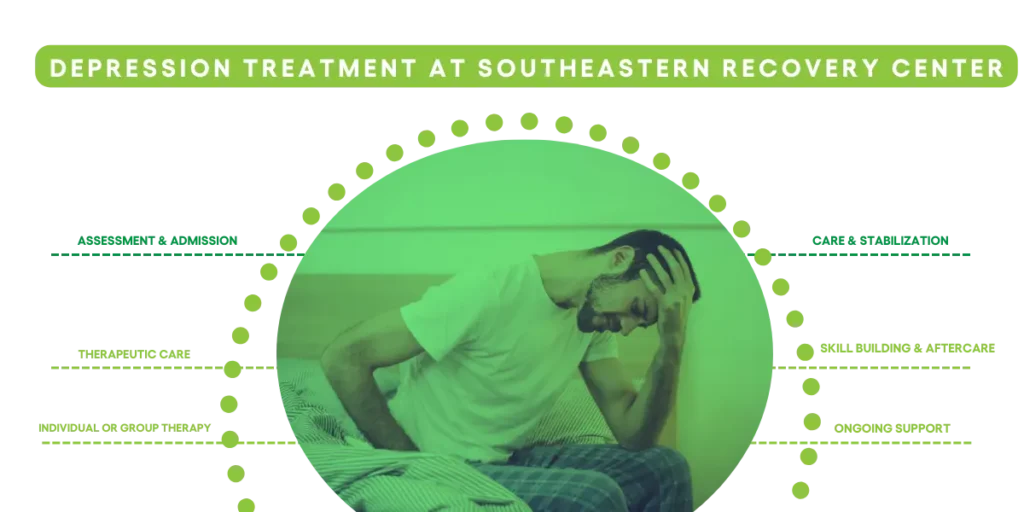
From your first phone call to the day you graduate from treatment, our team provides step-by-step support.
Our mission is simple: to provide the highest level of mental health rehab possible so that every client leaves stronger, healthier, and ready to thrive.

At Southeastern Recovery Center, we believe depression treatment isn’t a one-off thing, it’s arming an individual with tools they can use for the rest of their life. Our Charlotte-based facility provides a safe, welcoming space where clients can focus fully on long-term treatment.
We serve individuals from Charlotte, Concord, Gastonia, Huntersville, Raleigh, Greensboro, Asheville, and throughout North Carolina who are seeking trusted, compassionate care for depression and depressive episodes.
Our experienced team, state-of-the-art facility, and commitment to personalized care make us a leading choice for North Carolinians seeking to alleviate depression.
If you or a loved one are interested in learning more about what to expect when getting mental health treatment, please fill out our brief form and download the eBook. You can also give our admissions team a call & we would be happy to answer any questions you may have. Help is only a call away!
If you or a loved are struggling with depression, please reach out to our team today. Many treatment centers take a one-size-fits-all approach when treating mental health disorders which isn't effective...At SERC, we understand that each client has their own story which led them to seeking help. We put emphasis on individualized care, tailoring treatment based on the specific needs of each client.

Reach Out For Help! ⮕

Create A Recovery Plan! ⮕

Begin The Healing Process! ⮕
![Southeast (2) [Recovered]-07 2](https://serecoverycenter.com/wp-content/uploads/2023/08/Southeast-2-Recovered-07-2.webp "Southeast (2) [Recovered]-07 2")