What Is a High-Functioning Addict?

A high-functioning addict is someone who meets the criteria for a substance use disorder while still appearing to manage work, relationships, and daily responsibilities. At Southeastern Recovery Center, we often see individuals who hold jobs, care for families, and maintain social lives while quietly struggling with addiction. Because outward signs can be subtle, high functioning addiction often goes unnoticed or unaddressed until serious consequences develop.

Table of Contents

Full Color Logo No Text

What does “high-functioning addict” mean?

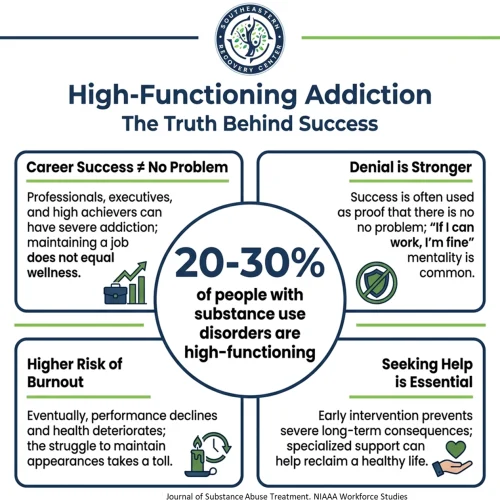
A high-functioning addict is a person whose substance use has become unhealthy or compulsive, but who continues to perform well in many areas of life. This may include:

  • Consistent employment or academic success
  • Stable housing and relationships
  • Meeting responsibilities while using substances regularly


Functioning does not mean healthy, and it does not mean addiction is not present.

high-functioning addiction truth behind success infographic

Can someone be addicted and still function well?

Yes. Many people with substance use disorders function at a high level for years.

High-functioning addiction is common because:

  • Substance use may temporarily enhance energy, focus, or confidence
  • People develop routines that hide their use
  • Friends and coworkers may not recognize warning signs

At Southeastern Recovery Center, we emphasize that functioning does not protect someone from the long term effects of addiction.

What are common signs of a high-functioning addict?

Signs are often more subtle than in advanced addiction.

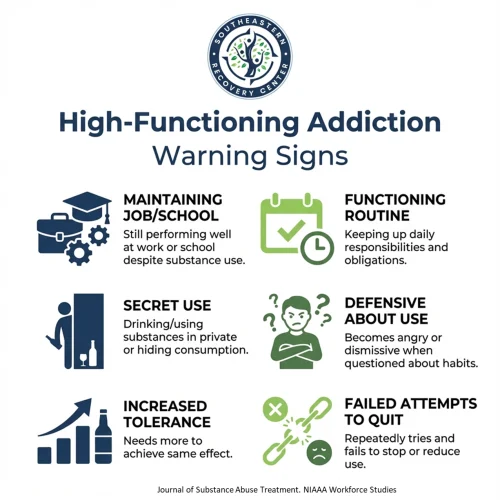
Common signs include:

  • Using substances to cope with stress or emotions
  • Increasing tolerance over time
  • Drinking or using in private or at specific times
  • Rationalizing or minimizing substance use
  • Becoming defensive when concerns are raised

These patterns often progress gradually.

high-functioning addiction warning signs infographic

Why is high-functioning addiction dangerous?

High-functioning addiction can be especially risky because it delays help.

Potential risks include:

  • Worsening physical and mental health
  • Sudden loss of control or escalation
  • Increased risk of overdose
  • Severe consequences appearing without warning

The absence of obvious problems can create a false sense of safety.

Is high-functioning addiction a real diagnosis?

No. A high-functioning addiction is not a clinical diagnosis.

It is a descriptive term used to explain a pattern of substance use that meets criteria for addiction even though outward functioning appears intact.

Clinically, this is still considered a substance use disorder.

Can a high-functioning addict benefit from treatment?

Absolutely. Early treatment can prevent more serious consequences.

Treatment can help:

  • Address underlying stress or trauma
  • Develop healthier coping skills
  • Prevent progression to more severe addiction
  • Improve overall quality of life

At Southeastern Recovery Center, treatment is tailored to meet people where they are.

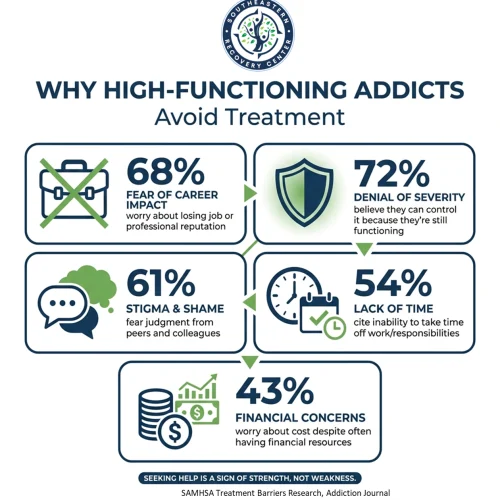
why high-functioning addicts avoid treatment infographic

How does Southeastern Recovery Center treat high-functioning addiction?

At Southeastern Recovery Center, care is individualized and discreet.

Treatment may include:

  • Comprehensive assessment
  • Individual and group therapy
  • Flexible outpatient or structured treatment options
  • Relapse prevention and long-term planning

Many high functioning individuals benefit from treatment that allows them to continue working while receiving support.

When should someone seek help?

It may be time to seek support if:

  • Substance use feels necessary to function
  • Attempts to cut back have failed
  • Tolerance continues to increase
  • Anxiety, guilt, or secrecy surrounds substance use

Seeking help early can protect health, relationships, and long term stability.

A supportive message from Southeastern Recovery Center

High-functioning addiction often hides in plain sight, but that does not make it less serious. Addiction does not need to reach a crisis to deserve care. At Southeastern Recovery Center, we believe that early support can make recovery smoother and more sustainable. Help is available, and change is possible at any stage.