What Are the 3 P’s of Recovery?

The 3 P’s of recovery are patience, persistence, and purpose. At Southeastern Recovery Center, these three principles are often used to explain what supports long-term recovery beyond the early stages of treatment. Recovery is not a single event but an ongoing process, and the 3 P’s help individuals stay grounded, motivated, and focused as they build a healthier life.

Table of Contents

Full Color Logo No Text

What do the 3 P’s of recovery mean?

The 3 P’s represent core attitudes that support sustained recovery over time.

They help people:

  • Stay engaged during difficult moments
  • Maintain progress after treatment
  • Build resilience and self understanding

Each of the 3 P’s plays an important role at every stage of recovery.

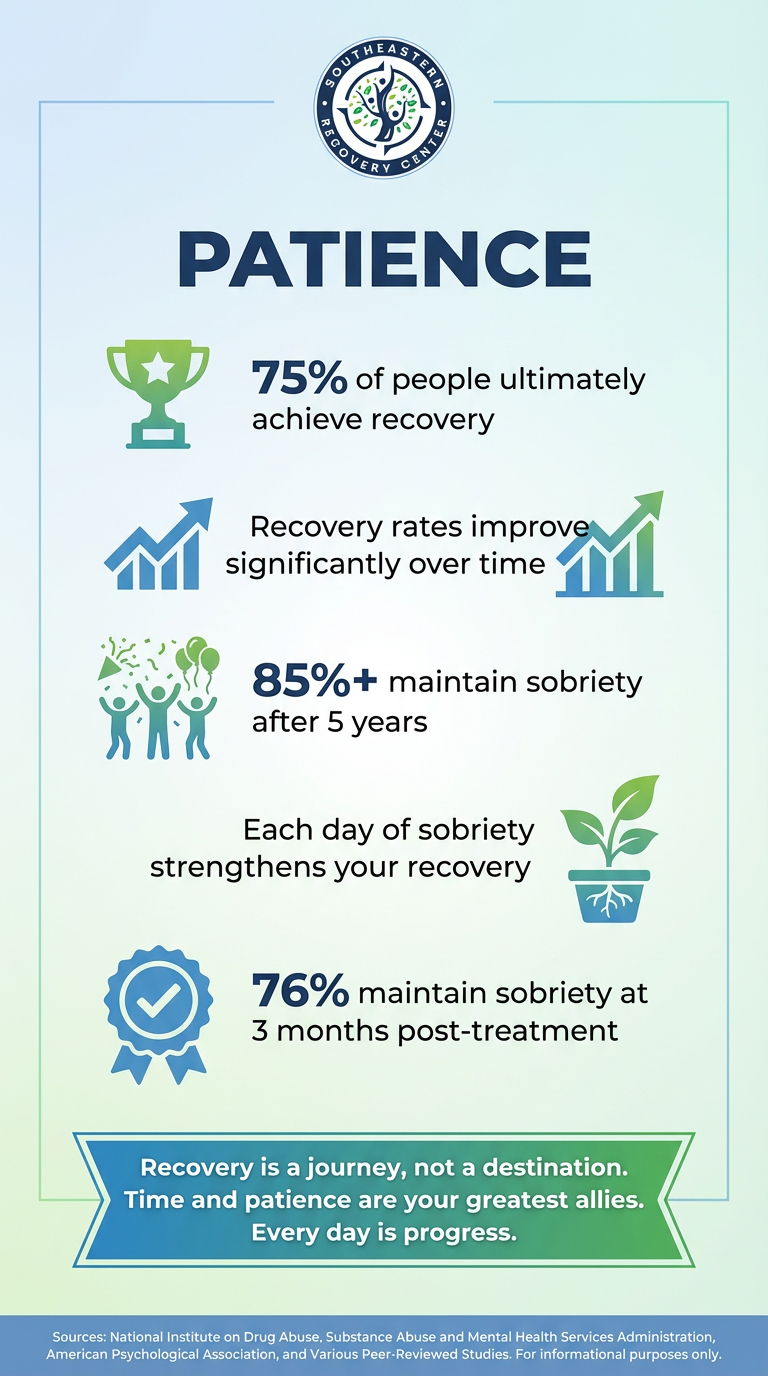
What does patience mean in recovery?

Patience in recovery means allowing time for healing.

This includes:

  • Giving the body time to recover from substance use
  • Allowing emotions to stabilize
  • Accepting that change happens gradually

At Southeastern Recovery Center, we remind clients that recovery rarely happens overnight and that patience reduces frustration and burnout.

a3 P's in recovery - Patience infographic

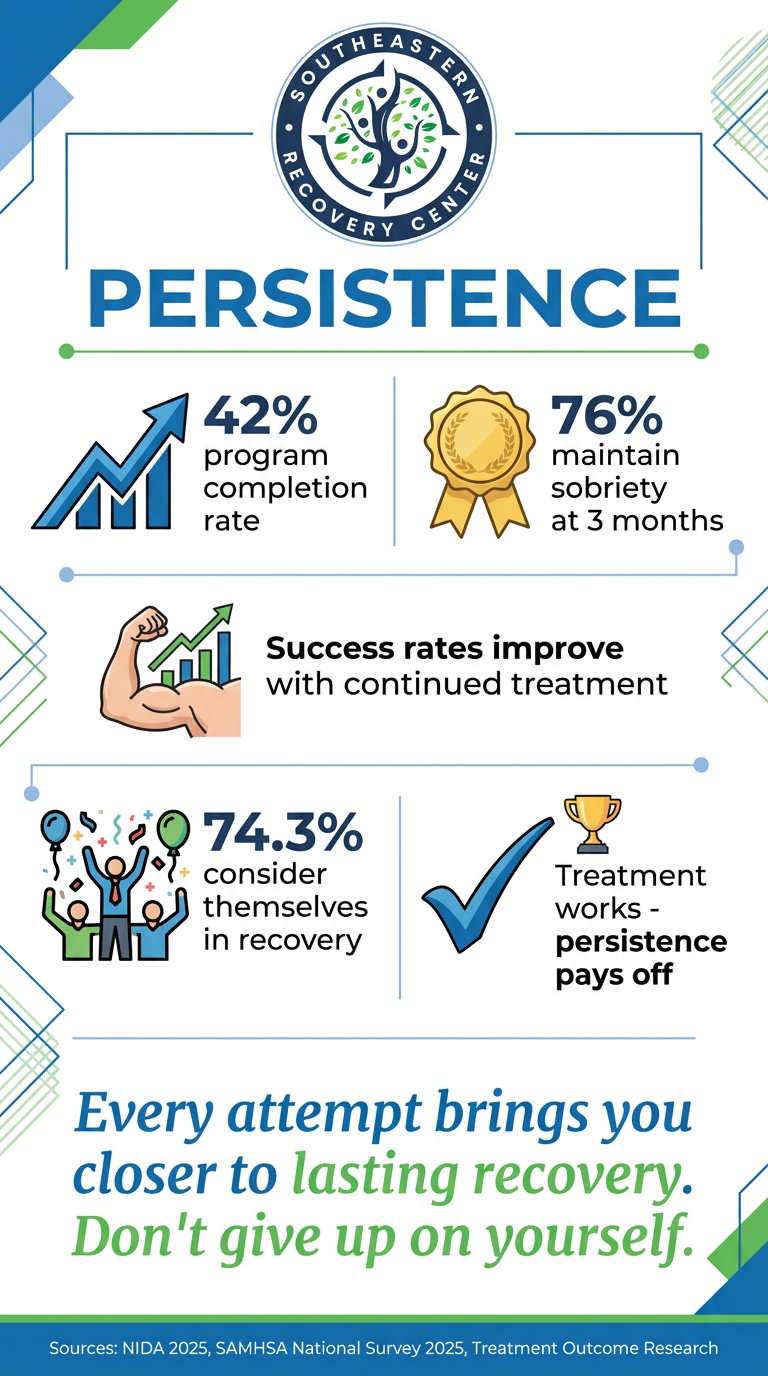
What does persistence mean in recovery?

Persistence is the commitment to keep going, even when recovery feels challenging.

Persistence may look like:

  • Continuing treatment or therapy
  • Returning to support after setbacks
  • Practicing coping skills consistently

Setbacks do not erase progress. Persistence helps people stay connected to recovery even during difficult periods.

3 P's in recovery - Persistence infographic

What does purpose mean in recovery?

Purpose gives recovery direction and meaning.

Purpose can include:

  • Rebuilding relationships
  • Pursuing meaningful work or education
  • Helping others in recovery
  • Creating a life that feels worth protecting

At Southeastern Recovery Center, we help individuals reconnect with values and goals that support long-term sobriety.

3 P's in recovery - Purpose infographic

Are the 3 P’s used in treatment?

The 3 P’s are not a clinical diagnosis or formal treatment model, but they are commonly used in recovery education and support.

They help simplify recovery concepts and provide practical guidance that people can apply in daily life.

How do the 3 P’s support long term recovery?

Together, the 3 P’s help individuals:

  • Manage expectations
  • Stay engaged after treatment
  • Build confidence over time
  • Reduce the risk of relapse

They work alongside therapy, medical care, and community support.

Can someone develop the 3 P’s during treatment?

Yes. The 3 P’s are learned and strengthened through support.

Treatment helps by:

  • Teaching coping and emotional regulation skills
  • Encouraging consistency and accountability
  • Helping people identify personal values and goals

At Southeastern Recovery Center, these principles are reinforced throughout treatment and aftercare planning.

When are the 3 P’s most important?

The 3 P’s are especially helpful:

  • Early in recovery
  • During transitions after treatment
  • When facing stress or life changes
  • After setbacks or challenges

They provide stability when motivation feels low.

A message of encouragement from Southeastern Recovery Center

Recovery is not about perfection. It is about showing up with patience, persistence, and purpose. At Southeastern Recovery Center, we believe these principles help people build a sustainable recovery that grows stronger over time. With support and commitment, lasting change is possible.