In the quest to treat disorders such as mental health disorders like anxiety, individuals sometimes have to resort to relying on medications such as Valium and Ativan. However, while both drugs can be used to treat anxiety (among other concerns) they are not the same, and should not be treated as such. This is especially important because individuals might feel that they can substitute Valium for Ativan to treat anxiety, which can be extremely dangerous.
In this post, we’re going to cover the differences between Valium and Ativan to explain the different pros, impacts, and potential downsides to each drug.
Article Preview:
What is the Difference Between Valium and Ativan? Valium and Ativan are both benzodiazepines, but they have different uses and potency levels.
Valium Uses and Dosage. Valium is used to treat anxiety, seizures, and muscle spasms.
How Long Does It Take Valium to Kick in? Valium kicks in within 30 to 60 minutes.
How Long Does Valium Last? Valium lasts a little over 12 hours.
Valium Side Effects. Side effects of Valium include headaches, drowsiness, and depression.
Ativan Uses and Dosage. Ativan is used to treat anxiety disorders, insomnia, and is occasionally used to alleviate symptoms related to cancer treatments.
How Long Does It Take Ativan to Kick in? Ativan kicks in within 30 minutes.
How Long Does Ativan Last? Ativan lasts for around 6 to 8 hours.
Ativan Side Effects. Ativan side effects include drowsiness, confusion, and difficulty breathing.
Can I Substitute Valium for Ativan (or Vice-versa?) No, you should not substitute Valium for Ativan.
Are Valium and Ativan Addictive? Valium and Ativan both have high addiction potential due to being benzodiazepines.
FAQs About What is the Difference Between Valium and Ativan. Answers to common questions about the differences between Valium and Ativan.
Though Valium (also known as diazepam) and Ativan (also known as lorazepam) are both benzodiazepines that are used to treat anxiety, the two drugs differ in potency, recommended use, and chemical composition, making it important for individuals to understand the difference between the two pharmaceutical drugs.
It’s important to note that because Valium and Ativan are both benzodiazepines, they both have high potential for an individual to develop dependence or addiction. According to a 2019 study, 17.2% of benzodiazepine total users across the United States reported misuse. Additionally, individuals aged between 18 to 25 had the highest rates of misuse (5.2%).
If you or a loved one are struggling with benzodiazepine addiction, it’s important to note that we have facilities such as Southeastern Recovery Center can provide personalized support.
Below we’ll explore some of the differences between the two drugs.
Valium Uses and Dosage
Valium is a prescription benzodiazepine that has been prescribed to treat anxiety, seizures, and muscle spasms. Valium is the most common brand name for the medication otherwise known as diazepam.
The recommended dosage for Valium varies depending on age and condition being treated. That said, Valium is generally recommended to only be taken for a short duration of time, up to around four weeks. Additionally, Valium is so potentially addictive that medical professionals may recommend you gradually reduce your dosage over time in order to prevent withdrawal symptoms.
How Long Does It Take Valium to Kick in?
Valium is known to generally work within 30 to 60 minutes if taken orally. If Valium is taken as an IV, its effects may be felt within 15 minutes. But age, metabolism, and body weight can all have an impact and how quickly an individual feels the effects of Valium.
How Long Does Valium Last?
Valium is known to stay in your system for as long as 10 to 21 days. That said, the actual effects of taking Valium are known to last a little over 12 hours.
Valium Side Effects
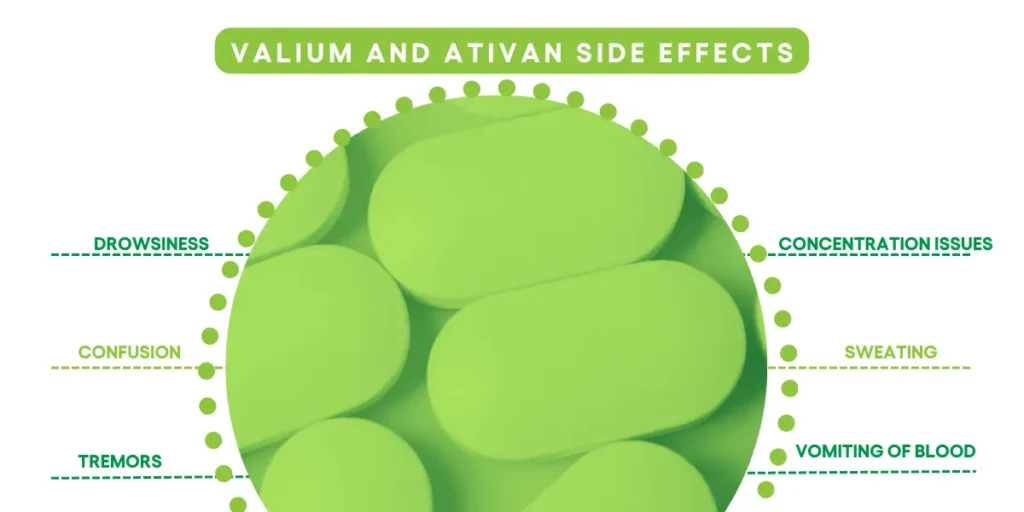
Common side effects of Valium / diazepam include:
- Headaches
- Drowsiness
- Confusion
- Suicide ideation
- Depression
- Tremors
- Difficulties with coordination
- Allergic reactions
Ativan Uses and Dosage
Ativan (a.k.a. lorazepam) is a benzodiazepine that is often used to treat anxiety disorders, insomnia, and occasionally symptoms associated with cancer treatments, such as nausea and vomiting. Additionally, Ativan is sometimes used to help mitigate symptoms of alcohol withdrawal.
The recommended dosage of Ativan will depend on the age and condition being treated by the pharmaceutical drug. Just like Valium, Ativan is generally recommended to be taken for as short a duration as possible, usually up to four weeks. Also like Valium, it’s possible you may be recommended to gradually reduce your dosage at the end of your prescribed. In order to prevent you suffering withdrawal symptoms due to this powerful benzodiazepine.
How Long Does It Take Ativan to Kick in?
Ativan generally begins to work within 30 minutes if taken orally or as a liquid. If taken as an IV, Ativan’s effects may be felt within 1 to 3 minutes. Age, liver and kidney health, and stomach contents are known to affect how quickly Ativan works.
How Long Does Ativan Last?
The effects of Ativan last for around 6 to 8 hours. Ativan also stays in your system for around 4 to 5 days.
Ativan Side Effects
Ativan side effects include
- Drowsiness
- Sleepiness
- Confusion
- Dry mouth
- Nausea or vomiting
- Difficulty breathing
- Sweating
- Concentration issues
- Vomiting of blood
Can I Substitute Valium for Ativan (or Vice-versa?)
No, you should not substitute Valium for Ativan, at least not without consulting your doctor first. Valium and Ativan (or Diazepam and Lorazepam, respectively) have a different chemical composition, which means that they react differently with other drugs you may be taking. Additionally, they serve different functions in certain situations. For example, Ativan is occasionally used during cancer treatments, while Valium has no such common usage.
Additionally, Valium and Ativan are both benzodiazepines, they have different levels of potency. This study found that 10mg of diazepam (Valium) is roughly equivalent to 2-2.5mg of lorazepam (Ativan), but that was only for the purposes of using these drugs as a sedative.
Are Valium and Ativan Addictive?
While we’ve covered the differences between Valium and Ativan, there is one critical characteristic that they both share: addictiveness.
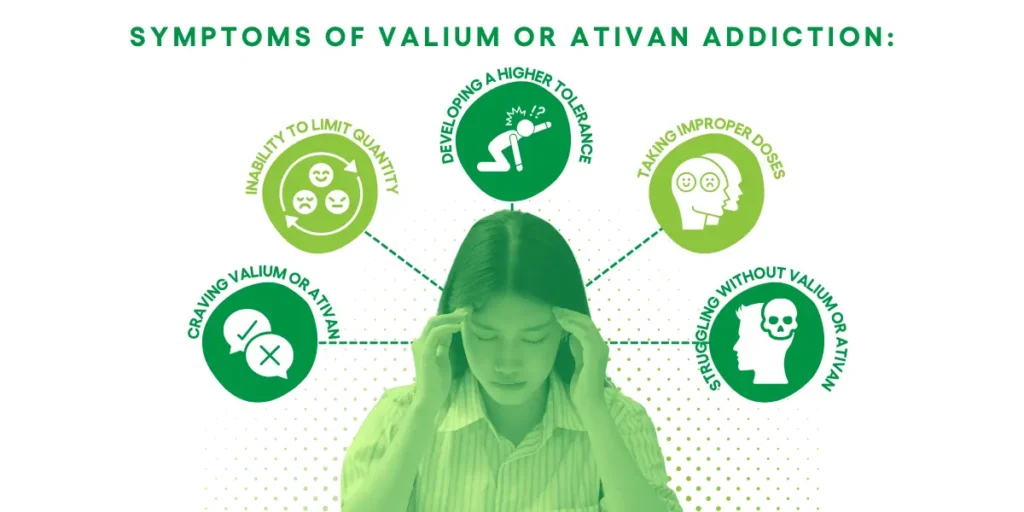
Valium and Ativan are both benzodiazepines, which means that it’s incredibly important for an individual to take them only as directed, and only for as long as directed. Otherwise, they risk developing symptoms of the benzodiazepine addiction, including:
- Drowsiness
- Blurry vision
- Erratic moods
- Inability to stop taking benzodiazepines
- Requiring higher doses of Valium or Ativan to feel same effects
- Combining benzodiazepines with other drugs
What’s worse is that an individual who has developed benzodiazepine addiction may struggle with withdrawal symptoms if they try to stop their usage, including:
- Nausea
- Tremors
- Anxiety
- Headaches
- Heart palpitations
- Seizures
At our location in Charlotte, North Carolina, we see plenty of such cases. It’s hardly surprising with studies finding that in North Carolina, 6% of opioid users concurrently used opioids and benzodiazepines.
This is an alarming stat when you consider that 30% of opioid-related deaths also involve benzodiazepines.
Any individual who abuses the prescription of Valium or Ativan can find themselves trapped in a loop due to benzodiazepine withdrawal syndrome. If you or a loved one is currently experiencing this, it is important to note that resources, such as Southeastern Recovery Center, can help put you on the path to recovery.
FAQs About What is the Difference Between Valium and Ativan?
Are valium and Ativan the same?
though Valium and Ativan are both benzodiazepines, they are not the same and have different uses and strength levels
How long does Valium last?
Valiums last for a little over 12 hours
How long does Ativan last?
Ativan lasts for around 6 to 8 hours
Are Valium and Ativan opioids?
Valium and Ativan are not opioids, but people misusing opioids often combine them with benzodiazepines like Valium and Ativan, which can lead to overdose and death.
Are Valium and Ativan addictive?
Valium and Ativan both have high potential to be addictive due to being benzodiazepines, which is why some medical professionals may advise you to taper your dosage after their recommended period of usage
Sources:
Maust, Donovan T., et al. “Benzodiazepine Use and Misuse Among Adults in the United States.” Psychiatric Services, vol. 70, no. 2, 1 Feb. 2019, pp. 97–106, https://pubmed.ncbi.nlm.nih.gov/30554562/. Accessed 20 Jan. 2026.
Dundee, J. W., et al. “Comparison of the Actions of Diazepam and Lorazepam.” British Journal of Anaesthesia, vol. 51, no. 5, May 1979, pp. 439–446, https://pubmed.ncbi.nlm.nih.gov/36117/. Accessed 20 Jan. 2026.
Hung, Anna, et al. “Risk Factors and Outcomes of Opioid Users with and Without Concurrent Benzodiazepine Use in the North Carolina Medicaid Population.” Journal of Managed Care & Specialty Pharmacy, vol. 26, no. 2, 2020, pp. 169–175, PMC10077839, https://pmc.ncbi.nlm.nih.gov/articles/PMC10077839/. Accessed 20 Jan. 2026.
Martin, Elizabeth, et al. “Concurrent Use of Opioids and Benzodiazepines: Evaluation of Prescription Drug Monitoring by a United States Laboratory.” Journal Name, PMC5680991, https://pmc.ncbi.nlm.nih.gov/articles/PMC5680991/. Accessed 20 Jan. 2026.