At Southeastern Recovery Center, it’s important for us to spread awareness for the fact that addiction to alcohol is not as simple as addressing what some call a “bad habit.” Alcohol addiction, like addiction to substances such as fentanyl, opioids, and Kratom, causes changes in the body, both physically and mentally. This means that individuals struggling with addiction often suffer withdrawal symptoms when they develop a dependence on alcohol or drugs.
In this post, we’re going to provide a detailed breakdown of what defeating alcohol addiction looks like for individuals, on a body composition level. We’ll cover both the alcohol withdrawal timeline (an individual’s lowest point when trying to quit alcohol intake) as well as touching on the alcohol addiction recovery timeline. If you or a loved one are wondering about the detoxing from alcohol timeline, this post is one worth saving.
Article Preview:
Alcohol Withdrawal Timeline. Alcohol withdrawal tends to last up to 72 hours after an individual’s last drink.
Why Do People Experience Alcohol Withdrawal Symptoms? People suffer from alcohol withdrawal symptoms because their body gets used to operating with alcohol present in their system.
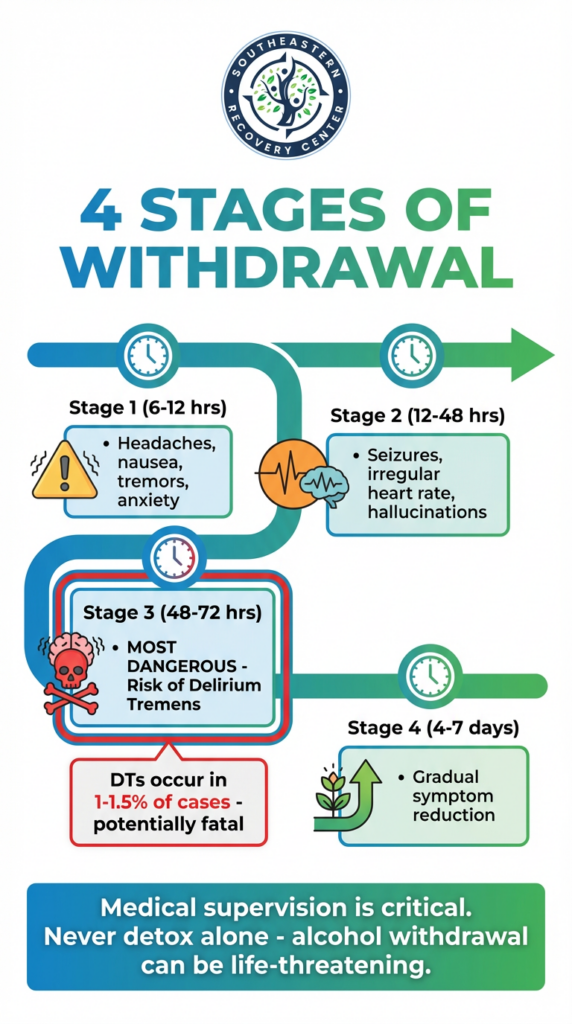
Alcohol Withdrawal Timeline: Stage 1. The first stage of alcohol withdrawal occurs around 6 to 12 hours after an individual’s last drink.
Alcohol Withdrawal Timeline: Stage 2. The second stage of alcohol withdrawal occurs 12 to 48 hours after individuals last drink.
Alcohol Withdrawal Timeline: Stage 3. The third stage of alcohol withdrawal occurs between 48 to 72 hours after an individual’s last drink, and is regarded as the most dangerous stage.
Alcohol Withdrawal Timeline: Stage 4. The fourth stage of alcohol withdrawal occurs after those initial 72 hours.
Which Stage of Alcohol Withdrawal is the Most Dangerous? The third stage of alcohol withdrawal is the most dangerous due to the chance of developing delirium tremens.
After Alcohol Withdrawal: Alcohol Addiction Recovery Timeline. Full recovery of bodily function from alcohol addiction can take weeks to months to years.
Alcohol Sobriety Timeline: Restoring the Body. Learn the timeline of how alcohol sobriety gradually restores bodily function.
Frequently Asked Questions about Alcohol Withdrawal and Recovery Timeline: Behind-the-Scenes Look at Your Body’s Symptoms and Transformation. Learn frequently asked questions about addiction as it relates to alcohol withdrawal and recovery.
Alcohol Withdrawal Timeline
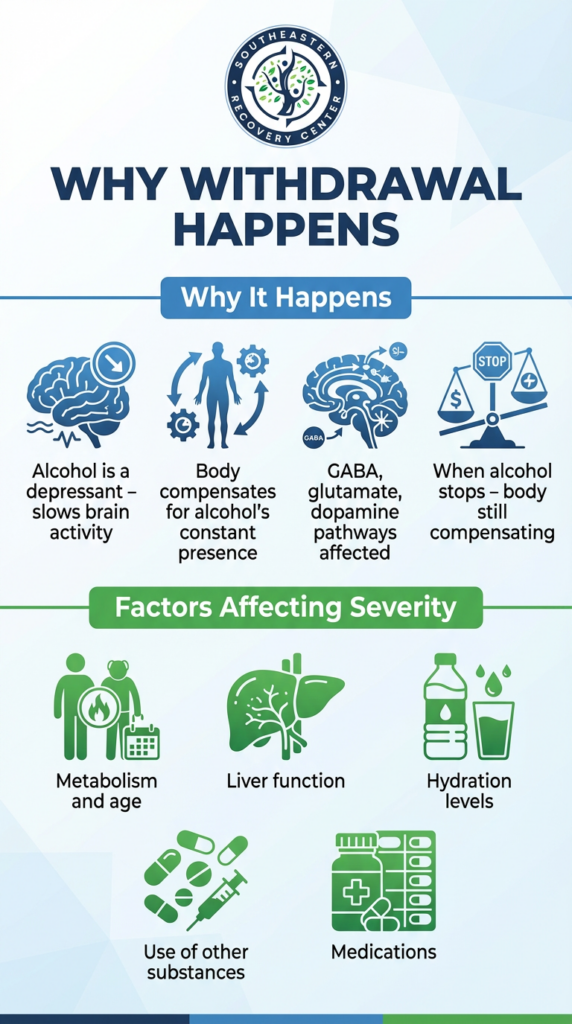
The alcohol withdrawal timeline tends to last for up to 72 hours after an individual’s last drink. But some individuals may experience lingering symptoms for weeks. Factors that impact how long alcohol withdrawal symptoms will last include:
- Metabolism
- Age
- Medications
- Use of other substances
- Hydration levels
- Liver function
Why Do People Experience Alcohol Withdrawal Symptoms?
People experience alcohol withdrawal symptoms because their brain has grown used to the presence of alcohol within the body. These people are considered to have developed alcohol use disorder (AUD).
Alcohol is classified as a depressant, meaning that it slows down brain activity and nerve communication due to its ethanol content. This causes an individual’s central nervous system (CNS) to have to compensate for alcohol’s consistent presence in the body, impacting neurological pathways such as the GABA, glutamate, and dopaminergic pathways.
Once they stop drinking, an individual’s body is still used to compensating for alcohol that is no longer present in the body. This is what causes the adverse physical and mental effects of alcohol withdrawal. Additionally, these alcohol withdrawal symptoms make it more difficult for someone to stick with the decision to quit alcohol intake.
Alcohol Withdrawal Timeline: Stage 1
The first stage of alcohol withdrawal symptoms occurs around 6 hours to 12 hours after an individual’s last drink. These symptoms are known to be fairly mild and tolerable, but it’s important to note that more severe symptoms tend to occur later on.
First stage symptoms of alcohol withdrawal include:
Physical Symptoms:
- Headaches
- Stomach pains
- Nausea
- Vomiting
- Tremors
Psychological Symptoms:
- Anxiety
- Fatigue
- Depression
- Foggy brain
Note: the risk of an individual suffering a seizure as a result of stopping alcohol intake is at its highest at 12 hours from the last drink.
Alcohol Withdrawal Timeline: Stage 2
The second stage of alcohol withdrawal symptoms kick in around 12 to 48 hours after an individual’s last drink. This is when symptoms from stage one may escalate in severity, in addition to introducing new symptoms as an individual’s body tries to get used to the lack of alcohol present.
Symptoms of the second stage of alcohol withdrawal include:
Physical Symptoms:
- Seizures
- Irregular heart rate
- Sweating
- Fever
- Rapid breathing
Psychological Symptoms:
- Hallucinations
- confusion
- Irritability
- Paranoia
- Agitation
Alcohol Withdrawal Timeline: Stage 3
The third stage of alcohol withdrawal symptoms occur between 48 hours to 72 hours after an individual’s last drink. This is when withdrawal symptoms can be at their most severe for individuals suffering from alcohol use disorder.
Note: It’s important to keep in mind that delirium tremens (DTs) may occur during this stage, which is a potentially fatal condition that occurs as a result of alcohol withdrawal. DTs cause many symptoms including tremors, agitation, and symptoms of psychosis such as hallucinations and paranoia. DTs occurs in 1 to 1.5% of individuals with alcohol use disorder.
Symptoms of the third stage of alcohol withdrawal include:
Physical Symptoms:
- Fever
- Sweating
- Rapid heart rate
- Raised blood pressure
Psychological Symptoms:
- Confusion
- Mood swings
- Severe confusion
Alcohol Withdrawal Timeline: Stage 4
The final stage of alcohol withdrawal is a gradual reduction in symptoms from the previous stages as an individual’s body fully adjusts the lack of alcohol present. Symptoms are expected to dissipate over the next four to seven days from an individual’s last drink, though in some scenarios an individual might suffer symptoms for weeks or even months.
Which Stage of Alcohol Withdrawal is the Most Dangerous?
All stages of alcohol withdrawal present some level of danger, but stage three of alcohol withdrawal (occurring between 48 to 72 hours after the last drink) is usually regarded as the most dangerous due to the threat of Delirium Tremens.
But with other symptoms such as potential seizures, raised blood pressure, and irregular heart rates associated with the other stages, it’s no wonder why individuals may find themselves unable to defeat their alcohol addiction on their own.
Individuals or their loved ones who suffer from alcohol use disorder should strongly consider seeking medical professional help before attempting to detox from alcohol at home. At our Charlotte, North Carolina location, we at Southeastern Recovery Center specialize in helping individuals receive personalized care to help defeat alcohol addiction. This includes helping ensure that they receive medical assistance with alcohol withdrawal symptoms, should they be necessary.
After Alcohol Withdrawal: Alcohol Addiction Recovery Timeline
Once an individual has successfully overcome their alcohol withdrawal symptoms (most safely through the assistance of medical professionals) they can start to look forward to reclaiming their lives. While the lifestyle changes and a shift in general outlook can help tremendously here, the fact is that there are lingering impacts of prolonged alcohol use on the body that may still be felt.
For example, if an individual wants to know how long it takes to reset alcohol tolerance, the answer is that it can take anywhere from 2 weeks to several months. But if they want to know how long it takes their body to fully recover from alcohol addiction, the below timeline will help illuminate the years’ long process.
Alcohol Sobriety Timeline: Restoring the Body
Prolonged alcohol usage has an impact on the brain, central nervous system, and liver. This disruption to your gastrointestinal tract and brain results in effects that linger in your body long after any alcohol withdrawal symptoms have abated. It takes time for your body and organs to restore themselves to their state pre alcohol use disorder. But thankfully, the slow process of your body’s recovery may not be tangibly felt after an individual’s last drink.
Alcohol Sobriety Phase 1: The Bio-Reset (Day 1 – Week 1)
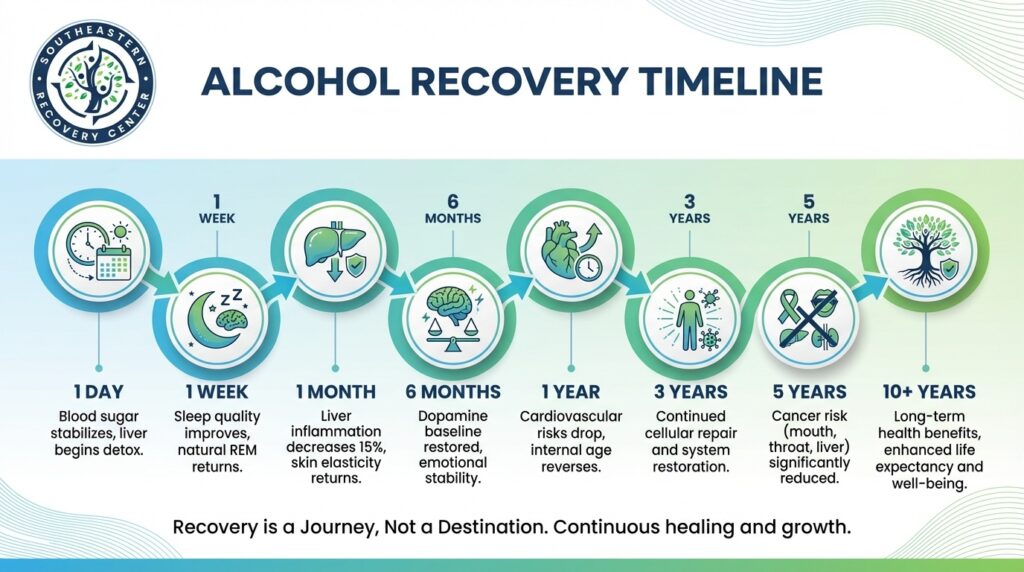
Day 1: The first phase of the alcohol recovery timeline lasts for a week, and overlaps with the standard period of suffering alcohol withdrawal symptoms. Day one is when your blood sugar stabilizes and the liver begins processing residual toxins in the body. As we mentioned before, your brain chemicals will have adjusted to the lack of alcohol in your system, which will impact your GABA neurotransmitters and cause most alcohol withdrawal symptoms.
Day 1-3: The “Recalibration.” Your body will continue struggling with the lack of alcohol up until day three, with your body working to purge acetate (a byproduct of alcohol) by converting it to water and carbon dioxide.
Day 7: The Sleep Revolution. By day 7, most alcohol withdrawal symptoms should be heavily reduced, if not outright abated. Some heavy drinkers may have noticed the effect of alcohol on their sleep, with heavy drinking periods noted in studies to cause issues falling asleep as well as decreasing total sleep time. Thankfully, by day 7 without a drink, alcohol-induced sedation is replaced by natural REM sleep, allowing the brain to begin “defragmenting” emotions and memories.
Alcohol Sobriety Phase 2: The Physical Rebound (1 Month – 6 Months)
Note: If you are still experiencing alcohol withdrawal symptoms this far into your recovery, it may be worth contacting alcohol rehabilitation facilities to discuss your options.
The second stage of the alcohol recovery timeline is when there is a focus on physical healing in your body. There are three particular checkpoints worth noting:
1 Month: Hepatic Healing. While an individual is drinking consistently, the alcohol is causing liver inflammation. The body will continue to try to heal this information, which in turn produces scar tissue. The end result of this cyclical process is the liver becoming covered in scars, a process known as cirrhosis.
When an individual stops drinking alcohol, the inflammation and scarring in the liver decreases, sometimes up to 15%. Additionally, alcohol use disorder is associated with impacted skin elasticity due to chronic dehydration, but after a period of about a month, skin elasticity returns.
3 Months: Oxygen Optimization. Alcohol use is associated with enlarged red blood cells, a condition known as macrocytosis which is caused by B12 deficiency (associated with liver inflammation). Thanks to a lack of alcohol intake, red blood cells can return to regular healthiness, which will have a natural impact on physical stamina as well as the lifting of “brain fog.”
6 Months: The Dopamine Baseline. After about six months from an individual’s last drink, their brain chemistry with just about every balance. This includes a reset for the dopamine “reward center” that would have contributed to a mental attachment to drinking alcohol. With normalcy comes the return of natural enjoyment and emotional stability.
Alcohol Sobriety Phase 3: The Systemic Overhaul (9 Months – 1 Year)
Phase 3 of the alcohol recovery timeline takes place within 9 to 12 months after an individual’s last drink. By the time an individual is ready to celebrate the anniversary of their sobriety, they will have experienced:
9 Months: The Immune Fortress. Alcohol intake is known to affect the immune system, including making it more sluggish to recognize and respond to infections. Nine months after an individual’s last drink, the white blood cell count and gut biome health should be restored, resulting in improved resistance and responsiveness towards illness.
1 Year: The Longevity Milestone. After one year of sobriety, individuals who used to suffer from alcohol addiction can celebrate knowing that the cardiovascular risks dropped, and their body’s “internal age” is practically turning back time due to systemic inflammation decreasing.
Alcohol Sobriety Phase 4: The Legacy Horizon (5 Years – 10+ Years)
Here is where we look at the long-term impacts of the individual managing to overcome alcohol addiction.
- 5 Years: The Cancer Threshold. Risk of mouth, throat, and esophageal cancers is slashed by 50%.
- 10 Years: Total Cellular Renewal. Risk of stroke and heart disease returns to a level similar to those who have never been heavy drinkers.
- 15+ Years: The Baseline Achievement. Statistical mortality risk becomes indistinguishable from the general healthy population.
These are only the highlights that we know from studying individuals’ bodies. They don’t cover the improved work-life balance and ability to sustain the filling relationships due to having overcome alcohol withdrawal.
Alcohol addiction can seem almost impossible to overcome. But the truth is that there are many medical professionals that are able to deliver personalized treatment plans that can help an individual not only address alcohol addiction, but also the underlying lifestyle causes that lead an individual to develop a dependence on alcohol in the first place. We at Southeastern Recovery Center dedicate ourselves to putting individuals on the road towards reaching that 15+ year stage of alcohol sobriety.
If you or a loved one are struggling with alcohol addiction, please know that help is available. We at Southeastern Recovery Center welcome anyone across North Carolina to our Charlotte location to receive personalized help that can help them transform their mind, body, and lifestyle for the better.
Frequently Asked Questions about Alcohol Withdrawal and Recovery Timeline: Behind-the-Scenes Look at Your Body’s Symptoms and Transformation
What is the timeline of alcohol withdrawal?
The timeline of alcohol withdrawal occurs in four stages over the course of 72 hours after your last drink.
What is the most dangerous stage of alcohol withdrawal?
The most dangerous stage of alcohol withdrawal is stage three, which occurs between 48 hours to 72 hours after an individual’s last drink. This stage is the most dangerous because it is when individuals might suffer from delirium tremens (DTs) which is potentially fatal.
How long does it take to reset alcohol tolerance?
It takes around 2 to 6 weeks to reset your alcohol tolerance, depending on your age, metabolism, and liver function.
When does your body recover from alcohol use disorder?
Your body recovers from the most severe effects of alcohol use disorder within a week or two after you stop in your last drink. That said, prolonged drinking can cause damage to your system that will take more time to heal as you remain sober.
Sources:
Banerjee, Niladri. “Neurotransmitters in Alcoholism: A Review of Neurobiological and Genetic Studies.” Indian Journal of Human Genetics, vol. 20, no. 1, 2014, p. 20, www.ncbi.nlm.nih.gov/pmc/articles/PMC4065474/, https://doi.org/10.4103/0971-6866.132750.
Mary Jo DiLonardo. “What Is Alcohol Withdrawal?” WebMD, WebMD, 2023, www.webmd.com/mental-health/addiction/alcohol-withdrawal-symptoms-treatments.
Cleveland Clinic. “Temperance Movement: Lower Alcohol Use and Avoid Delirium Tremens.” Cleveland Clinic, 5 June 2023, my.clevelandclinic.org/health/diseases/25052-delirium-tremens.
National Institute on Alcohol Abuse and Alcoholism. “Alcohol’s Effects on Health.” Www.niaaa.nih.gov, May 2022, www.niaaa.nih.gov/publications/alcohol-metabolism.
Brower, Kirk J. “Alcohol’s Effects on Sleep in Alcoholics.” Alcohol Research & Health, vol. 25, no. 2, 2026, p. 110, pmc.ncbi.nlm.nih.gov/articles/PMC2778757.
Jung, Finn, et al. “Markers of Intestinal Permeability Are Rapidly Improved by Alcohol Withdrawal in Patients with Alcohol-Related Liver Disease.” Nutrients, vol. 13, no. 5, 14 May 2021, p. 1659, https://doi.org/10.3390/nu13051659.
Worldcat.org, 2024, adf.on.worldcat.org/oclc/8947343350.