Sometimes, we forget that teachers and educators are human. Or at least, society tends to view them as being above that. This could be related to the fact that educators deal with our youth, and we naturally want to believe that these individuals are shining beacons as far as their influence goes. But ultimately, teachers are fallible, flawed, and human, which is why they are as susceptible to drug use disorders as anyone.
Recent events in North Carolina serve as a reminder of this fact. Moreover, they work as a warning sign that North Carolina educator stress is to be considered a public health issue before it spills over even more into our community.
Article Preview:
Teacher Drinking Alcohol While on the Job 32-year-old Alena Chabot was caught drinking while on the job.
What Happened to the Drunk Teacher? Alena Chabot was charged and resigned from work as an educator.
The Impact of a Teacher Drinking While At Work. Students witnessed a teacher under the influence, and a North Carolina school lost its teacher during an ongoing educator shortage.
Why Would Educators Drink While on the Job? Alcohol use disorder is one of the primary reasons that educators might drink while on the job.
Who is to Blame for Educators Drinking While Teaching? While the educator holds most of responsibility for drinking while teaching, external stressors that push educators to self medicate with alcohol should not be discounted.
Stress Factors Impacting North Carolina Educators. Burnout and stress are some of the top stress factors that impact North Carolina educators.
Frequently Asked Questions About Why NC Educator Stress is a Public Health Issue. Learn frequently asked questions about stress and alcohol as they relate to NC educators.
Teacher Drinking Alcohol While on the Job
In September, a teacher at a North Carolina middle school was accused of being drunk on just the second day of the semester. The teacher in question, 32-year-old Alena Chabot, was found to have an open container of alcohol along with prescription medication present while she was at the Lenoir County school.
Interestingly enough, her behavior on the day was so stark from the way she acted while she was sober that even the students noted the disparity. One child commented that by halfway through the class, they realized that Alena was “slurring her words.”
What Happened to the Drunk Teacher?
Alena Chabot was charged on September 9, two weeks after she was first hit with the allegations of being drunk. She was also alleged to have grabbed and pushed two boys in her class. She was charged with disorderly conduct on school property and being intoxicated and disruptive.
Alena Chabot resigned from her job the same day allegations occurred.
The Impact of a Teacher Drinking While At Work
There are several things to note here that go beyond looking at the headlines of the North Carolina teacher being drunk while on the job.
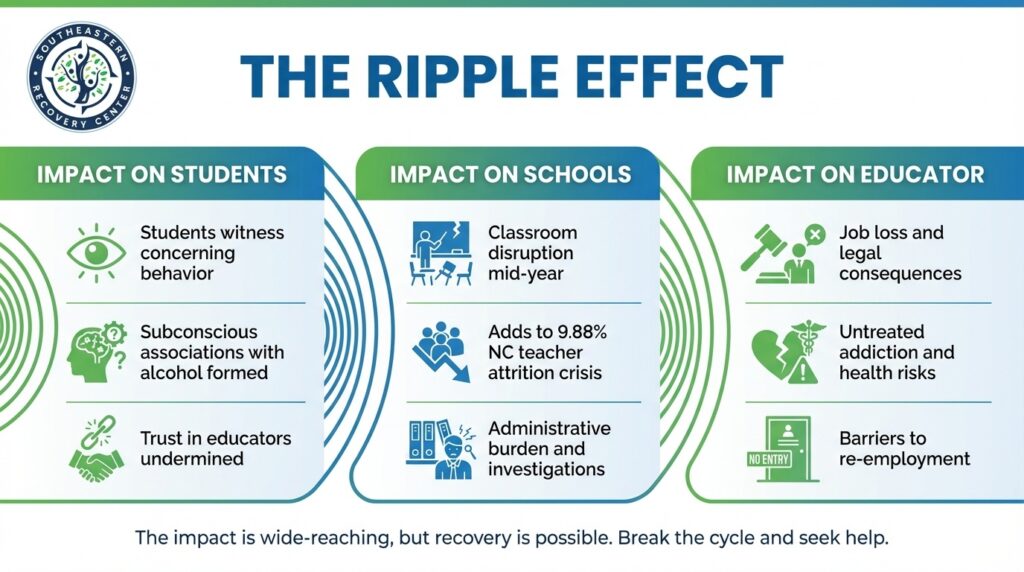
First off, Alena Chabot’s behavior was noticed by students in the classroom. And while some students may have found her slurring her words and being more aggressive alarming, others might have found it amusing. Then, when they noticed her absence, they may have taken to the Internet and discovered the stories detailing that she was under the influence of alcohol on the job. All of a sudden, these students may be making associations in their underdeveloped brains, linking alcohol to funny behavior. This is the sort of subconscious messaging that could lead them to make irresponsible decisions pertaining to alcohol before or even after they come of age.
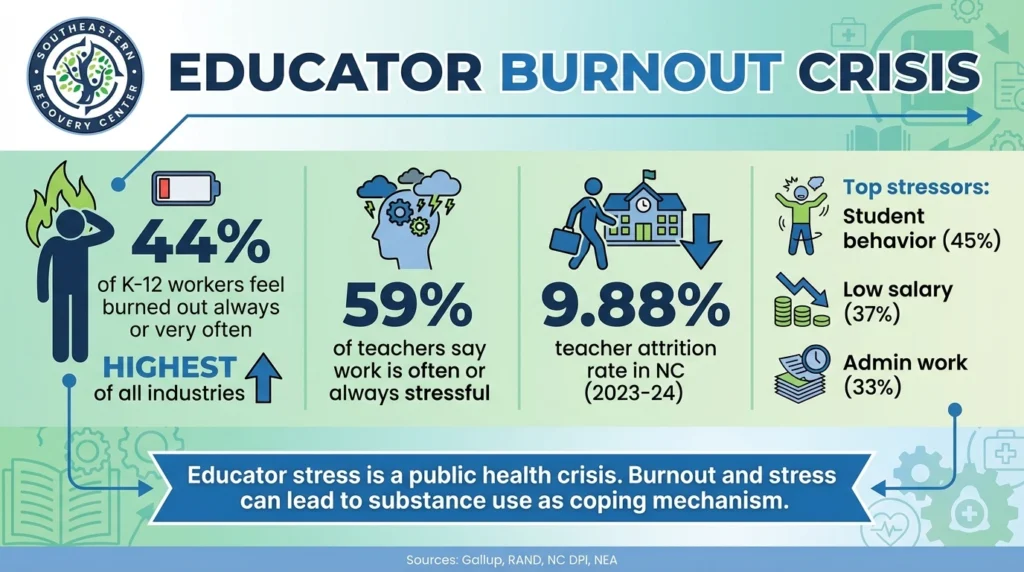
Second off, Alena Chabot was arrested. If she was in a union and was actively seeking treatment for alcohol addiction, it’s possible that her job as an educator may have still been protected. However, she resigned voluntarily. Even this has a short and long-term impact. This was a classroom that lost a teacher when the school year had already started, creating a disruption. Additionally, North Carolina is currently struggling with too many teachers leaving the profession, with the 2023 to 2024 teacher attrition rate sitting at 9.88%.
In short, there is no one who benefited from this scenario. Not the educator herself, not her students, not her school. It’s even arguable whether losing this teacher’s presence in the classroom was the best possible outcome, especially considering that time at a rehab facility could have resulted in her behavior being properly and permanently corrected.
Why Would Educators Drink While on the Job?
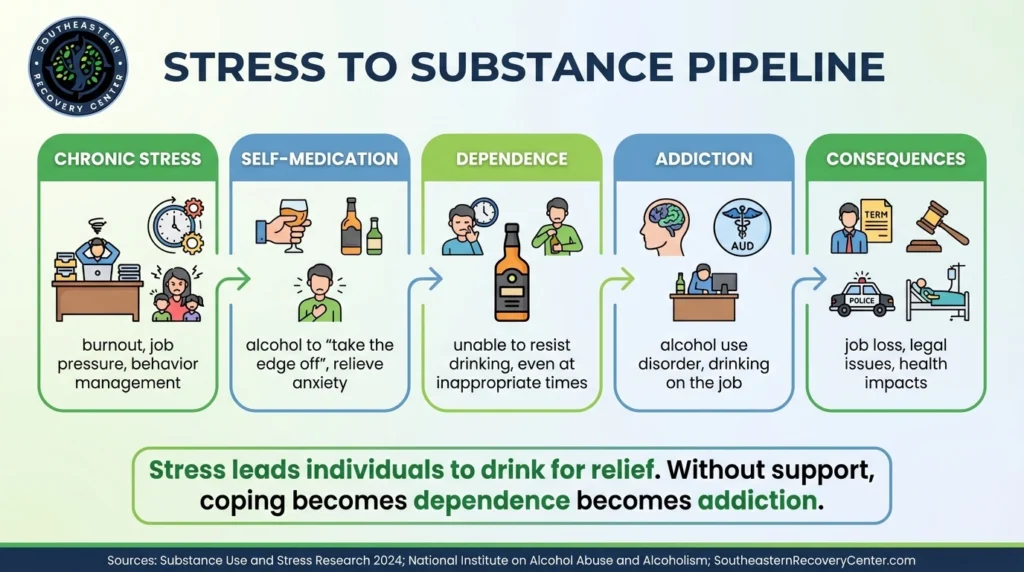
Educators would drink while on the job primarily if they were suffering from alcohol use disorder. At the moment, it is not currently public knowledge if Alena Chabot suffers from alcohol use disorder or if this was a one-off event. However, this behavior does overlap with the kind of actions individuals suffering from alcohol use disorder would take.
An addiction to alcohol causes individuals to seek out the drink even when partaking is inadvisable or dangerous. An educator drinking while on the job, to the point where students who likely have no familiarity with alcohol and notice the change in their behavior, falls under this category.
But individuals suffering from alcohol addiction find it hard to control themselves otherwise.
Who is to Blame for Educators Drinking While Teaching?
A normal response would be to blame the educators themselves for drinking while on the job. Irate parents and caretakers might also sling blame at principals and vice principals and other people responsible for overseeing operations in the school.
But then we have to ask ourselves: why would an educator choose to drink on the job if they had another option?
This is the sort of thinking that we often have at Southeastern Recovery Center. Part of our ability to provide personalized treatment for drug and alcohol addiction as well as mental health disorders is attributable to our ability to understand the underlying causes behind these conditions.
To us, we are less focused on the drinking itself and more concerned with systemic factors that would lead an educator to drinking while on the job. And those are many and varied.
Stress Factors Impacting North Carolina Educators
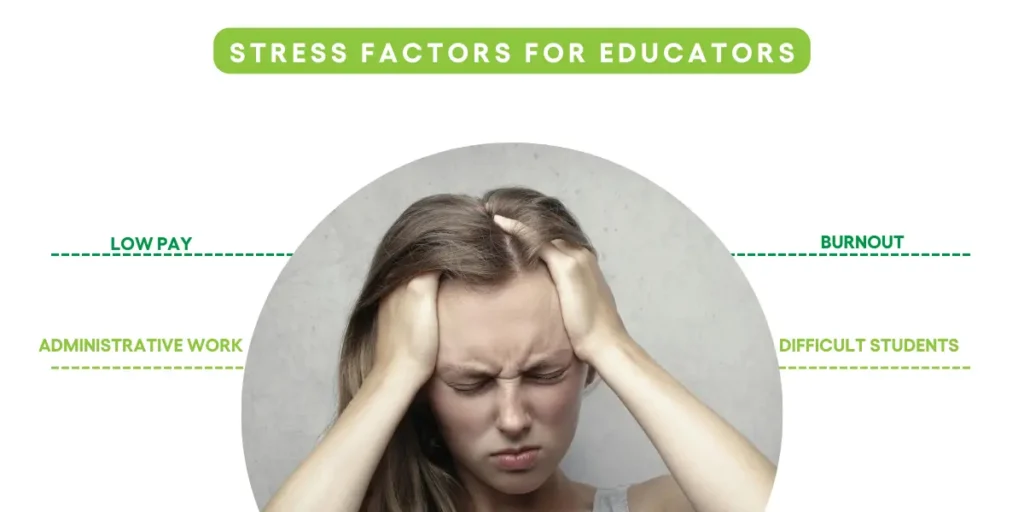
Stress factors impacting North Carolina educators include:
- General burnout. A Gallup poll found that over 4 out of every 10 K-12 workers (44%) say that they feel “always” or “very often” burned out at work. This is a stark figure that outpaces all other industries nationally.
- Job-related stress factors. A survey by the National Education Association found that the top sources of teachers’ job-related stress included managing student behavior (45%), low salaries (37%), and administrative work outside of teaching (33%).
- And like homework, this is persistent stress that follows educators outside of school buildings. 59% of teachers say that they “often” or “always” feel that their work is stressful.
When we consider the numerous and consistent sources of stress impacting North Carolina teachers, it’s almost as if the question shifts from why would a North Carolina educator drink to why don’t more North Carolina educators drink? Especially when taking into account how society pushes the idea of moderate drinking as a way to relieve stress and forget woes.
What we see in the case of Alena Chabot is a learning lesson when it comes to how far of an impact consistent stress can have on North Carolina’s educators. In the wake of that, it’s important for us to consider how that stress can lead to individuals developing bad habits, including a dependence or addiction to alcohol or drugs.
These are individuals who need our help. We at Southeastern Recovery Center in Charlotte, North Carolina do our best to provide them personalized care, but a welcoming environment and friends and family who are more understanding could help us achieve much more.
Frequently Asked Questions About Why NC Educator Stress is a Public Health Issue
Why would an educator drink on the job?
An educator with drink on the job that they had developed an alcohol addiction and were unable to resist.
What happened to Alena Chabot after she drank while teaching?
Alena Chabot was charged with disorderly conduct on school property and also resigned from her teaching job the same day the allegations occurred.
Are educators solely to blame for teaching while on the job?
Educators hold the primary responsibility for the decision to drink while on the job, but individuals suffering from alcohol addiction are often unable to resist the urge to drink without help in the form of resources, medical professional assistance, or family support.
Does stress lead people to drink?
Yes, stress can lead an individual to drink to “take the edge off” or help them feel less anxiety.
Sources:
Tucker, Luke. “Teacher Accused of Being Drunk in Class Also Allegedly Pushed Students at North Carolina School.” wbtv.com, WBTV, 10 Sept. 2025, www.wbtv.com/2025/09/10/teacher-accused-being-drunk-class-also-allegedly-pushed-students-north-carolina-school/
“Teacher Attrition Declined in 2023-24 School Year; Still Higher than Average of Past Several Years.” Nc.gov, 2023, www.dpi.nc.gov/news/press-releases/2025/04/02/teacher-attrition-declined-2023-24-school-year-still-higher-average-past-several-years.
Nc.gov. (2023). Teacher attrition declined in 2023-24 school year; still higher than average of past several years. [online] Available at: https://www.dpi.nc.gov/news/press-releases/2025/04/02/teacher-attrition-declined-2023-24-school-year-still-higher-average-past-several-years.
Marken, Stephanie, and Sangeeta Agrawal. “K-12 Workers Have Highest Burnout Rate in U.S.” Gallup, 13 June 2022, news.gallup.com/poll/393500/workers-highest-burnout-rate.aspx.
Walker, Tim. “What’s Causing Teacher Burnout? | NEA.” Nea.org, 7 Apr. 2025, www.nea.org/nea-today/all-news-articles/whats-causing-teacher-burnout.
Doan, Sy, et al. “Teacher Well-Being and Intentions to Leave in 2024: Findings from the 2024 State of the American Teacher Survey.” Www.rand.org, 18 June 2024, www.rand.org/pubs/research_reports/RRA1108-12.html.