The term “dual diagnosis” refers to a situation where someone has received diagnoses for both a substance use disorder and a mental health disorder at the same time. When mental health problems get worse, people often start using substances like drugs or alcohol more heavily. This can create a dangerous cycle where they depend on these substances even more. It can also push them closer to the edge, making their mental health problems worse or causing new ones. Additionally, if someone already has mental health issues, their addiction can make those problems worse.


According to SAMHSA's 2024 National Survey on Drug Use and Health, approximately 21.2 million adults in the United States live with a co-occurring mental illness and substance use disorder. In fact, nearly half of all people with a substance use disorder will also experience a mental health condition at some point — and vice versa. Yet the majority never receive treatment for both. At Southeastern Recovery Center in Charlotte, we provide treatment for both drug and alcohol addiction as well as mental health disorders specifically to close that gap.
At Southeastern Recovery Center, we understand treating these conditions separately leads to the best outcome for the individual client. Our approach to enhanced dual diagnosis treatment includes methods such as cognitive-behavioral therapy, EMDR therapy, experiential therapy, and more. By taking a holistic approach to dual diagnosis, we aim to provide each client the tools necessary to maintain long term sobriety, avoiding future stays in rehab.
Understanding whether you’re dealing with co-occurring disorders takes a level of self-awareness and introspection. For this reason, individuals may depend on the perspective of a medical professional to get a more clear answer. That said, you may be dealing with co-occurring disorders if:
One of the most common questions we hear at our Charlotte facility is: “Did my drinking cause my depression, or did my depression cause my drinking?” The honest answer is that both are possible, and for most people, the answer is complicated. Research shows three distinct patterns:
At Southeastern Recovery Center, we don’t need to solve this mystery before beginning treatment for our patients. Our integrated, personalized approach addresses both conditions at the same time. Ultimately, what matters more than the order you develop disorders is how thoroughly each disorder is addressed for long-term health.

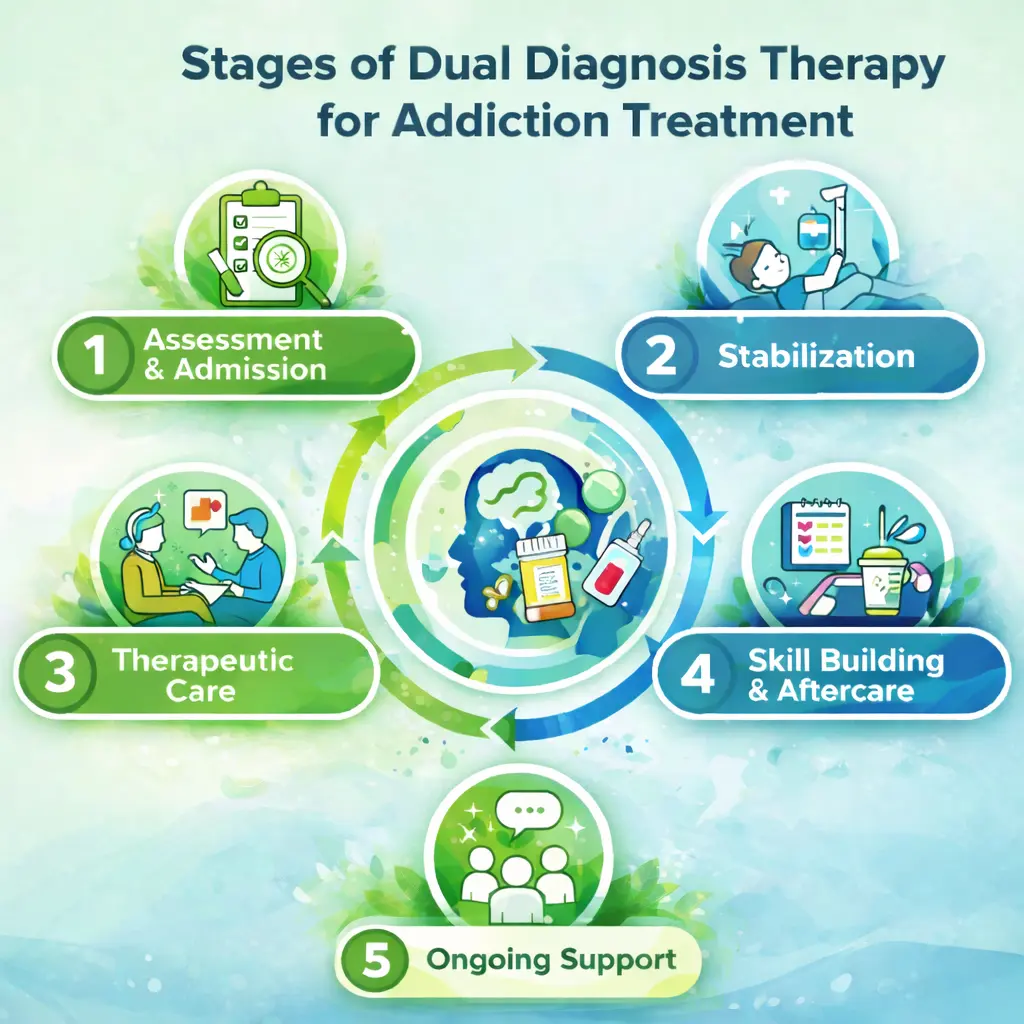
From your first phone call to the day you graduate from treatment, our team provides step-by-step support.
Here are ten things you should consider:
1. Assessment & Admission
Our admissions team examines both your mental health history and substance use patterns together, evaluates your needs, and verifies insurance coverage.
2. Stabilization
We guide you through safe withdrawal in a medically supported environment. If needed, this can include a medically supervised outpatient detox that stabilizes the body before deeper therapeutic work begins.
3. Therapeutic Care
You’ll work with licensed therapists providing a combination of individual therapy, group sessions, and evidence-based modalities like CBT, DBT, and EMDR to address the underlying factors driving your co-occurring conditions simultaneously.
4. Skill Building & Aftercare
We help you develop tools and routines for lasting alleviation of depression symptoms.
5. Ongoing Support
SERC’s alumni and aftercare program provides the long-term support structure needed to maintain progress after intensive treatment ends.
Our mission is simple: to provide the highest level of dual diagnosis treatment possible so that every client leaves stronger, healthier, and ready to thrive in work and life.
Historically, mental health and substance use disorders were treated in completely separate systems. This meant different healthcare providers, different treatment facilities, and even conflicting approaches to treatment. A person might attend addiction counseling on Tuesdays and see a psychiatrist on Thursdays, with neither provider fully understanding how the two conditions were fueling each other. The result was higher relapse rates, incomplete recovery, and individuals relapsing due to being given inadequate information when it came to addressing mental health disorders and substance use disorders simultaneously.
At Southeastern Recovery Center, our dual diagnosis approach treats both conditions within the same program, by the same integrated clinical team. Your therapist, medical provider, and counselors all communicate and plan together, because recovery shouldn’t be a game of telephone between providers who don’t speak to each other.
We serve individuals from Charlotte, Concord, Gastonia, Huntersville, and throughout North Carolina who are seeking trusted, compassionate care for depression and depressive episodes.
Our experienced team, state-of-the-art facility, and commitment to personalized care make us a leading choice for those seeking freedom from drug addiction and mental health disorders in North Carolina.
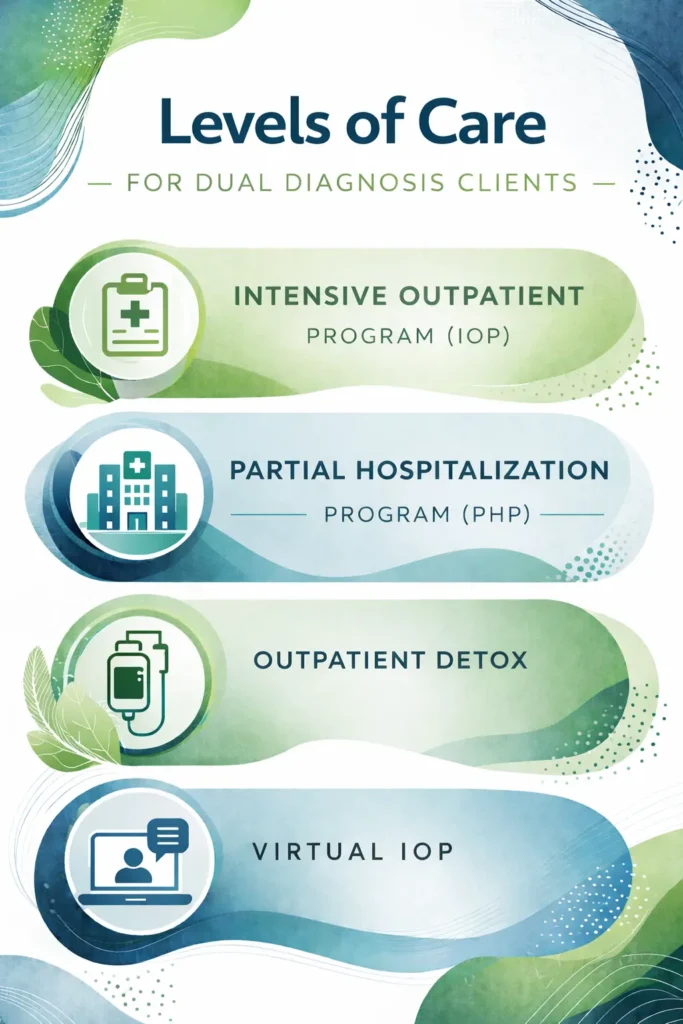
There are several different levels of dual diagnosis care that we at Southeastern Recovery Center can provide for clients. While our medical professionals will always form personalized plans that meet the treatment goals for every patient, your preferences are always weighed heavily when we make recommendations. Possible treatment options include:
For dual diagnosis clients who are medically stable but need structured, multi-day treatment while living at home or in sober living. Southeastern Recovery Center’s Charlotte location makes in-person treatment accessible without long-distance travel.
Our dual diagnosis treatment in a PHP setting provides an integrated, high-intensity clinical environment where we simultaneously treat mental health disorders and addiction as a single, intertwined condition to ensure sustainable recovery.
For clients whose withdrawal symptoms need medical management before therapeutic dual diagnosis work can begin. We’ll facilitate your placement in detox facilities around North Carolina based on your location and required treatment.
For dual diagnosis clients outside the Charlotte/Mecklenburg area, or for patients who otherwise require the flexibility of remote treatment.
Dual diagnosis treatment is treatment that addresses both mental health disorders and substance use disorders simultaneously.
The most common co-occurring disorders are anxiety and depression paired with alcohol use disorder.
You know you have a dual diagnosis if you experience a need to use substances when dealing with mental health disorders such as anxiety or PTSD.
Yes, dual diagnosis can be treated at the same time as addiction, with medically-assisted treatment available if needed to mitigate withdrawal symptoms.
Dual diagnosis treatment takes anywhere from 30 to 90 days or longer, depending on individual needs.
Yes, insurance generally covers dual diagnosis treatment in North Carolina.
If you only treat the addiction and not the mental health condition, fluctuations in mental health can lead an individual to relapse.
Yes, dual diagnosis treatment is available on an outpatient basis at certain facilities such as Southeastern Recovery Center.
If you or a loved one are struggling with co-occurring disorders, help is only a call away. When seeking help, it is important to choose a treatment center who understands the correlation between mental health and addiction. At Southeastern Recovery Center, our staff understands the correlation between the two, offering tailored treatment to clients in an aim to break the cycle future rehab processes.


If you or a loved one are interested in learning more about what to expect when getting help for drug or alcohol addiction, please fill out our brief form and download the eBook. You can also give our admissions team a call & we would be happy to answer any questions you may have. Help is only a call away!