
What Are the 4 C’s of Addiction?

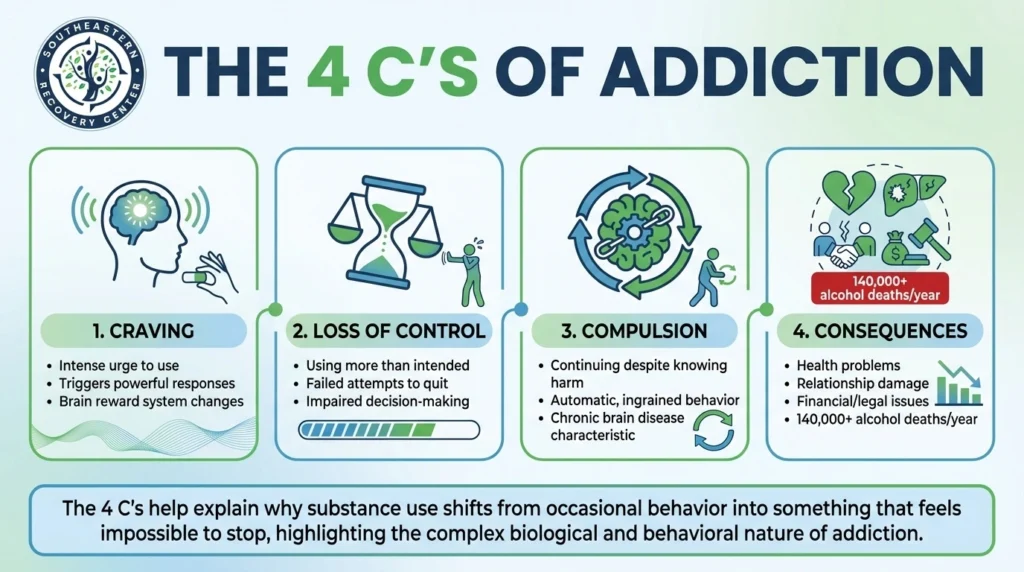
The 4 C’s are Craving, Loss of Control, Compulsion, and Consequences. 

When families try to understand addiction, one framework comes up again and again: the 4 C’s of addiction. These four traits help explain why substance use shifts from occasional behavior into something that feels impossible to control.

At Southeastern Recovery Center in Charlotte, NC, we use this framework to help clients and families make sense of what’s happening beneath the surface. Addiction is not simply about willpower. It follows recognizable patterns in the brain and behavior.

Full Color Logo No Text

Table of Contents

the 4 C's of addiction infographic

1. Craving

Craving is the intense urge to use a substance. It goes beyond wanting a drink or drug. It becomes intrusive and difficult to ignore.

Substances like alcohol and opioids affect the brain’s reward system, especially dopamine pathways. Over time, the brain begins to associate relief, pleasure, or emotional escape with that substance. Even reminders such as stress, certain places, or social situations can trigger powerful cravings.

According to the National Institute on Drug Abuse, repeated substance use changes brain circuits involved in reward, stress, and self-control, which helps explain why cravings can feel overwhelming.

infographic of the 1st C of addiction, which is craving

2. Loss of Control

Loss of control means a person repeatedly uses more than intended or for longer than planned.

Someone might promise to have “just one drink” but end up drinking excessively. They may try to quit or cut back several times without success. This is not a character flaw. It is a hallmark sign of addiction.

Over time, brain changes make it harder to regulate impulses. Decision-making and judgment become impaired, particularly in the prefrontal cortex, the area responsible for self-control and long-term planning.

infographic of the 2nd C of Addiction which is Loss of Control

3. Compulsion

Compulsion refers to continuing to use despite knowing it is harmful.

A person may understand the risks to their health, relationships, or career, but still feel driven to use. The behavior becomes automatic and deeply ingrained.

The American Society of Addiction Medicine defines addiction as a chronic brain disease involving compulsive use despite harmful consequences. Compulsion is what separates casual use from a clinical disorder.

infographic of the 3rd c of addiction which is compulsion

4. Consequences

Consequences are the negative outcomes that result from substance use. These may include:

  • Health problems such as liver disease or heart issues
  • Strained or broken relationships
  • Job loss or financial stress
  • Legal problems
  • Emotional issues like depression or anxiety

Even when consequences pile up, addiction often continues. That persistence in the face of harm is a defining feature.

The Centers for Disease Control and Prevention reports that excessive alcohol use is responsible for more than 140,000 deaths in the United States each year. These statistics highlight how serious the consequences can become.

infographic of the 4th C of addiction which is consequences

Why the 4 C’s Matter

Understanding the 4 C’s helps families shift from blame to awareness. When you recognize craving, loss of control, compulsion, and consequences, you can see addiction for what it is: a progressive condition that requires structured support.

It also helps answer a common question: “Why can’t they just stop?”
Because addiction affects brain function, stopping without treatment can be extremely difficult.

How Treatment Addresses the 4 C’s

At Southeastern Recovery Center in Charlotte, we design treatment plans that directly target each of the 4 C’s:

Recovery involves retraining the brain, rebuilding daily habits, and restoring relationships.

When to Seek Help

If you or a loved one recognizes these four patterns, it may be time to seek professional support. Addiction rarely improves on its own, but with treatment, long-term recovery is possible.

Early intervention can prevent further physical, emotional, and financial damage. Structured inpatient or intensive outpatient programs (which includes a virtual IOP program from the comfort of your own home) can provide the accountability and therapeutic support needed to break the cycle.

I’m ready to start my journey.

You’ve already taken the hardest step by being here. We believe in your strength and your future, and our compassionate team is honored to walk beside you. Let’s take the next step toward the life you deserve, together.

I’m worried about someone I love.

Watching someone you love struggle is incredibly heavy, but you don’t have to carry that weight alone. We’re here to partner with you, providing expert guidance and support to help your loved one find their way back.

I want to see what’s possible.

Financial questions shouldn’t stand in the way of healing. We’ll help you navigate the details by verifying your insurance and walking through options, so you can focus entirely on getting the care and support you truly deserve.