The four stages of alcoholism are pre-alcoholic (early risk), early stage, middle stage, and late stage alcoholism. Alcohol use disorder develops progressively, meaning it worsens over time if left untreated. At Southeastern Recovery Center, we help individuals recognize these stages early so intervention can happen before serious health consequences occur.
Alcoholism is not defined by how often someone drinks. It is defined by how alcohol affects the brain, behavior, and physical health.

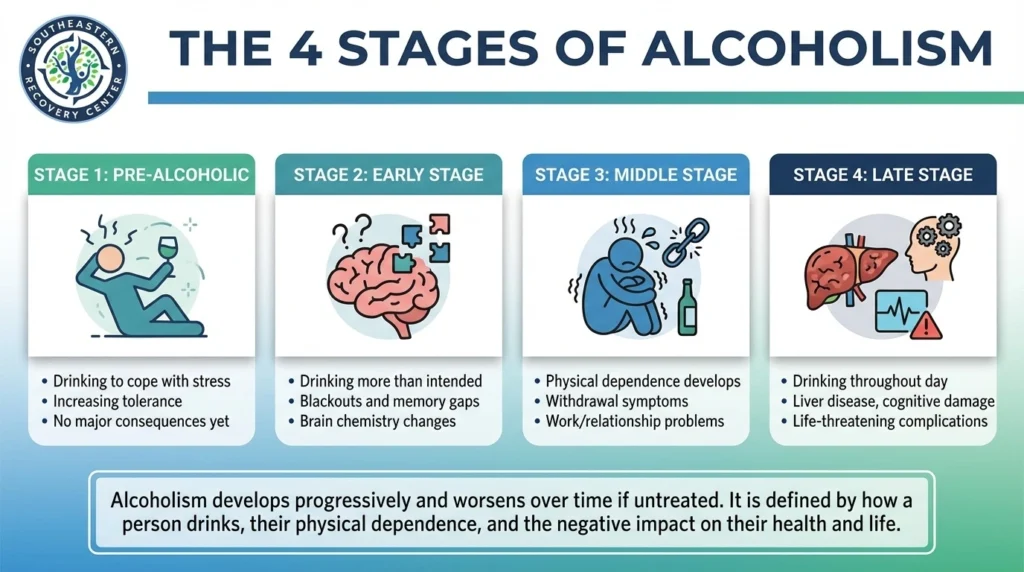
In this stage, drinking often begins as a coping tool rather than a social activity.
Common characteristics include:
Drinking to relieve stress or anxiety
Gradually increasing tolerance
Using alcohol as a primary way to unwind
Justifying frequent drinking as normal
At this point, there may be no major life consequences, but patterns are forming. According to the National Institute on Alcohol Abuse and Alcoholism, increased tolerance is often one of the earliest biological warning signs of alcohol dependence.
Early awareness is critical because intervention at this stage is often less complex and more successful.

During the early stage, alcohol use becomes more problematic and difficult to control.
Common signs include:
Drinking more than intended
Blackouts or memory gaps
Hiding or minimizing drinking
Failed attempts to cut back
This stage reflects changes in brain chemistry. The brain’s reward system begins prioritizing alcohol, making cravings stronger. The National Institute on Drug Abuse explains that repeated substance use rewires the brain’s decision-making and impulse control systems.
Although someone may still appear “functional,” the risk of escalation increases significantly.

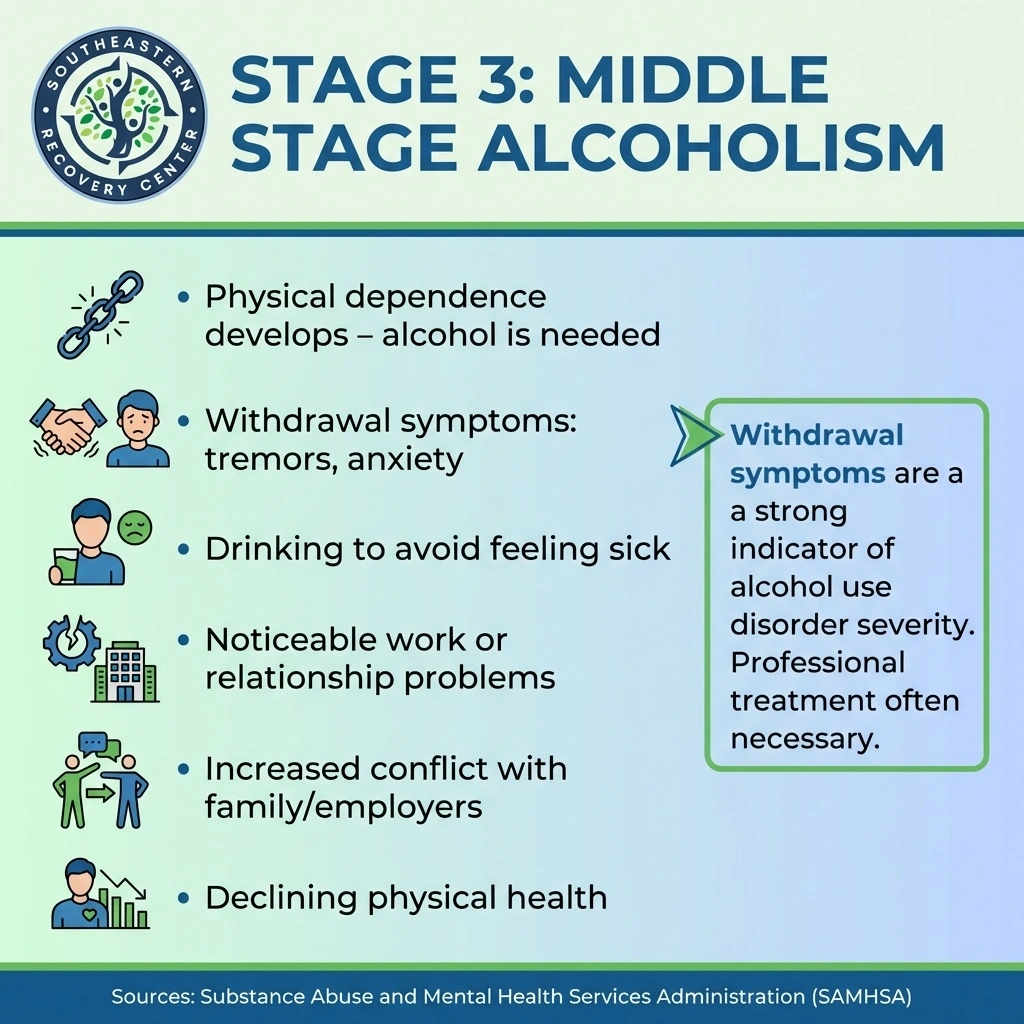
In the middle stage, physical dependence develops. Alcohol is no longer just desired. It is needed.
Common indicators include:
Withdrawal symptoms such as tremors or anxiety
Drinking to avoid feeling sick
Noticeable work or relationship problems
Increased conflict with family or employers
Declining physical health
According to the Substance Abuse and Mental Health Services Administration, withdrawal symptoms are a strong indicator of alcohol use disorder severity.
At this stage, professional treatment is often necessary to safely interrupt the cycle.
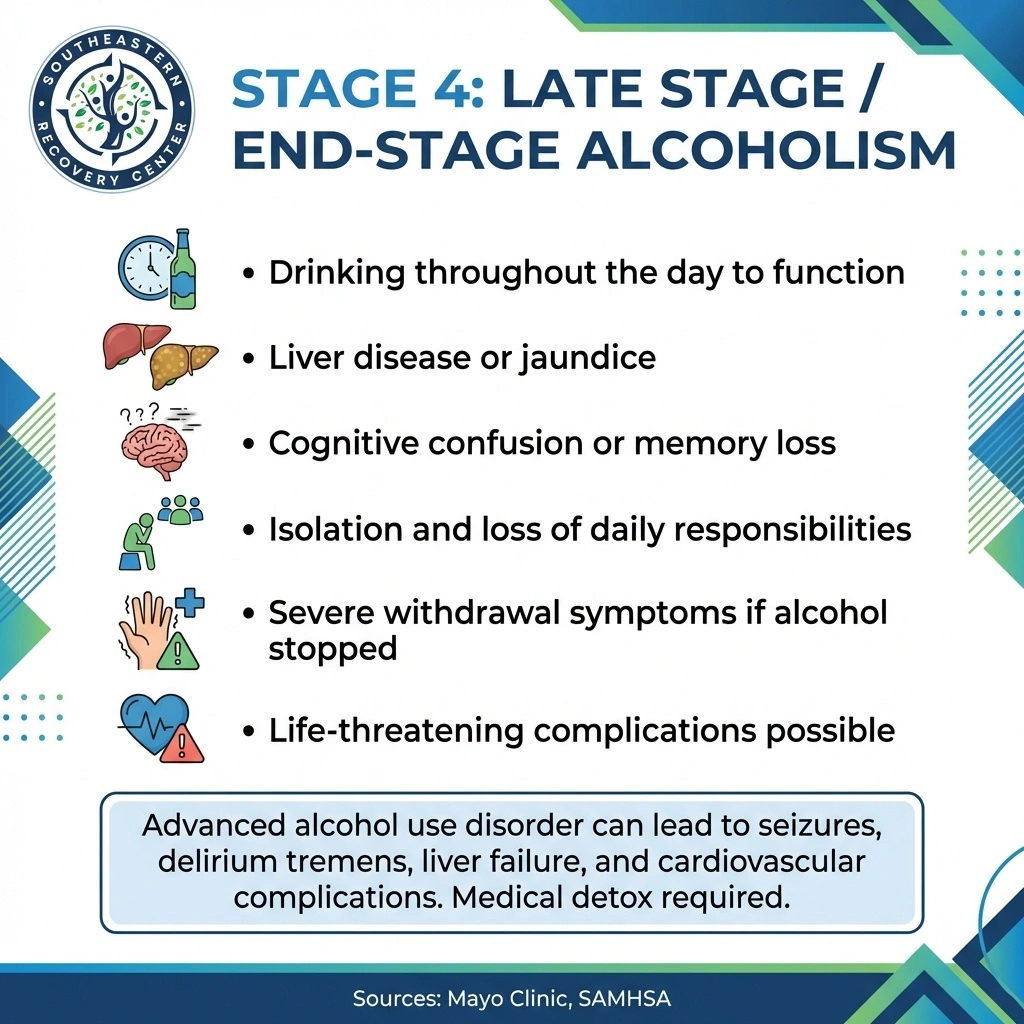
The final stage is the most dangerous. Alcohol has become a physical necessity, and severe health damage may already be present.
Common signs include:
Drinking throughout the day to function
Liver disease or jaundice
Cognitive confusion or memory loss
Isolation and loss of daily responsibilities
Severe withdrawal symptoms if alcohol is stopped
Late-stage alcoholism carries serious medical risks, including seizures, delirium tremens, liver failure, and cardiovascular complications. The Mayo Clinic confirms that advanced alcohol use disorder can lead to life-threatening complications if untreated.
Detoxing at this stage must always occur under medical supervision.
Alcoholism rarely appears suddenly. It develops over time. Recognizing the stage someone is in can:
Early intervention significantly improves long-term recovery outcomes.
While the stages represent progression, recovery allows people to regain health and stability. Some physical damage, such as cirrhosis, may be permanent. However, many neurological and emotional symptoms improve significantly with sustained sobriety and medical care.
The brain has remarkable healing capacity once alcohol use stops and proper treatment begins.
At Southeastern Recovery Center, we provide:
Whether someone is in the early warning stage or facing late-stage dependence, treatment is available and recovery is possible.

If you or a loved one recognizes these stages in your life, you do not have to wait for things to worsen. Alcohol use disorder is treatable at every stage, and early action can prevent permanent harm.
Recovery begins with reaching out.
A conversation does not commit you to treatment. It simply gives you information and clarity.
You don’t have to walk this path alone. Our compassionate team is here to support you through every stage of your recovery. Start your recovery journey with a team that truly cares.
You want the best for them, and so do we. Let’s work together to build a clear path toward their recovery with a team that values them as much as you do.
You deserve quality care without the guesswork. We’ll walk through your insurance benefits together and find the best path forward for your unique situation.
Sources
American Psychiatric Association. Diagnostic and Statistical Manual of Mental Disorders,
5th ed., text rev., American Psychiatric Publishing, 2022.
National Institute on Alcohol Abuse and Alcoholism. “Alcohol Use Disorder.”
National Institutes of Health,
https://www.niaaa.nih.gov/alcohols-effects-health/alcohol-use-disorder.
National Institute on Drug Abuse. “Drugs, Brains, and Behavior: The Science of Addiction.”
National Institutes of Health,
https://nida.nih.gov/research-topics/drugs-brains-behavior-science-addiction.
Mayo Clinic. “Alcohol Use Disorder.”
Mayo Foundation for Medical Education and Research,
https://www.mayoclinic.org/diseases-conditions/alcohol-use-disorder.
Substance Abuse and Mental Health Services Administration. “Treatment Improvement Protocol (TIP) Series.”
U.S. Department of Health and Human Services,
https://www.samhsa.gov.