What Are the 7 Personality Traits of an Alcoholic?

The seven personality traits commonly associated with alcoholism are denial, mood instability, impulsivity, defensiveness, isolation, secrecy, and loss of motivation. At Southeastern Recovery Center, we help people understand that alcoholism does not come from a certain type of personality. There is no single “alcoholic personality.” Instead, long term alcohol use can lead to emotional and behavioral patterns that may look like personality traits. These changes are effects of alcohol use disorder, not reflections of a person’s true character, and many improve or resolve with treatment and sustained recovery.

Table of Contents

Full Color Logo No Text

Is there a specific personality type associated with alcoholism?

No. Alcohol use disorder (AUD) affects people of all personalities, backgrounds, and walks of life.

What people often describe as “personality traits” are usually changes caused by alcohol’s impact on the brain, emotions, and coping abilities. These changes can become more noticeable as drinking progresses.

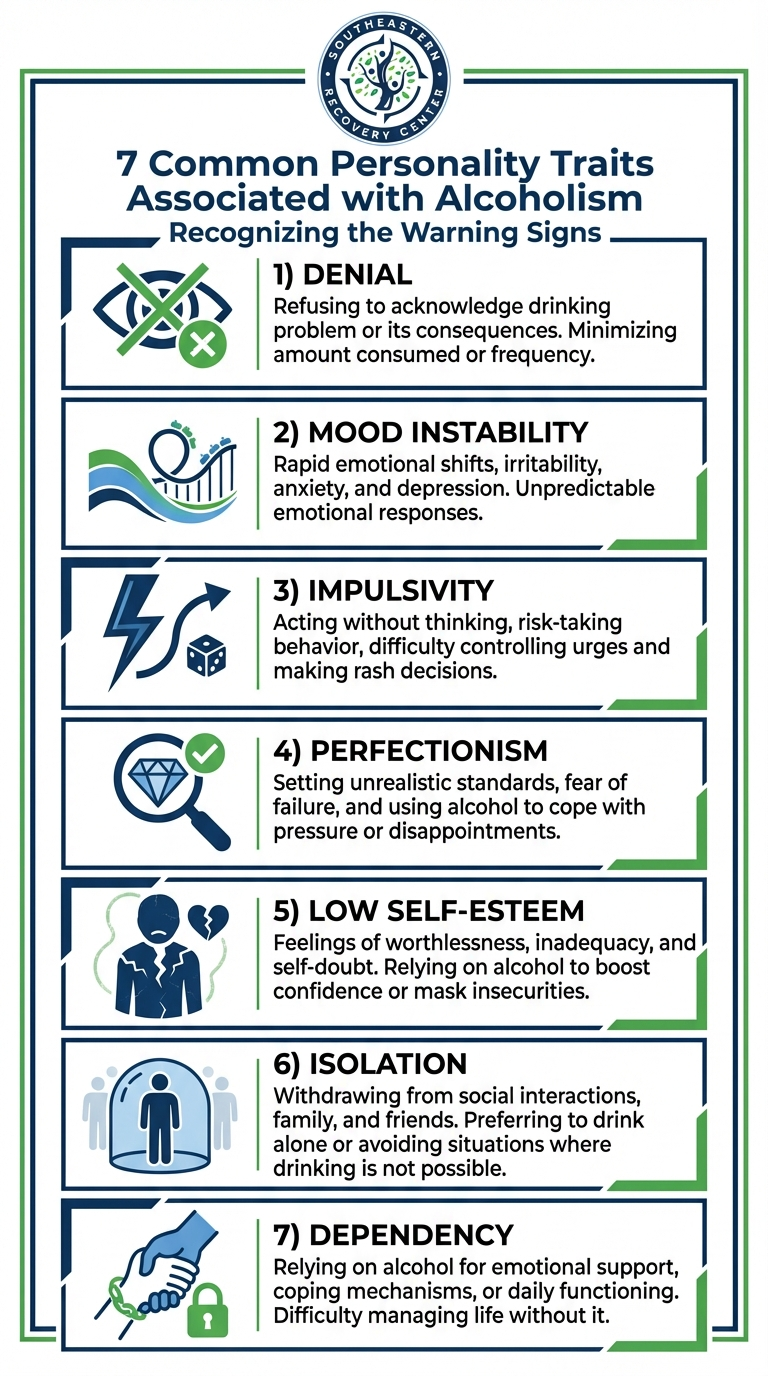
What are the 7 common personality traits associated with alcoholism?

The following traits are commonly seen in people struggling with alcohol use disorder. Not everyone will experience all of them.

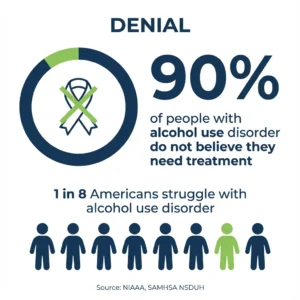
alcoholic trait denial infographic

1. Denial or minimization

Denial is one of the most common traits.

This may look like:

  • Downplaying how much or how often someone drinks
  • Comparing their drinking to others
  • Believing they can stop at any time

Denial is often a coping response that protects someone from fear or shame.

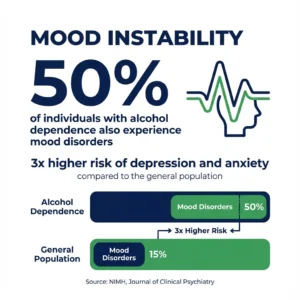
alcoholic trait mood instability infographic

2. Mood swings and emotional instability

  • Irritability or anger
  • Anxiety or restlessness
  • Sudden sadness or emotional numbness

At Southeastern Recovery Center, we often see emotional balance return as sobriety continues.

alcoholic trait impulsivity infographic

3. Impulsivity and poor decision-making

Alcohol lowers inhibition and affects judgment.

Impulsivity may show up as:

  • Risky behavior
  • Financial problems
  • Saying or doing things that feel out of character

Over time, this can strain trust and relationships.

alcoholic trait defensiveness infographic

4. Defensiveness or sensitivity to criticism

When drinking is questioned, a person may react strongly.

This can include:

  • Becoming defensive or argumentative
  • Feeling attacked by concern from others
  • Avoiding conversations about alcohol

These reactions are often rooted in fear rather than intent to harm.

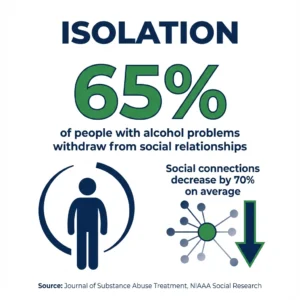
alcoholic trait isolation infographic

5. Isolation or withdrawal from others

Many people with alcohol use disorder begin pulling away from loved ones.

Reasons may include:

  • Shame or guilt
  • Wanting to hide drinking
  • Choosing alcohol over social connection

Isolation can deepen dependence and make recovery feel harder to reach.

alcoholic trait secrecy and dishonesty infographic

6. Secrecy or dishonesty

As drinking becomes harder to control, secrecy often increases.

This may include:

  • Hiding alcohol
  • Lying about drinking habits
  • Avoiding accountability

These behaviors usually come from embarrassment and self protection, not dishonesty by nature.

alcoholic trait loss of motivation infographic

7. Loss of motivation or emotional flatness

Alcohol affects the brain’s reward system.

This can result in:

  • Loss of interest in hobbies or goals
  • Low energy or apathy
  • Reduced self-care

What may look like laziness is often a sign of neurological impact from alcohol.

Are these traits permanent?

In most cases, no.

With treatment and sobriety:

  • Emotional regulation improves
  • Honesty and connection return
  • Motivation often increases
  • Personality traits begin to normalize

Many people in recovery say they feel like themselves again.

When do personality changes signal a serious problem?

It may be time to seek help if these traits:

  • Develop gradually and worsen over time
  • Interfere with work or relationships
  • Appear alongside withdrawal symptoms
  • Continue despite clear negative consequences

Early support can prevent progression and reduce harm.

How does Southeastern Recovery Center help?

At Southeastern Recovery Center, treatment focuses on the whole person, not labels.

Care may include:

  • Therapy to address emotional and behavioral changes
  • Support for co-occurring mental health concerns
  • Education about addiction and brain health
  • Ongoing recovery planning and aftercare

The goal is healing, not judgment.

7 personality traits alcoholic graphic

A compassionate message from Southeastern Recovery Center

Alcohol can change behavior, but it does not define who someone is. The traits associated with alcoholism are signs of a struggling nervous system, not a broken person. At Southeastern Recovery Center, we believe recovery restores clarity, connection, and a sense of self. With the right support, real change is possible. Sources: https://www.samhsa.gov/