The first signs alcohol is damaging your body often include persistent fatigue, digestive problems, mood changes, rising tolerance, and disrupted sleep.
Many people assume alcohol-related damage only shows up after years of heavy drinking. In reality, the body often sends early warning signs long before serious disease develops.
At Southeastern Recovery Center in Charlotte, NC, we often talk with individuals who noticed subtle physical or mental changes but did not initially connect them to alcohol use. Recognizing these early symptoms can make a significant difference in long-term health outcomes.
Below are some of the first signs that alcohol may be harming your body.

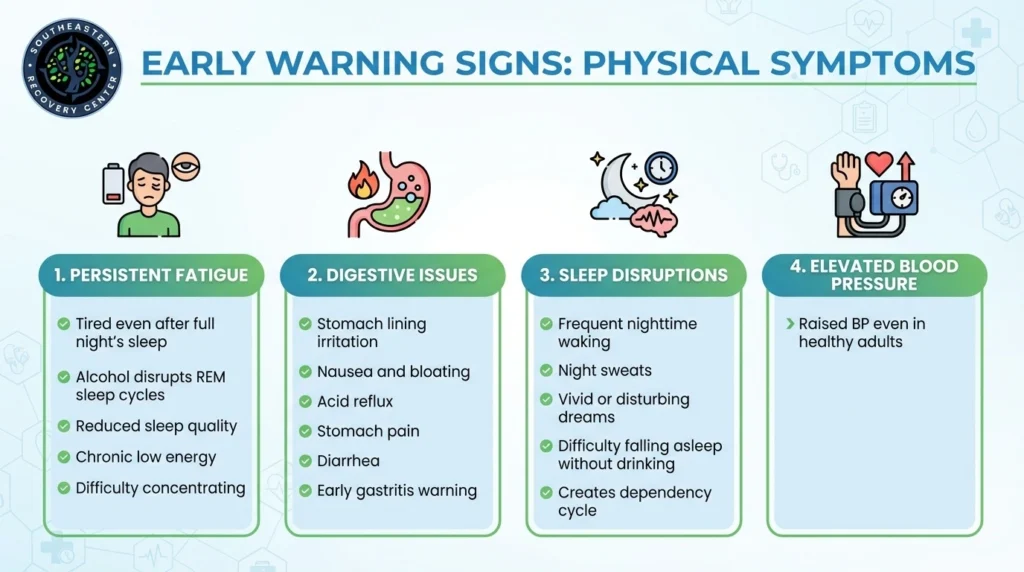
Feeling constantly tired, even after a full night of sleep, is a common early sign.
Alcohol disrupts normal sleep cycles, particularly REM sleep. Even if you fall asleep quickly after drinking, the quality of sleep is reduced. Over time, this leads to chronic fatigue, low energy, and difficulty concentrating.
The National Institute on Alcohol Abuse and Alcoholism explains that alcohol interferes with restorative sleep and impacts the body’s ability to recover overnight.
Alcohol irritates the stomach lining and digestive tract. Early symptoms may include:
Frequent digestive discomfort after drinking can indicate inflammation of the stomach or early gastritis.
One of the first systems alcohol affects is the brain.
You may notice:
Alcohol initially increases feel-good neurotransmitters like dopamine, but over time it disrupts the brain’s natural balance. According to the National Institute on Drug Abuse, repeated alcohol use alters brain circuits related to stress and reward, which can worsen emotional instability.
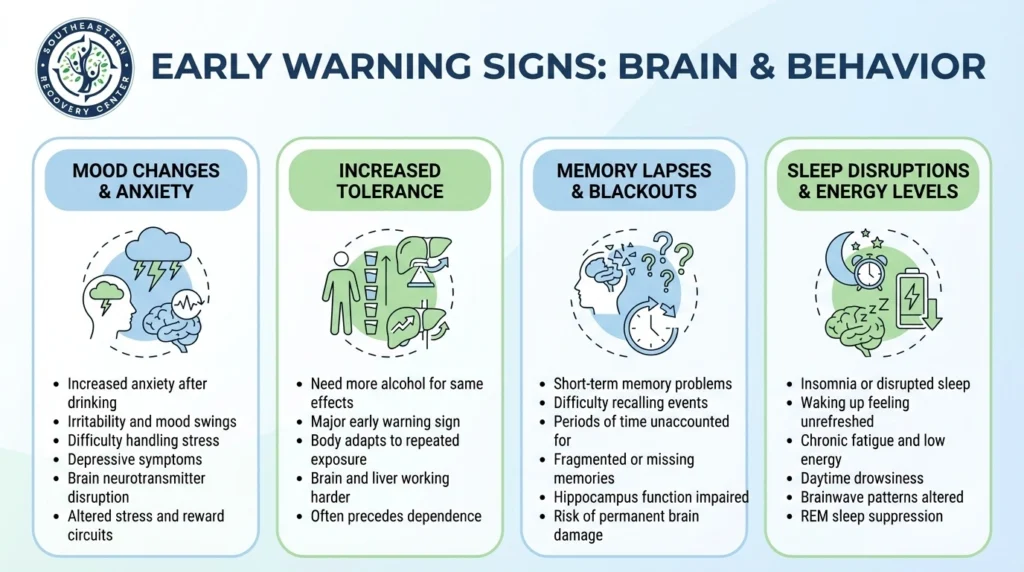
Needing more alcohol to feel the same effects is a major early warning sign.
Tolerance develops as the body adapts to repeated exposure. While this may seem like a minor change, it signals that the brain and liver are already working harder to process alcohol.
Rising tolerance often precedes dependence.
Beyond fatigue, alcohol can cause:
Poor sleep becomes both a symptom and a driver of continued drinking, creating a cycle that is hard to break.
Alcohol can raise blood pressure even in otherwise healthy adults.
The Centers for Disease Control and Prevention notes that excessive alcohol use increases the risk of high blood pressure and cardiovascular problems. Early elevation may not cause noticeable symptoms, which is why routine checkups are important.
The liver is often affected earlier than people realize.
Early-stage fatty liver disease may not cause pain, but signs can include:
The American Liver Foundation reports that fatty liver disease can begin developing even with moderate but consistent alcohol use.
The good news is that early fatty liver is often reversible with abstinence.
Short-term memory problems or “blackouts” are strong indicators of alcohol affecting the brain.
If you frequently forget conversations, events, or actions after drinking, it suggests that alcohol is interfering with normal brain function.
Repeated blackouts are not normal and should be taken seriously.
Ignoring these early warning signs of alcohol abuse can lead to more severe complications, including:
The earlier someone addresses problematic drinking, the more reversible the damage may be.
You don’t have to walk this path alone. Our compassionate team is here to support you through every stage of your recovery. Start your recovery journey with a team that truly cares.
You want the best for them, and so do we. Let’s work together to build a clear path toward their recovery with a team that values them as much as you do.
You deserve quality care without the guesswork. We’ll walk through your insurance benefits together and find the best path forward for your unique situation.
Many people wait until there are dramatic consequences before seeking help. But alcohol addiction and physical damage develop gradually.
At Southeastern Recovery Center in Charlotte, we help individuals intervene early. Treatment focuses on:
Early treatment significantly improves outcomes and may prevent permanent organ damage.

Sources
American Liver Foundation. “Alcohol-Related Liver Disease.” American Liver Foundation, www.liverfoundation.org.
Centers for Disease Control and Prevention. “Alcohol and Public Health.” CDC, www.cdc.gov/alcohol.
National Institute on Alcohol Abuse and Alcoholism. “Alcohol’s Effects on the Body.” National Institutes of Health, www.niaaa.nih.gov.
National Institute on Drug Abuse. “Drugs, Brains, and Behavior: The Science of Addiction.” National Institutes of Health, www.nida.nih.gov.