What Happens to the Brain When Someone Is Addicted?

When someone becomes addicted, the brain’s reward, motivation, and decision-making systems are altered, making substance use feel necessary rather than optional. At Southeastern Recovery Center, we help individuals and families understand that addiction is a brain-based condition, not a lack of willpower. These changes explain why cravings persist and why stopping without support can feel overwhelming.

Table of Contents

Full Color Logo No Text

How does addiction change the brain?

Addictive substances affect how the brain communicates and regulates pleasure.

Over time, repeated substance use:

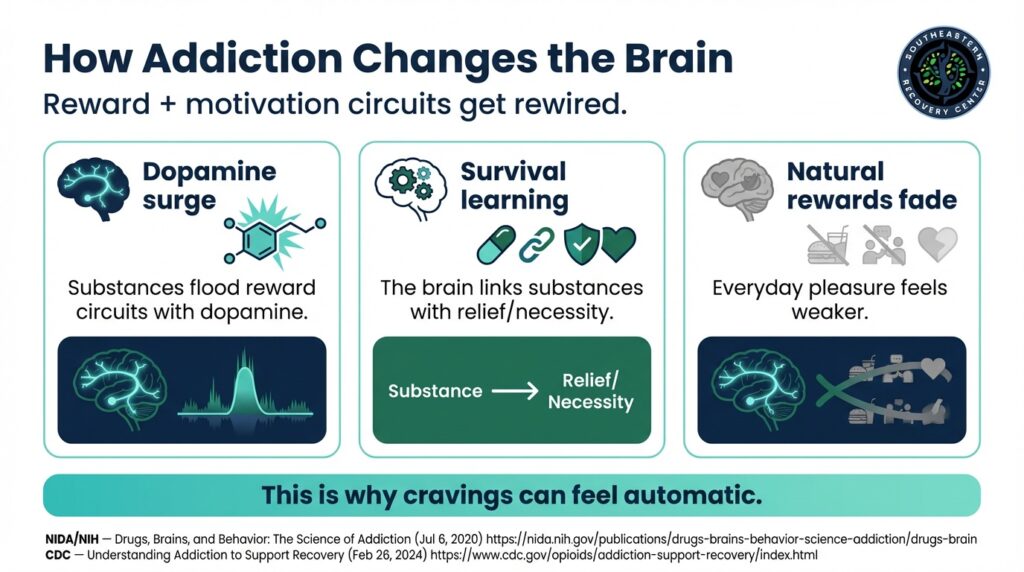
  • Floods the brain with dopamine
  • Trains the brain to associate substances with survival
  • Reduces response to natural rewards


This rewiring prioritizes substance use over everyday needs.

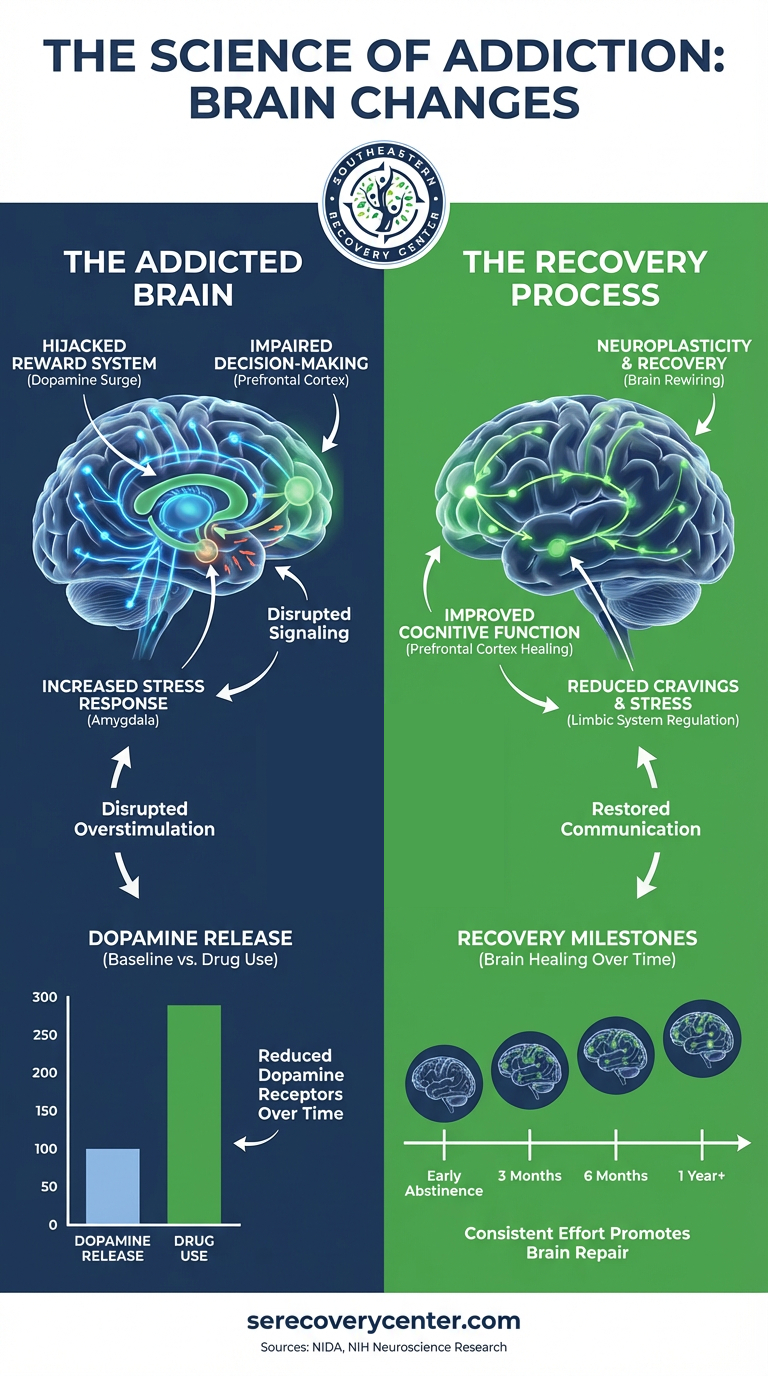
infographic of the science behind how the brain changes during addiction and during recovery

What is dopamine’s role in addiction?

Dopamine is a chemical involved in motivation and reward.

With addiction:

  • The brain releases dopamine in large amounts when substances are used
  • Natural rewards like food or relationships produce less pleasure
  • Cravings become intense and automatic

The brain learns to seek substances as a primary source of relief or pleasure.

What parts of the brain are affected by addiction?

Several key brain areas are impacted.

These include:

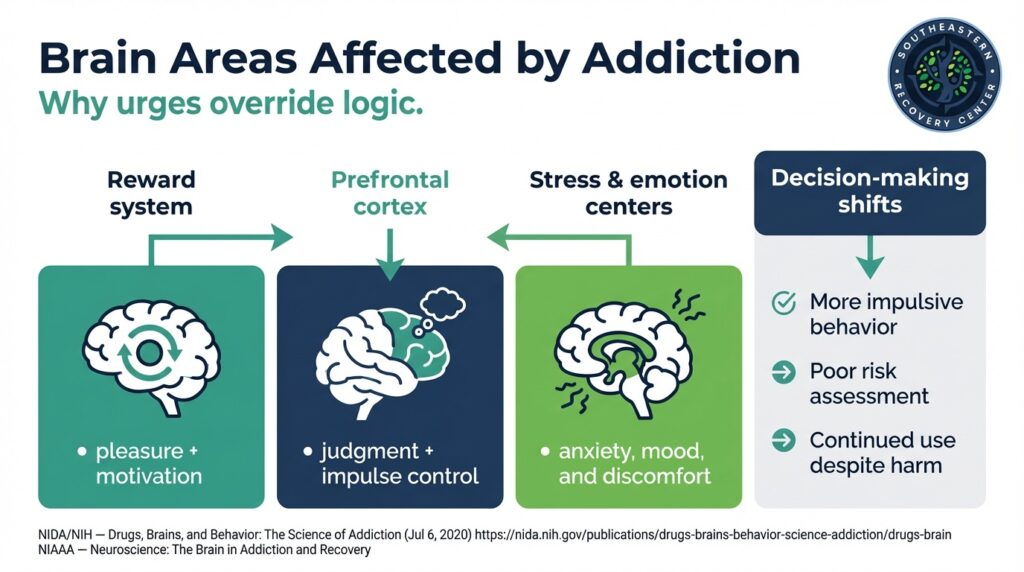
  • The reward system, which controls pleasure and motivation
  • The prefrontal cortex, which manages judgment and impulse control
  • Stress and emotional regulation centers, which influence anxiety and mood

Damage to these systems makes resisting urges more difficult.

areas of the brain affected by addiction infographic

Why does addiction affect decision-making?

The prefrontal cortex helps people weigh consequences and make rational choices.

Addiction weakens this area, leading to:

  • Impulsive behavior
  • Poor risk assessment
  • Continued use despite negative outcomes

Does addiction permanently damage the brain?

Not always.

The brain has the ability to heal through neuroplasticity.

With sustained recovery:

  • Brain chemistry gradually stabilizes
  • Dopamine levels improve
  • Decision-making and emotional regulation strengthen

Healing takes time and varies by individual.

How long does brain recovery take?

There is no single timeline.

General recovery patterns include:

  • Improved sleep and mood within weeks
  • Better focus and emotional stability over months
  • Continued improvement with long-term sobriety

Support and consistency play a major role in recovery.

how addiction changes the brain infographic

How does treatment support brain healing?

Treatment helps stabilize and retrain the brain.

At Southeastern Recovery Center, care may include:

Treatment creates the conditions needed for brain healing.

Why understanding the brain helps reduce stigma

Knowing how addiction affects the brain helps reduce shame.

Addiction is:

  • A medical condition
  • Influenced by biology, environment, and mental health
  • Treatable with proper care

Education empowers recovery and compassion.

A hopeful message from Southeastern Recovery Center

Addiction changes the brain, but those changes are not permanent. With the right support, the brain can recover and rebuild healthier patterns. At Southeastern Recovery Center, we believe understanding the science of addiction helps people move forward with clarity, confidence, and hope.

Harvard Health Publishing. How Addiction Hijacks the Brain.
Harvard Medical School, www.health.harvard.edu/blog/how-addiction-hijacks-the-brain-2017111012872.

Mayo Clinic. Drug Addiction (Substance Use Disorder).
Mayo Foundation for Medical Education and Research,
www.mayoclinic.org/diseases-conditions/drug-addiction.

National Institute on Drug Abuse. Drugs, Brains, and Behavior: The Science of Addiction.
National Institutes of Health, www.nida.nih.gov/publications/drugs-brains-behavior-science-addiction.

National Institute on Alcohol Abuse and Alcoholism. Understanding Alcohol Use Disorder.
National Institutes of Health, www.niaaa.nih.gov/health-professionals-communities/alcohol-use-disorder.

Substance Abuse and Mental Health Services Administration. Understanding Substance Use Disorders.
U.S. Department of Health and Human Services, www.samhsa.gov/find-help/disorders.