
Alcohol affects nearly every system in the body, but some organs are especially vulnerable to long-term or heavy drinking – the liver, her brain, the heart, the pancreas, the entire gastrointestinal system (esophagus, stomach lining, intestines), and the immune system. While many people associate alcoholism primarily with liver damage, the reality is far broader.
At Southeastern Recovery Center in Charlotte, NC, we help clients understand that alcohol use disorder is not just a behavioral issue. It is a medical condition that impacts multiple organs over time.
Below are the organs most commonly and severely affected by chronic alcohol use.

The liver is the organ most widely associated with alcoholism, and for good reason.
The liver processes alcohol and works to remove toxins from the bloodstream. When someone drinks heavily or daily, the liver becomes overworked. Over time, this can lead to:
According to the National Institute on Alcohol Abuse and Alcoholism, alcohol-associated liver disease is one of the leading causes of liver-related deaths in the United States.
Early-stage fatty liver can sometimes improve with abstinence, but advanced cirrhosis is often irreversible.

Alcohol directly affects the brain’s chemistry, structure, and communication pathways.
Chronic alcohol use can lead to:
The National Institute on Drug Abuse explains that repeated alcohol exposure changes the brain’s reward system and stress response circuits, reinforcing compulsive drinking behaviors.
In severe cases, long-term alcohol misuse can cause Wernicke-Korsakoff syndrome, a serious neurological condition linked to thiamine deficiency.

Alcohol significantly impacts cardiovascular health.
Heavy drinking increases the risk of:
The Centers for Disease Control and Prevention reports that excessive alcohol use contributes to thousands of cardiovascular-related deaths each year.
Over time, alcohol can weaken the heart muscle, reducing its ability to pump blood efficiently.

The pancreas helps regulate blood sugar and produces digestive enzymes. Alcohol interferes with these functions and can trigger inflammation.
Long-term heavy drinking may lead to:
Repeated inflammation can cause lasting damage and chronic pain.

Alcohol irritates the entire digestive tract, including:
This irritation can lead to:
The American Cancer Society identifies alcohol as a risk factor for several cancers, including liver, esophageal, colorectal, and breast cancer.

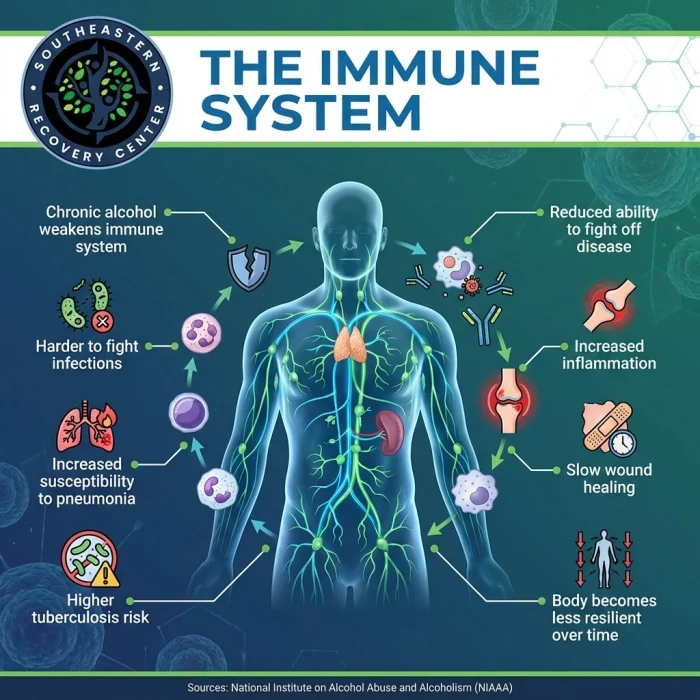
Chronic alcohol use weakens the immune system, making it harder for the body to fight infections.
People with alcohol use disorder are more susceptible to:
Over time, the body becomes less resilient overall.
The encouraging news is that some organs can begin to recover after stopping alcohol use.
However, advanced damage such as cirrhosis or heart failure may not be fully reversible.
The earlier someone seeks help, the better the long-term outcomes.

Understanding which organs are affected can make the seriousness of alcoholism more real. Alcohol use disorder is not just about social consequences. It is a progressive medical condition with measurable physical effects.
At Southeastern Recovery Center in Charlotte, we help clients address both the psychological and physical components of addiction. Treatment focuses on:
Recovery is not only about stopping drinking. It is about restoring health and preventing further organ damage.
Taking the first step toward change is a brave choice. Our dedicated team is here to provide the steady guidance and professional care you need to rediscover your strength. You deserve a life of wellness, and we are honored to help you build it.
It is difficult to watch a friend or family member struggle, but you are not alone in this fight. We partner with families to create a bridge toward healing, offering the expertise and empathy required to navigate the complexities of their recovery together.
Clarity brings peace of mind. We take the stress out of the process by verifying your benefits and outlining a clear path for treatment. Let us handle the details of your coverage so you can focus entirely on the journey toward a healthier future.
Sources
American Cancer Society. “Alcohol Use and Cancer.” American Cancer Society, www.cancer.org/cancer/risk-prevention/diet-physical-activity/alcohol-use-and-cancer.html.
Centers for Disease Control and Prevention. “Alcohol and Public Health.” CDC, www.cdc.gov/alcohol.
National Institute on Alcohol Abuse and Alcoholism. “Alcohol’s Effects on the Body.” National Institutes of Health, www.niaaa.nih.gov.
National Institute on Drug Abuse. “Drugs, Brains, and Behavior: The Science of Addiction.” National Institutes of Health, www.nida.nih.gov.