PTSD Treatment In North Carolina

PTSD, short for post-traumatic stress disorder, is a mental health disorder that develops after witnessing or experiencing a traumatic event. PTSD can be a long-lasting condition that comes with flashbacks, nightmares, and negative thoughts that lead an individual to withdraw from relationships and work.

At Southeastern Recovery Center in Charlotte, NC, we help identify and treat PTSD. We achieve this through personalized PTSD treatment plans that help individuals not only address their PTSD symptoms, but also to understand the underlying causes and necessary coping mechanisms to manage symptoms.

Supportive
0 %
Treatment Modalities
0
Levels Of Care
0

Table of Contents

Article Preview:

What is PTSD? PTSD is a mental health condition that is caused by being part of or witnessing a traumatic event.

Why is PTSD a concern in North Carolina (and Charlotte?) 57.6% of North Carolinians reported experiencing at least one traumatic event, which could trigger PTSD.

How does PTSD start? PTSD is usually triggered by a particularly stressful or terrifying life event.

How to recognize PTSD. PTSD can be recognized when an individual has intrusive memories, avoidance, negative thoughts and moods, and physical or emotional reactions.

How long does PTSD last? PTSD can last anywhere from weeks to months to years depending on an individual’s severity, triggers, and treatment.

How Is PTSD Treated in North Carolina? Southeastern Recovery Center uses a mix of science and empathy to provide individuals with relief from PTSD.

How Can Families Help Someone Suffering From PTSD? Families can help someone suffering from PTSD by taking part in treatments and doing their own research into how PTSD rewires behavior.

How to Prevent PTSD Relapse. Southeastern Recovery Center makes use of continued therapy, healthy coping strategies, and access to alumni networks to help individuals prevent relapse after PTSD treatment.

How to Choose the Right PTSD Treatment in Charlotte. To find a PTSD  treatment center in Charlotte, North Carolina, look for accreditation and experience with mental health rehab.

How PTSD Treatment Works at Southeastern Recovery Center. Southeastern Recovery Center makes use of an intake assessment to create a personalized plan to help you with your PTSD treatment.

Why Choose Southeastern Recovery Center. Southeastern Recovery Center creates personalized treatment plans to serve patients from all over North Carolina, not just Charlotte.

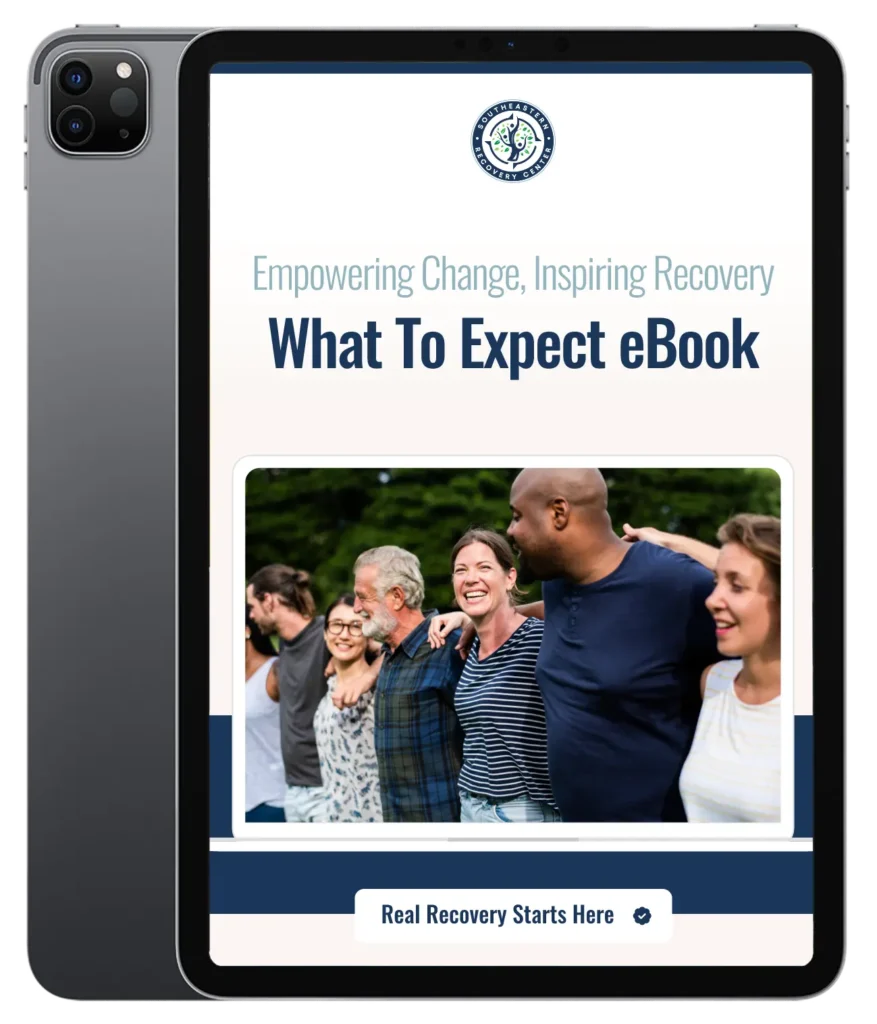
Download Our Free eBook! Get a free e-book that teaches more about how treatment for PTSD and other mental health disorders is handled at Southeastern Recovery Center in Charlotte, North Carolina.

Frequently Asked Questions About PTSD Treatment. Get answers to the most commonly asked questions about treating PTSD.

Full Color Logo No Text

What is PTSD?

PTSD is a mental health condition that is caused by being part of or witnessing a traumatic event. While many individuals will require an adjustment period after this sort of stressful event, people who have a harder time and begin to develop mental and physical symptoms may have PTSD.

PTSD can also cause an individual to reexperience those emotionally or physically traumatic events. This can happen in the form of flashbacks or nightmares. The impact of going through this recurring trauma again and again can begin to take a toll on individuals mental and physical health.

Suffering from PTSD can cause an individual to withdraw from their friend and family relationships, have difficulty with work and sleeping, and generally worsen their quality of life. This can also lead to them developing other mental health conditions such as depression or anxiety.

Full Color Logo No Text

Why is PTSD a Concern in North Carolina (and Charlotte?)

PTSD can happen to anyone anywhere, since this most common trigger is a stressful or terrifying life event.

When we look at data showing how PTSD affects North Carolina:


This speaks to how impactful PTSD can be for individuals. If you or someone you know in Charlotte or North Carolina is suffering from PTSD, it’s important to know that help is available and treatment is absolutely possible.

how to recognize PTSD

How does PTSD start?

PTSD is usually triggered by a particularly stressful or terrifying life event. Examples include childhood physical abuse, sexual assault, physical assault, and robbery. Additionally, women have been found to be more likely to develop PTSD than men.

The likelihood of developing PTSD increases with the severity and duration of traumatic experiences. Additionally, being exposed to traumatic events more frequently being physically injured during a traumatic event increases the odds of developing PTSD.

How to Recognize PTSD

PTSD has varied symptoms and behavioral patterns that can be recognized. These include:

  • Intrusive memories (flashbacks and nightmares)
  • Avoidance (isolation or changes to avoid potential triggers)
  • Negative thoughts and moods (detachment from family and friends, emotional numbness)
  • Physical and emotional reactions (heightened awareness, irritability)

Additionally, PTSD symptoms can manifest through the development of other mental health problems such as depression or anxiety, the manifestation of self harming behavior, and through physical symptoms such as headaches and chest pains.

How Long Does PTSD Last?

The duration of PTSD will vary from person to person, but symptoms can last anywhere from months to years. There’s also a possibility to have PTSD for a lifetime if the mental health disorder is not properly treated.

This is why it’s so important to get proper medical help if you are experiencing post-traumatic stress disorder.

At our Charlotte facility, patients experiencing PTSD receive the support and guidance they need to alleviate their symptoms.

How Is PTSD Treated in North Carolina?

At Southeastern Recovery Center, our approach to PTSD treatment is both scientific and empathetic. We know that every individual’s underlying triggers of PTSD will vary, so we want to equip our patients with the tools they need to fight this chronic condition.

We do this through offering a variety of treatments including:

  • Residential Treatment – 24-hour structured support for those needing intensive care.
  • Outpatient Programs – Flexible treatment options for clients balancing recovery with daily responsibilities.
  • Therapy and Counseling – Evidence-based modalities like Cognitive Behavioral Therapy (CBT), Motivational Interviewing (MI), and trauma-informed care.
  • Dual Diagnosis Treatment – Addressing co-occurring issues such as anxiety, depression, or PTSD.
  • Aftercare and Alumni Support – Helping clients transition smoothly back into daily life.
  • Drug Addiction Support – For clients that have developed an addiction to drugs or alcohol to self medicate for mental health, we make use of medical detoxification, addiction treatments, and residential treatment to help patients return to sober living.

Whether you’re coming to us from Fayetteville or from Raleigh, know that all patients receive the same comprehensive, personalized care to guide the path towards dealing with PTSD.

How Can Families Help Someone Suffering From PTSD?

An individual’s PTSD can impact the entire family. At the same time, familial support can play a significant role in helping someone cope with their PTSD.

Families in Charlotte and throughout North Carolina can help by:

  • Speaking openly and without judgment
  • Encouraging professional treatment instead of self-treatment or even self-medication
  • Learning about PTSD and PTSD triggers
  • Setting healthy boundaries
  • Participating in family therapy sessions

At Southeastern Recovery Center, we provide family programs that help loved ones rebuild trust, improve communication, and create a shared understanding of living with PTSD.

How to Prevent PTSD Relapse

For some people, PTSD can be cured in its entirety. For others, PTSD treatment doesn’t end after a visit to our facility. Symptoms may persist, and those who have experienced PTSD once are more likely to experience it again after another traumatic event. Dealing with PTSD symptoms may require ongoing support and structure.

Our PTSD treatment helps clients in Charlotte and across North Carolina continue to combat this chronic mental health disorder through:

  • Continued therapy and support groups


  • Identifying and managing personal triggers


  • Developing healthy coping strategies


  • Building new daily routines and social connections


  • Access to community-based resources and alumni networks

Experiencing a relapse in your PTSD does not mean that you somehow failed. All this means is that you might need additional support in your mental health journey in order to alleviate symptoms. With proper guidance, you can learn to manage and reduce PTSD triggers.

How to Choose the Right PTSD Treatment in Charlotte

Finding the right treatment center in Charlotte, NC, or elsewhere in North Carolina, can feel overwhelming. Most people suffering from PTSD are looking for quick, effective, and science-backed treatment that they can rely on for relief. Here are key factors to consider for treatment facilities:

  • Accreditation 
  • Licensed therapists and addiction specialists
  • Holistic treatment
  • Experience with PTSD and associated mental health disorders
  • Individualized treatment plans
  • Aftercare and long-term support
  • Addressing any drug or alcohol dependencies or addictions that may have developed as a result of poor mental health

At Southeastern Recovery Center, we meet all of these criteria and more. Our focus is on holistic treatment that addresses the underlying factors that lead to needing treatment for PTSD in the first place.

PTSD Treatment North Carolina

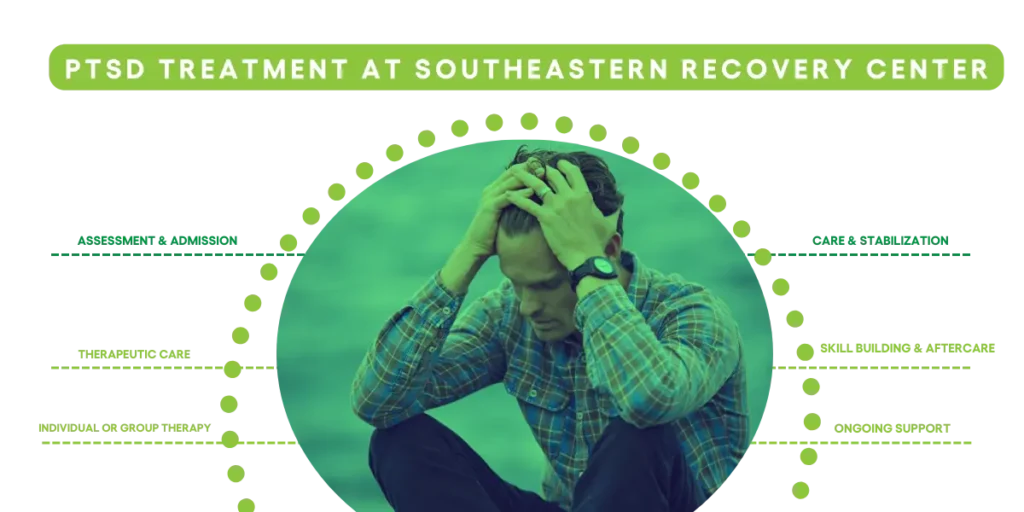
How PTSD Treatment Works at Southeastern Recovery Center

From your first phone call to the day you graduate from treatment, our team provides step-by-step support.

    1. Assessment & Admission – Our admissions team evaluates your needs and verifies insurance coverage.


    2. Detox & Stabilization – We guide you through safe withdrawal in a medically supported environment.


    3. Therapeutic Care – You’ll work with licensed therapists to uncover root causes and triggers of your PTSD.


    4. Skill Building & Aftercare – We help you develop tools and routines for lasting alleviation of PTSD symptoms.


    5. Ongoing Support – Alumni programs and recovery resources keep you connected to your progress.

Our mission is simple: to provide the highest level of mental health rehab possible so that every client leaves stronger, healthier, and ready to thrive.

Why Choose Southeastern Recovery Center

At Southeastern Recovery Center, we believe PTSD treatment isn’t a one-off thing, it’s arming an individual with tools they can use for the rest of their life if they experience a relapse or new triggers. Our Charlotte-based facility provides a safe, welcoming space where clients can focus fully on long-term treatment.

We serve individuals from Charlotte, Concord, Gastonia, Huntersville, and throughout North Carolina who are seeking trusted, compassionate care for depression and depressive episodes.

Our experienced team, state-of-the-art facility, and commitment to personalized care make us a leading choice for North Carolinians seeking to alleviate PTSD.

South East Recovery eBook Cover

What To Expect eBook

South East Recovery eBook Cover

Download Our Free eBook!

If you or a loved one are interested in learning more about what to expect when getting mental health treatment, please fill out our brief form and download the eBook. You can also give our admissions team a call & we would be happy to answer any questions you may have. Help is only a call away!

Full Color Logo No Text

Frequently Asked Questions About PTSD Treatment

How quickly can I be diagnosed with PTSD?

You can be diagnosed with PTSD after experiencing symptoms for longer than a month and experiencing significant distress or issues with your daily functioning.

PTSD lasts a varying amount of time, anywhere from months to years. The duration of your PTSD will depend on your PTSD duration, treatment, and frequency of triggers.

PTSD reoccurs at a rate of about 13.1% in trauma exposed populations, according to this study.

Yes, you are more likely to develop PTSD again after experiencing it once. This is because the initial trauma and development of PTSD rewires your brain and body in a way that makes you more susceptible to future stressors.

No, you cannot fully treat PTSD at home without proper professional treatment. However, you can partially manage your symptoms through use of methods such as mindfulness and relaxation techniques.

We're Here For You!

If you or a loved are struggling with PTSD, please reach out to our team today. Many treatment centers take a one-size-fits-all approach when treating mental health disorders which isn't effective...At SERC, we understand that each client has their own story which led them to seeking help. We put emphasis on individualized care, tailoring treatment based on the specific needs of each client.

1
Step One

Reach Out For Help! ⮕

Southeast (2) [Recovered]-07 2
Request A Confidential Call

Click the button below to fill out our brief form. 

2
Step Two

Create A Recovery Plan! ⮕

Southeast (2) [Recovered]-07 2
Create A Plan

Our team will work with you or a loved one to create a treatment plan

3
Step Three

Begin The Healing Process! ⮕

Southeast (2) [Recovered]-07 2
Begin Your Recovery

Your Journey Begins The Moment You Reach Our Facility