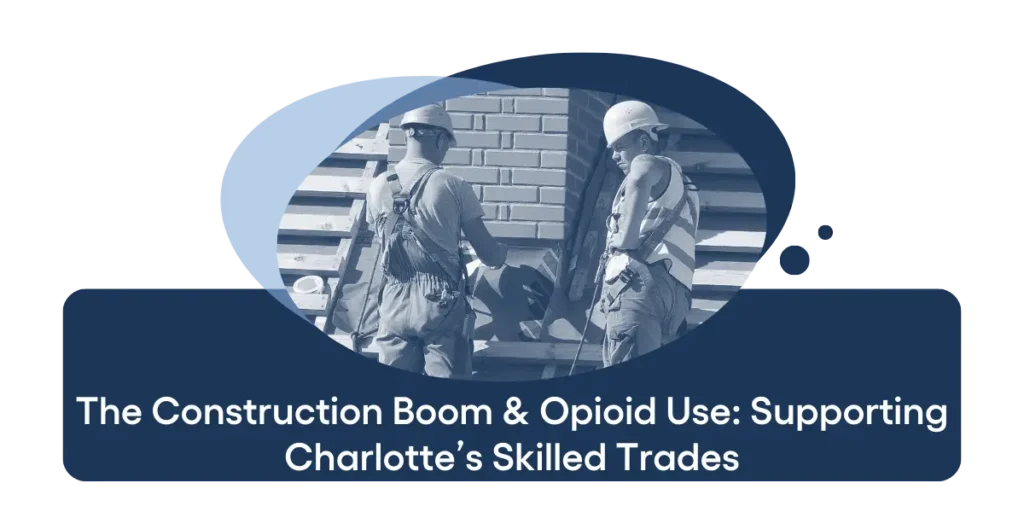
The construction industry has a fraught, complicated relationship with opioid use, which makes it rife for unaddressed substance use disorders. In Charlotte, NC, a “building boom” is creating plenty of opportunity for construction workers. At the same time there’s a boom in construction workers looking for treatment for pain management and addiction in Charlotte.
As construction continues to thrive in Charlotte, North Carolina it’s important for our community to understand how opioid usage and construction jobs are interlinked. This will help individuals and loved ones recognize signs of addiction, and improve the odds of community-based initiatives that ensure blue-collar workers have access to rehab resources as needed.
Summary: Opioid usage is at its highest in the construction industry due to the high rates of injury and subsequent high rates of prescribed opioids. To support Charlotte’s skilled tradesmen, employers and rehab facilities need to be prepared to provide resources and treatment that promote healthy coping mechanisms for pain.
Article preview:
How Are Construction and Opioid Usage Linked? The construction industry has the highest rate of opioid usage of all industries surveyed by the Substance Abuse and Mental Health Services Administration.
Why is Opioid Usage So High in Construction? High injury rates are the primary factor driving up opioid usage and construction.
Pain Management and Addiction in Charlotte (and North Carolina). Better alternatives for pain management need to be accessed by construction workers in Charlotte, and effective opioid addiction treatment needs to address long-term concerns.
What Are Signs That Construction Workers Have Developed Opioid Use Disorder? Paleness, bruised veins, and irritability are some signs that a construction worker has begun to develop a dependence on opioids.
Rehab for Construction Workers in NC. Personalized treatment, science-backed methods, and long-term support are requirements for effective rehab for construction workers in North Carolina.
FAQs about The Construction Boom & Opioid Use: Supporting Charlotte’s Skilled Trades. Get answers to frequently asked questions about the construction industry and opioid usage.
How Are Construction and Opioid Usage Linked?
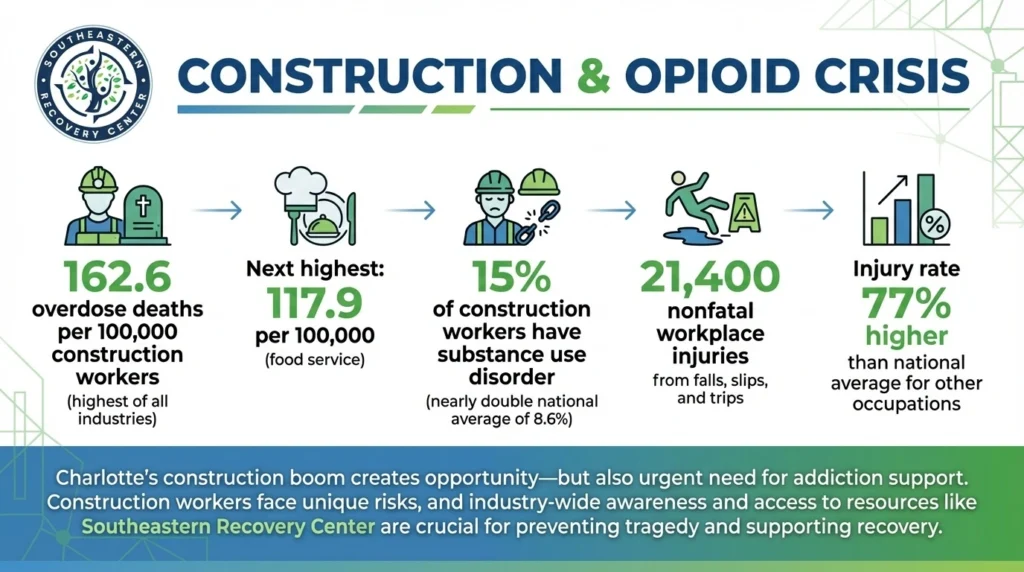
Data from the CDC shows that the construction industry suffers by far from the most drug overdose deaths of all surveyed industries. Overdose deaths occurred at a rate of 162.6 per 100,000 construction workers. The next highest rate is 117.9 per 100,000 workers in the food preparation and serving related industry.
The stats in construction have been dire for over a decade. The CDC noted increasing rates of overdose deaths in construction from 2011 to 2018. There has been an ongoing opioid overdose epidemic over the years across America, but the construction industry is seeing the worst of it.
Why is Opioid Usage So High in Construction?
The opioid epidemic is so severe in the construction industry that the CDC has written blogs about it. This resulted in several revelations about the relationship between opioid usage and construction.
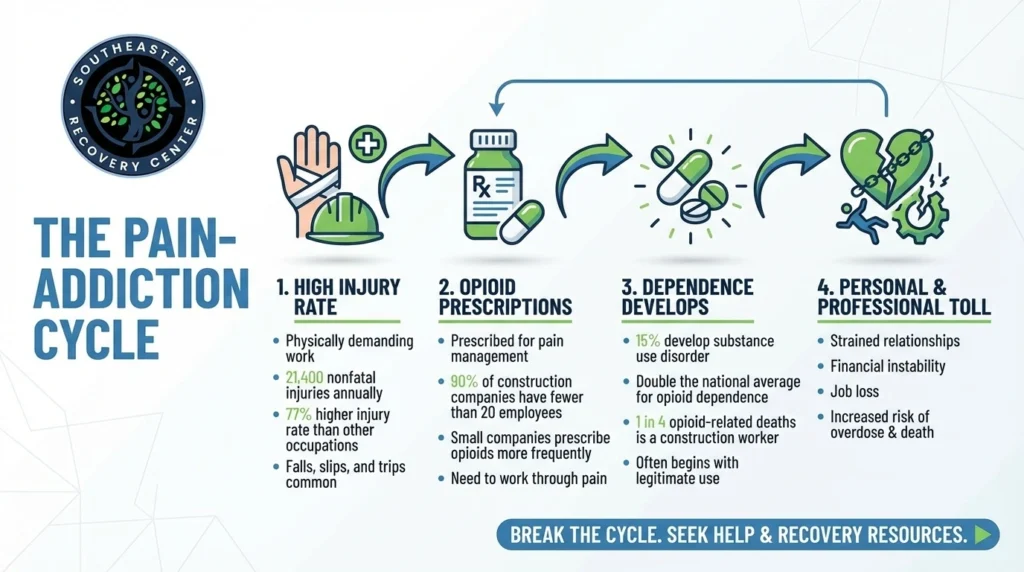
One of these factors was a unique relationship between opioid prescriptions and company size. Strangely, workers (in any industry) employed at small companies were said to prescribe opioids more frequently than workers at larger ones. Around 90% of construction companies are noted to employ fewer than 20 employees, making them fit the description of small businesses.
But the primary factor contributing both directly and indirectly to opioid usage among construction workers was their struggles with pain management.
Pain Management and Addiction in Charlotte (and North Carolina)
The primary driver of the high rates of opioid use disorder among construction workers is their high rates of injury, as confirmed by numerous studies. Construction work is physically demanding, and as such is associated with high rates of injury and illness. According to data from the US Bureau of Labor Statistics, workers in construction and extraction occupations experienced 21,400 nonfatal workplace injuries and illnesses due to falls, slips, and trips. The injury rate for construction workers is 77% higher than the national average for other occupations.
This high rate of injury and need for pain management naturally dovetails into the development of addiction not just in Charlotte but across the United States. An estimated 15% of construction workers have a substance use disorder, which is almost double the national average of 8.6%.
By the very nature of their work, construction workers are trapped in a vicious cycle. They are injured at a higher rate than most people, which leads to them being prescribed opioids at a higher rate than most people, which makes them more likely than any other type of worker to get addicted to opioids long term. Additionally, attempting to take off from work to recover from injuries will result in a loss of wages and possibly reputational hits due to a stigma of working through pain. The result is almost feeling as if they require pain relieving medication to complete work.
Construction is also a blue-collar job. Workers who may be conscious of the risks of developing substance use disorders may feel as if boutique recovery centers generally overlook them, making them feel as if they have no place to go when it comes to having their concerns around opioid usage heard.
This is why it’s so important that facilities like Southeastern Recovery Center offer treatment and facilitation into rehab for construction workers in NC. The type of personalized treatment we provide helps address underlying factors that lead to opioid use disorder, such as environmental factors and social pressure. The construction industry itself has too many factors that push workers towards abusing opioids to keep up with work. Workers need to be aware of alternative coping mechanisms for pain management and addiction in order to defeat opioid addiction.
What Are Signs That Construction Workers Have Developed Opioid Addiction?
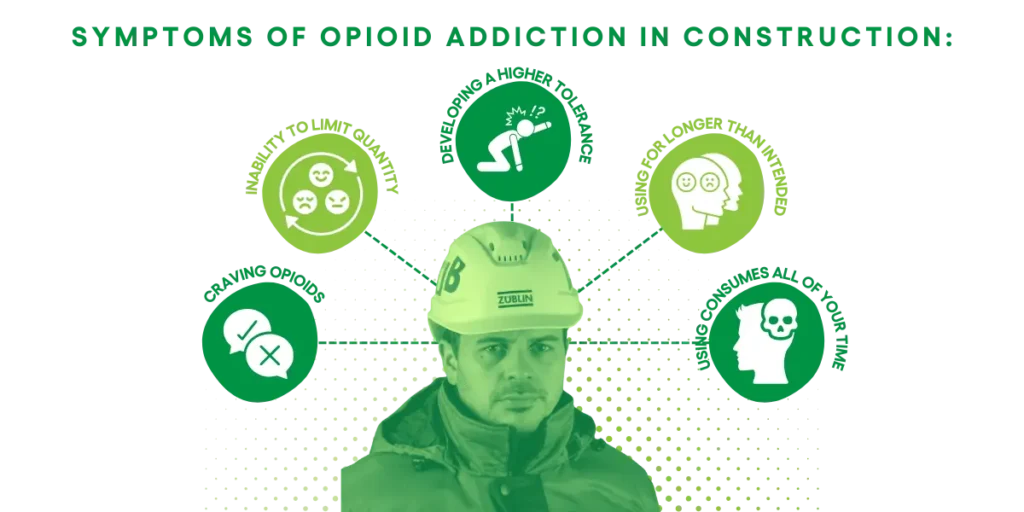
There are several signs that construction workers are using opioids.
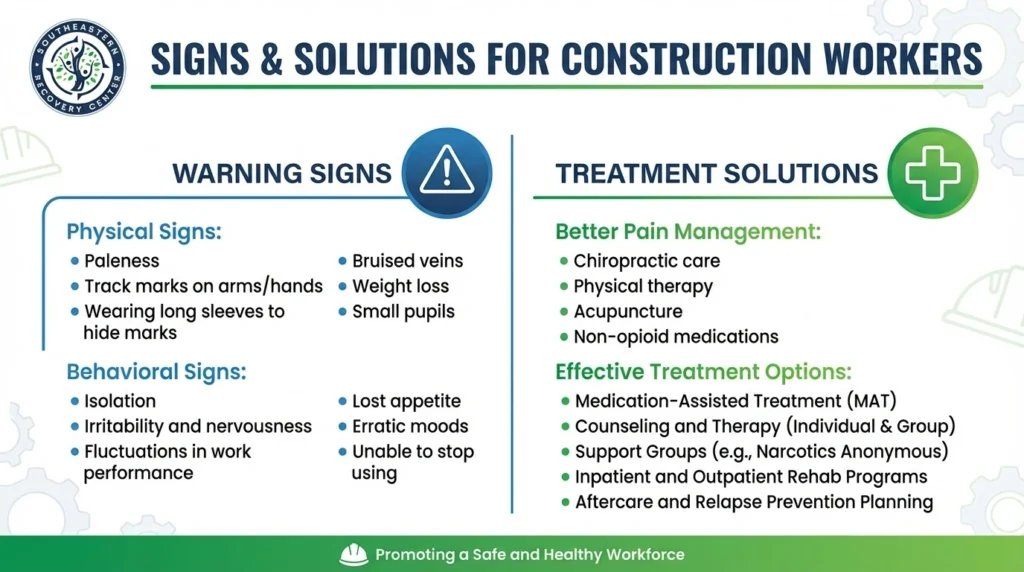
Physical symptoms of opioid addiction in construction workers include such as:
- Paleness
- Track marks and arms and hands, or wearing long sleeves to hide them
- Bruised veins
- Weight loss
- Small pupils
Behavioral symptoms of construction workers who may need rehab for opioid addiction include:
- Isolation
- Irritability
- Nervousness
- Fluctuations in work performance
- Lost appetite
- Erratic moods
If opioid usage is known, signs of an opioid use disorder include an individual being unable to stop their usage, require higher doses of opioids to feel the effects they once did, and taking opioids and ill-advised or dangerous times.
If you or a loved one are showing these signs, it may be time to look for rehab for construction workers in North Carolina.
Rehab for Construction Workers in NC
When looking for rehab for construction workers in North Carolina, there are three qualities that should be prioritized:
- Personalized treatment. Treatment should be customized on a per-person basis and address the underlying causes of opioid use disorder. In the case of construction workers, pain relief should be one of the main factors acknowledged.
- Science-backed treatment methods. Methods should be well researched and endorsed by medical professionals. It may also be worthwhile seeking out a facility that provides medications such as methadone and buprenorphine to help alleviate opioid withdrawal symptoms.
- Aftercare and long-term support. Construction workers need to be supported when it comes to finding ways of coping with pain in the long term. Otherwise, the demands of construction jobs are more than likely to put them once again in contact with opioids. This can include placement with peer support groups or sober living activities.
Southeastern Recovery Center meets all of these criteria and more, and our focus on integrity, compassion, and clinical experience has made us one of the go-to providers when it comes to addressing pain management and addiction in Charlotte.
FAQs about The Construction Boom & Opioid Use: Supporting Charlotte’s Skilled Trades
How common is opioid usage in construction?
Opioid usage is by far most common in construction over all other industries, and construction has the highest rate of overdose deaths as well.
What causes construction workers to use opioids?
The main cause of construction workers using opioids is for pain relief due to their high injury rate while on worksites.
Are there better options for pain management for construction workers?
Yes, there are better options for pain management for construction workers, including chiropractic care, physical therapy, and acupuncture.
What are some signs of opioid addiction in construction workers?
Signs of opioid addiction in construction workers include irritability, track marks in their arms and hands, and erratic moods.
Sources:
Billock, Rachael. “Drug Overdose Mortality by Usual Occupation and Industry: 46 U.S. States and New York City.” CDC, CDC, www.cdc.gov/nchs/data/nvsr/nvsr72/nvsr72-07.pdf.
Krisberg, Kim. “Construction Sector Struggles with Opioid Overdose Deaths.” The Nation’s Health, vol. 54, no. 6, Aug. 2024, pp. 1–10, www.thenationshealth.org/content/54/6/1.2.
CDC. “Addressing the Opioid Overdose Epidemic in Construction: Minimize Work Factors That Cause Injury and Pain.” NIOSH Science Blogs, 20 Jan. 2026, www.cdc.gov/niosh/blogs/2021/opioids-in-construction.html.
“Correlates of Opioid Dispensing | WCRI.” Www.wcrinet.org, www.wcrinet.org/reports/correlates-of-opioid-dispensing.
Petosa, Nichole Helmick and Jeremy. “Workplace Injuries and Job Requirements for Construction Laborers : Spotlight on Statistics: U.S. Bureau of Labor Statistics.” Www.bls.gov, Nov. 2022, www.bls.gov/spotlight/2022/workplace-injuries-and-job-requirements-for-construction-laborers/home.htm.
Manzo, Frank, and Jill Manzo. Addressing the Opioid Epidemic among Midwest Construction Workers. 2018.