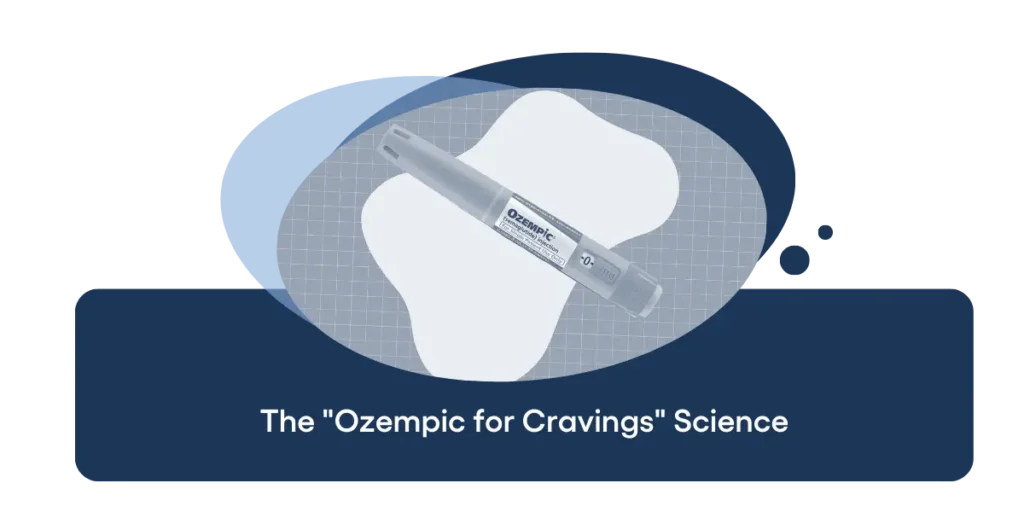
GLP-1s like Ozempic, Wegovy, and Rybselsus are quickly becoming known as wonder drugs due to the impact on diabetes and weight loss, but research is showing that we might start to see the embracing of Ozempic for cravings (or addictions). New studies are showing that semaglutide (the FDA-approved generic drug that is repackaged in brands like Ozempic) can be used to reduce cravings for illicit substances such as opioids.
At Southeastern Recovery Center, we’re always on the lookout for exciting, new discoveries such as this. As research continues, Ozempic and Semaglutide may become widely accepted as a way to help reduce cravings for drugs and alcohol. In this manner, Semaglutide will become yet another tool that can be used to overcome substance use disorders.
That said, while these medications may help quiet the noise at the back of a recovering addict’s head, individuals will still need to make sure to address the underlying causes of their addiction. That’s where treatment facilities like SERC will help, providing personalized plans and treatment that can be delivered either in person or remotely through techniques such as virtual IOP.
Article TL;DR: Data is beginning to suggest that GLP-1s like Ozempic, Wegovy, and Rybselsus may have an impact in curbing drug and alcohol addiction cravings. If this proves to be true and safe, drugs like Ozempic can become part of a select few medications used in addiction recovery.

Article Preview:
What are GLP-1s like Ozempic? GLP-1s like Ozempic are glucagon-like peptide-1 receptor agonists that regulate blood glucose levels, metabolism, and other biological functions.
GLP-1s Impact On Addiction: The Data. Data is suggesting that GLP-1s like Ozempic have an impact in curbing addiction cravings.
Potential Downsides To Using GLP-1s For Substance Use Disorders. GLP-1s also have potential downsides including loss of appetite, nausea, dizziness.
How Medications Can Assist In Drug And Alcohol Addiction Recovery. GLP-1s like Ozempic would be joining medication like buprenorphine and naltrexone is a tool that can be used for addiction recovery, so long as they are proven to be safe.
FAQs The “Ozempic for Cravings” Science. Learn answers to frequently asked questions about Ozempic, GLP-1s, and their impact on drug addiction cravings.
What are GLP-1s like Ozempic?
GLP-1s are a class of FDA approved medications that are glucagon-like peptide-1 receptor agonists. These include semaglutide, liraglutide, and dulaglutide. GLP-1s interact with the G protein-coupled receptor found naturally in the human body. This receptor interacts with GLP-1 to regulate blood glucose levels, the metabolism, and several other crucial biological functions.
GLP-1 medication exploded into popularity due to the success of semaglutides like Ozempic in weight loss. Although semaglutide is regarded as equivalent to GLP-1, in reality it is a peptide that is similar to GLP-1s but has a slightly modified sidechain.
The company Novo Nordisk sells semaglutide under brand names Ozempic and Rybselsus for use in managing diabetes. They also sell it under the brand name Wegovy for weight management weight loss. Despite this distinction, Ozempic overtook Wegovy and popularity, largely due to success stories from celebrities like Oprah suddenly transforming their bodies with weight loss.
It’s important to note that these GLP-1s are not all equivalent. Although Ozempic and Wegovy are both semaglutide injections, Wegovy is a higher dose version that has been approved for use in weight loss. Ozempic’s trials were focused on type II diabetes and its complications, so it was not officially approved for use in weight loss.
As we potentially move towards embracing Ozempic for addiction cravings, it’s important to note the subtle differences in these GLP-1 drugs. Even though they may be able to be used for substance use disorder recovery, we don’t want individuals mixing and matching them without understanding what they are exposing themselves to. That’s why individuals should always be willing to reach out to treatment facilities like Southeastern Recovery Center before they dabble in attempting to recover from addiction at home.
GLP-1s Impact On Addiction: The Data
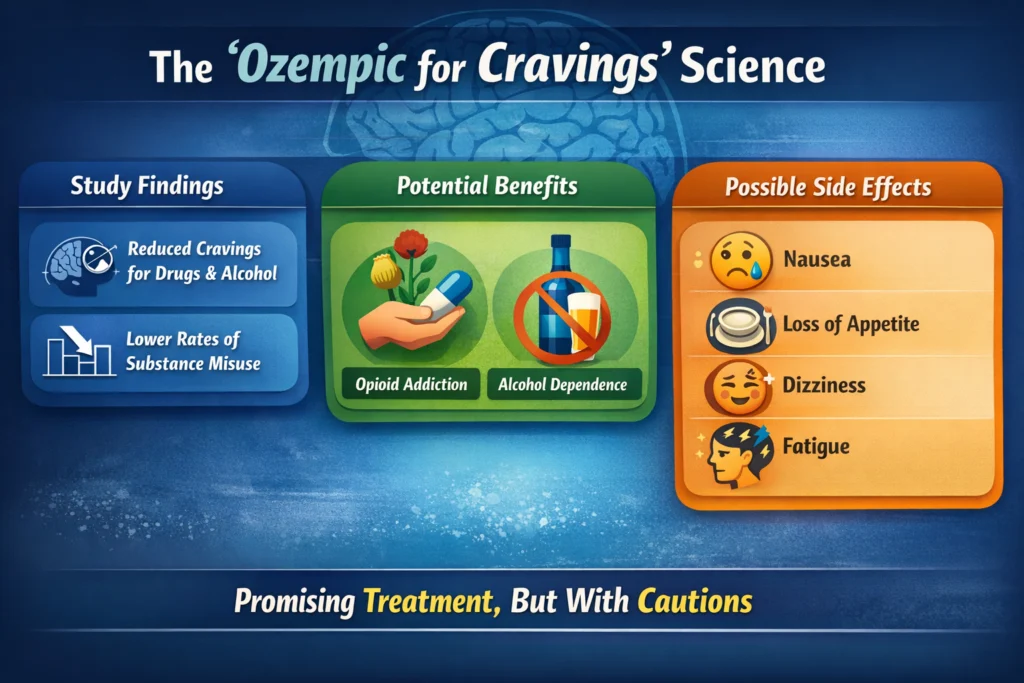
- A 2026 study of 600,000 US veterans found a surprising link between GLP-1s and substance use disorders (SUDs) such as addiction to alcohol, opioids, and other drugs. Individuals who had started taking a GLP-1 drug for diabetes were 15 to 20% less likely to misuse substances ranging from alcohol to opioids.
- According to the Substance Abuse and Mental Health Services Administration (SAMHSA), 48.4 million Americans aged 12 or older had a substance use disorder in 2024. This is equivalent to 16.8% of Americans.
- Meanwhile, one in eight adults (12%) are taking a GLP-1 drug such as Ozempic or Wegovy.
- Not only was GLP-1 usage consistently associated with reduced risk of developing substance use disorders, but semaglutide was also associated with fewer SUD-related hospital admissions, overdoses, and deaths.
GLP-1s are rapidly growing in the public consciousness, though their current usage is only understood to be for managing type 2 diabetes or weight loss. The implications of semaglutides like Ozempic potentially being to combat substance use disorders such as opioid addictions are huge. While we’ll have to wait for more trials and potential FDA approval, this bodes well for our ability to fight addiction in our communities.
Potential Downsides To Using GLP-1s For Substance Use Disorders

There is a reason why individuals shouldn’t rush out to get their hands on semaglutide like Ozempic or Wegovy to try to combat opioid addiction (or other substance use disorders). While Ozempic is starting to look like a miracle drug combating all things from diabetes to weight gain to now even drug and alcohol addiction, it has downsides. GLP-1s are associated with side effects including:
- Loss of appetite
- Nausea
- Vomiting
- Dizziness
- Headaches
There are also a few rare but severe side effects associated with GLP-1s, such as pancreatitis, acute kidney injury, and medullary thyroid cancer.
How Medications Can Assist In Drug And Alcohol Addiction Recovery
We should note that the use of GLP-1s addiction recovery, if it becomes more popular, will not be anything new for drug addiction treatment. The use of medications, where useful and applicable, is already well-established.
For example, medication-assisted treatment for addiction recovery can include the use of drugs such as buprenorphine, methadone, and naltrexone to treat opioid use disorder. In such cases, these medications are used to help block cravings and restore normal body function. The drug Narcan is also used to reverse the effects of opioid overdose.
In the case of treating alcohol use disorder, the drugs acamprosate, disulfiram, and naltrexone are used to help fight alcohol withdrawal symptoms and help manage alcohol dependence.
However, even when medication is used to treat substance use disorders, it’s not the only tool used by medical professionals. At Southeastern Recovery Center, recommendations around these medications are only part of the overall process of us creating personalized plans for each of our patients to ensure that we address the root causes of their substance use disorders. We also deploy methodologies such as Virtual IOP and PHP, the use of science-backed techniques such as cognitive behavioral therapy and group therapy.
GLP-1s in addiction recovery is a developing science, but it’s one we’re going to monitor carefully. Still, individuals will need to be comfortable working with medical professionals in order to truly overcome addiction.
| Medication Type | Examples | Current Primary Use | Possible Role in Addiction Recovery | Key Limitation or Caution |
|---|---|---|---|---|
| GLP-1 receptor agonists | Ozempic, Wegovy, Rybelsus, semaglutide | Type 2 diabetes and weight management | Emerging research suggests they may help reduce cravings and lower substance misuse risk | Not FDA-approved as a treatment for substance use disorders |
| Opioid use disorder medication | Buprenorphine | Helps reduce opioid cravings and withdrawal symptoms | Already used as an evidence-based addiction treatment | Must be prescribed and monitored appropriately |
| Opioid use disorder medication | Methadone | Helps stabilize people recovering from opioid addiction | Long-established medication-assisted treatment option | Requires careful medical supervision |
| Opioid and alcohol use disorder medication | Naltrexone | Helps block opioid effects and may reduce alcohol cravings | Used in both opioid and alcohol addiction treatment | Not appropriate for every patient or every stage of recovery |
| Alcohol use disorder medication | Acamprosate | Helps support recovery from alcohol dependence | Used to help manage alcohol-related recovery symptoms | Works best as part of a larger treatment plan |
| Alcohol use disorder medication | Disulfiram | Creates an unpleasant reaction if alcohol is consumed | Can help discourage alcohol use in certain patients | Depends heavily on adherence and medical guidance |
| Overdose reversal medication | Narcan (naloxone) | Reverses opioid overdose | Life-saving emergency intervention, not a cravings medication | Does not treat the underlying addiction |
| Behavioral treatment support | CBT, group therapy, PHP, virtual IOP | Addresses mental health, coping skills, and relapse prevention | Essential for treating root causes of addiction alongside medication | Medication alone is usually not enough for lasting recovery |
FAQs The “Ozempic for Cravings” Science
What are GLP-1s?
GLP-1s are a class of FDA-approved medications that are used to regulate blood glucose, metabolism, and other biological functions.
Is Ozempic a GLP-1?
Yes, Ozempic is a GLP-1 medication, as is Wegovy and Rybselsus.
Do GLP-1s have an impact on addiction cravings?
Yes, a recent 2026 study suggests that GLP-1s have an impact on drug and alcohol addiction cravings.
Are GLP-1s like Ozempic a proven cure for substance use disorders?
No, GLP-1s like Ozempic are not a proven cure for substance use disorders.
Sources:
GoodRx. Weight-Loss Injections Are Dominating the Market: Where Will GLP-1 Pills Fit In? https://www.goodrx.com/classes/glp-1-agonists/wegovy-vs-ozempic.
Cai, Miao, et al. “Glucagon-like Peptide-1 Receptor Agonists and Risk of Substance Use Disorders among US Veterans with Type 2 Diabetes: Cohort Study.” BMJ, vol. 392, BMJ, 4 Mar. , p. e086886, https://doi.org/10.1136/bmj-2025-086886.
kffrainl. “Poll: 1 in 8 Adults Say They Are Currently Taking a GLP-1 Drug for Weight Loss, Diabetes or Another Condition, Even as Half Say the Drugs Are Difficult to Afford.” KFF, 14 Nov. 2025, https://www.kff.org/public-opinion/poll-1-in-8-adults-say-they-are-currently-taking-a-glp-1-drug-for-weight-loss-diabetes-or-another-condition-even-as-half-say-the-drugs-are-difficult-to-afford/.
“SAMHSA Releases Annual National Survey on Drug Use and Health.” Www.Samhsa.Gov, 28 Jul. 2025, https://www.samhsa.gov/newsroom/press-announcements/20250728/samhsa-releases-annual-national-survey-on-drug-use-and-health.
Zheng, Zhikai, et al. “Glucagon-like Peptide-1 Receptor: Mechanisms and Advances in Therapy.” Signal Transduction and Targeted Therapy, vol. 9, no. 1, Springer Science and Business Media LLC, 18 Sep. 2024, https://doi.org/10.1038/s41392-024-01931-z.