The need for rehab centers is only growing each and every day, whether individuals want help with handling mental health disorders or to receive treatment for drug or alcohol addiction. However, one of the major factors that impede the individuals ability to get the treatment that they need is access to effective treatment at a rehab center. This is why virtual treatment, such as virtual IOP, is starting to grow in popularity.
Virtual IOPs (Virtual Intensive Outpatient Programs) allow individuals to receive effective, personalized treatment for any substance use disorder or mental health disorder they may be struggling with.
At Southeastern Recovery Center in Charlotte, NC, we now offer Virtual IOP to broaden our ability to offer effective care to patients across the state. Through virtual rehab, we can deliver evidence-based treatment to individuals even in the comfort and safety of their own homes.
What is a Virtual IOP? Virtual IOP stands for virtual intensive outpatient program, and as a way to deliver treatment for mental health disorders or substance use disorders remotely.
Are Virtual IOPS less effective than inpatient treatment? Virtual IOPs are not innately less effective than inpatient treatment.
What’s the importance of Virtual IOPs in North Carolina? Virtual IOPs increase North Carolinians access to treatment for mental health disorders as well as substance use disorders.
How Is Virtual IOP Delivered in North Carolina? Southeastern Recovery Center provides Virtual IOPs that are personalized to each individual, hoping to address the underlying causes of mental health disorders and drug or alcohol addiction.
What are Signs that Virtual IOP is right for me? An individual whose work or lifestyle prevents them from taking time off could benefit from a Virtual IOP.
How Can Families Help Individuals that Need Virtual IOP? Families can help by doing their own research into virtual rehab programs and recognizing signs that an individual needs to attend one.
How to Choose the Best Virtual IOP in North Carolina. Find an accredited rehab center that can provide Virtual IOP to treat drug addiction such as opioids as well as tackling mental health disorders.
Frequently Asked Questions About Virtual IOP. Learn answers to some commonly asked questions about a Virtual IOP.

A Virtual IOP is a virtual intensive outpatient program. These are programs designed to deliver treatment for mental health disorders or substance use disorders virtually, meaning that patients will be able to access them from anywhere.
Virtual IOP is usually delivered either online or through the phone. This ease of access results in greater convenience for patients, which can help improve client retention, effectiveness, and even relapse prevention. Because of these benefits and more, Southeastern Recovery Center has adopted this method to ensure that we can deliver personalized treatment for mental health disorders such as anxiety, PTSD, and depression, as well as helping treat substance use disorders such as alcohol addiction, opioid addiction, kratom addiction, and others.
| Statistic | Data |
|---|---|
| Adults in Mecklenburg County reporting poor mental health for 8 or more days per month | 1 in 5 adults |
| Mecklenburg County adults diagnosed with depression | Nearly 25% |
| Increase in overdose deaths among Black and Hispanic residents in Mecklenburg County since 2019 | 200% rise (compared to 14% among White residents) |
| Share of non-fatal overdoses in Mecklenburg County occurring in Black or Hispanic populations | Over 55% of all cases |
| Increase in drug overdose deaths across North Carolina (2021 to 2022) | 22% increase |
| Emergency department visits for suicide attempts among children under 18 in the Charlotte area (2019 to 2021) | 20% increase |
| Naloxone doses distributed across Mecklenburg County to prevent overdose deaths | 16,968 doses in 2024 |
| Primary driver of opioid-related overdose deaths in Charlotte | Fentanyl mixed into street drugs and counterfeit pills |
| North Carolina adults estimated to have a substance use disorder | 1 in 6 adults |
| NC residents living in areas without enough mental health and addiction treatment professionals | 2,670,849 people |
| North Carolina ranking for access to quality mental health and addiction treatment (2024) | Last in the nation |
| NC adults who needed mental health or substance abuse treatment but did not receive it | 452,000 adults; 44.8% cited cost as the barrier |
Sources: Mecklenburg County Public Health, County Conversations on Behavioral Health, 2024; Mecklenburg County Public Health, Overdose Deaths Report, 2025; NC DHHS Overdose Deaths Press Release, 2023; NC Institute of Medicine, Behavioral Health Issue Brief, 2023; NAMI North Carolina State Fact Sheet; NAMI Charlotte, State of Mental Health in America, 2024
Because Virtual IOPs are delivered remotely and are also outpatient programs, they often get compared to inpatient programs. The fact of the matter is that there is no type of rehab that is innately more effective than another, including virtual intensive outpatient programs versus inpatient treatment programs.
Rather than trying to evaluate one method over another, it’s important for individuals to recognize that every case is different. Some people do not have the lifestyle or work accommodations necessary to check into an inpatient program. Other people thrive under the freedom provided by outpatient programs, but just need a little guidance for medical professionals to help direct the recovery process.
This is why we as Southeastern Recovery Center Pl. such an emphasis in providing personalized treatment. Our goal is to understand the underlying causes that lead to an individual requiring virtual rehab in North Carolina in the first place. From there, we can help create a recovery strategy and put them in contact with appropriate rehab facilities in NC that will be most likely to help our patients make a full recovery.

Data trends relating to substance use disorders are only growing more alarming over the years, partially due to the ongoing opioid crisis in America:
In cases where the most dire possible outcomes for mental health disorders or drug addiction were reached, access to rehab could have made a difference. That’s why we at Southeastern Recovery Center are so focused on providing virtual rehab in NC. If you or someone you know is struggling with mental health or substance use, it’s important to be aware that help has never been more accessible, and treatment is absolutely possible.

| Substance | NC Use or Disorder Rate | Context for Addiction Treatment in NC |
|---|---|---|
| Alcohol | Misuse rate: 28.98% to 44.23% | Excessive drinking is linked to 3,500 or more NC deaths every year |
| Marijuana | Use rate: 13.46% to 16.47% | Most widely reported illicit substance among NC residents |
| Prescription Opioids | Misuse rate: 2.68% to 2.85% | Opioids are involved in approximately 82% of NC drug overdose deaths |
| All Illicit Drugs (combined) | 10.28% to 12.13% past-month use | Over 1,071,000 NC residents used illicit drugs in a single month |
| Cocaine | Use rate: 1.17% to 1.37% | Fentanyl is increasingly found mixed into the cocaine supply in Charlotte and Mecklenburg County |
| Methamphetamine | Use rate: 0.39% to 0.62% | Contributing to rising emergency department visits across North Carolina |
| Prescription Drug Misuse (all types) | 2.24% to 2.67% | Includes stimulants, sedatives, and tranquilizers |
| Heroin | 0.23% to 0.33% (ages 18+) | Largely displaced by fentanyl in the North Carolina drug supply |
| Opioid Use Disorder (diagnosed) | 1.40% to 1.59% | 52 NC counties have no opioid addiction treatment center |
| Substance Use Disorder (all types) | 7.91% to 9.59% | About 10% of NC residents need addiction treatment; most cannot access it |
At Southeastern Recovery Center, our approach to treating patients is both scientific and compassionate. We understand that virtual patients may fear that the quality of support they receive will be impacted by distance. But with us, that’s not the case. Our goal is always fully comprehending what the individual is experiencing, including understanding what life circumstances might have led to them needing Virtual IOP in the first place.
Through analyzing the underlying factors that lead to mental health disorders or drug and alcohol addiction, we’re able to equip an individual to live a healthier lifestyle overall. We achieve this through offering a variety of treatments:
Whether you’re coming to us from Fayetteville or from Raleigh, whether you’re attending in-person or virtually, know that all patients receive the same comprehensive, personalized care to guide the path towards dealing with addiction and mental health struggles.
| Research Finding | Key Data |
|---|---|
| Telehealth substance use disorder patients who felt virtual addiction treatment met their needs as well as or better than in-person care | 82% of participants |
| Independent peer-reviewed studies confirming telehealth addiction treatment matches in-person outcomes for retention, therapeutic alliance, and substance use | 7 independent studies confirmed |
| Recovery outcomes when comparing virtual IOP to in-person outpatient addiction treatment | No significant difference found |
| Reduction in depression severity among patients completing a virtual IOP or PHP program (analysis of 2,300 or more patients) | 53% reduction |
| Reduction in anxiety severity among patients enrolled in virtual intensive outpatient programs | 50% reduction |
| Sustained recovery success rate at 6 to 12 month follow-up across leading virtual IOP programs | 65% to 80% |
| Virtual IOP program completion rate compared to the national in-person IOP average | Matches or exceeds the national 60% to 70% average |
| Hazelden Betty Ford Center conclusion on virtual intensive outpatient program outcomes for substance use disorder | Virtual IOP is as effective as in-person IOP treatment |
| Telehealth treatment effectiveness for medication adherence in substance use disorder care | Equally or more effective than in-person care across multiple studies |
If you’re trying to weigh the merits of pursuing virtual IOP versus inpatient treatment, here’s a quick checklist that can help you evaluate whether virtual rehab is right for you:
If you fit all or most of these criteria, it’s possible that virtual IOP can be an effective way for you to deal with mental health disorders or drug or alcohol addiction. Reach out to us to discuss your options more.

People can often feel alone while battling drug and alcohol addiction or mental health disorders such as anxiety and PTSD. Unfortunately, isolation can make it even harder for an individual to turn a lifestyle around. That’s why we at Southeastern Recovery Center like to encourage family involvement in an individual’s healing process.
Families in Charlotte and throughout North Carolina can help by:
At Southeastern Recovery Center, we firmly believe that friends and family are a core component of the healing process. We’re more than happy to accommodate families that want to be part of an individual’s journey towards stronger mental health.
Finding the best Virtual IOP in North Carolina requires a look at various factors such as the types of addictions they treat (such as opioids or alcohol) and the mental health disorders they’re able to help manage. Here are some key factors to consider:
At Southeastern Recovery Center, we meet all of these criteria and more. Our focus on integrity, compassion, and clinical excellence has made us one of North Carolina’s most trusted rehab providers.

From your first phone call to the day you graduate from treatment, our team provides step-by-step support.
Our mission is simple: to provide the highest level of mental health rehab possible so that every client leaves stronger, healthier, and ready to thrive.
| Selection Criteria | Why It Matters for Your Addiction or Mental Health Recovery | Southeastern Recovery Center |
|---|---|---|
| Accreditation through CARF or The Joint Commission | Accreditation confirms that an addiction treatment program meets nationally recognized standards for patient safety and clinical care quality | ✅ Accredited |
| Charlotte-based or North Carolina-licensed clinical team | A local team understands NC insurance networks, community resources, and the specific barriers facing Charlotte-area patients seeking virtual rehab | ✅ Charlotte, NC based |
| Dual diagnosis treatment for co-occurring mental health and substance use disorders | 1 in 4 NC overdose victims had a co-occurring mental health disorder. Treating only addiction while ignoring mental health significantly increases relapse risk | ✅ Dual diagnosis treatment |
| Evidence-based therapy including CBT, DBT, MI, and trauma-informed care | Clinical studies confirm that evidence-based addiction treatment consistently outperforms non-clinical approaches for substance use disorder and mental health recovery | ✅ CBT, MI, and trauma-informed care |
| Fully individualized treatment plans for each patient | Personalized plans address the root causes of addiction and mental health disorders rather than applying a one-size-fits-all approach | ✅ Fully individualized |
| Experience treating opioid addiction, alcohol use disorder, fentanyl, kratom, and co-occurring substance addictions in NC | Fentanyl is the top driver of overdose deaths in Charlotte and Mecklenburg County (Mecklenburg County Medical Examiner, 2025) | ✅ Full substance spectrum |
| Family therapy and family involvement in the recovery process | Active family participation is a strong clinical predictor of long-term recovery from addiction and mental health disorders | ✅ Family therapy included |
| Aftercare planning, alumni programs, and step-down support | Research shows 70% of successful virtual IOP patients engage in continuing care after completing their program (2025 benchmarks) | ✅ Alumni and aftercare support |
| Insurance verification and financial guidance for treatment access | 44.8% of NC residents who needed mental health or addiction treatment could not afford it (NAMI NC). Knowing your coverage options removes the biggest barrier to getting help | ✅ Insurance verification available |
| Statewide virtual coverage reaching patients across NC, not just those near a physical facility | 65% of rural North Carolina has no access to an opioid addiction treatment center (NC Health News, 2022). Virtual IOP makes quality treatment reachable from anywhere in the state | ✅ Statewide virtual coverage |
At Southeastern Recovery Center, we believe that individuals deserve proper, personalized care. To us, recovering from drug and alcohol addiction or mental health disorders is about rebuilding life with purpose and clarity. Our Charlotte-based facility provides a safe, welcoming space where individuals can focus fully on healing.
We serve individuals from Charlotte, Concord, Gastonia, Huntersville, and throughout North Carolina who are seeking trusted, compassionate care for depression and depressive episodes.
Our experienced team, state-of-the-art facility, and commitment to personalized care make us a leading choice for those seeking freedom from drug addiction in North Carolina.
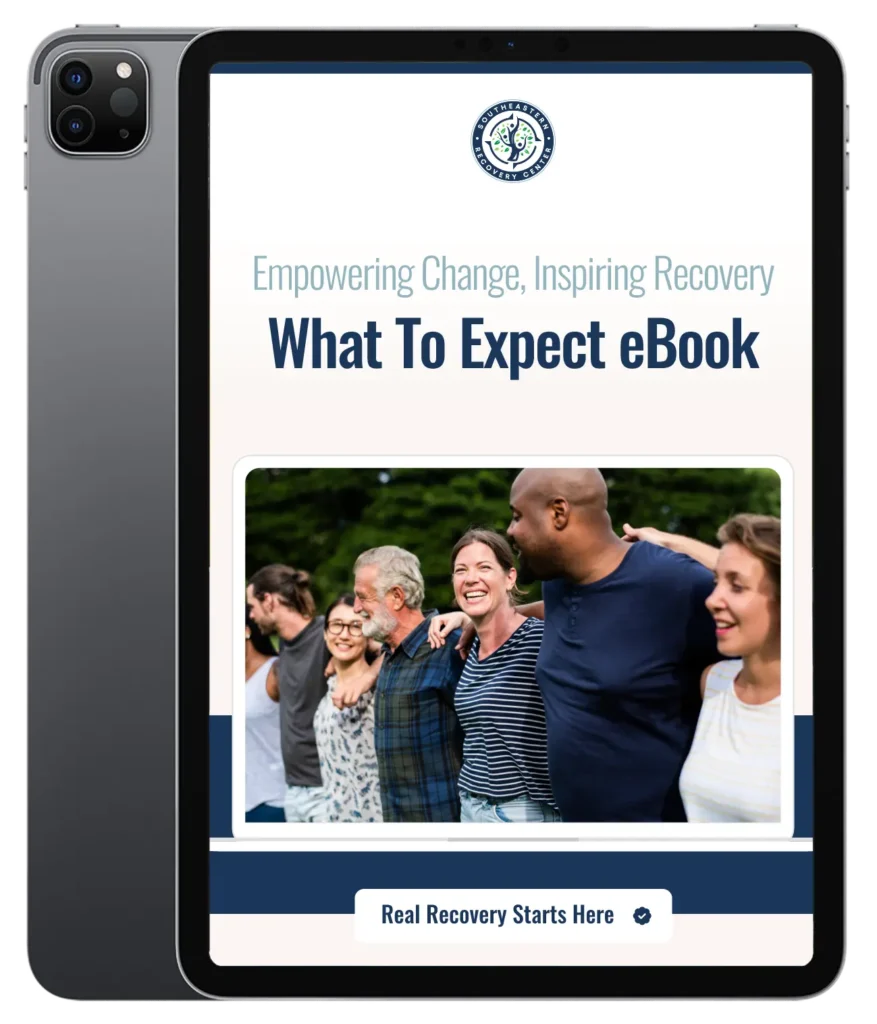
If you or a loved one are interested in learning more about what to expect when getting mental health treatment, please fill out our brief form and download the eBook. You can also give our admissions team a call & we would be happy to answer any questions you may have. Help is only a call away!
There is no difference between Virtual rehab and Virtual IOP. They are both outpatient programs designed to deliver rehab treatment to individuals online or over the phone.
Virtual rehab is not worse than in person rehab. Both can put you viable options that can help an individual deal with drug or alcohol addiction as well as mental health disorders.
You don’t have to choose between Virtual IOP treatment plans. Using a rehab center like Southeastern Recovery Center will have medical professionals choosing an effective one on your behalf.
While some facilities will let you access virtual rehab from out of state, it might be best to use a virtual rehab that’s in state so that you can reach a facility if you need to for various reasons.
Yes, most major insurance plans are required to cover virtual IOP under federal law. The Mental Health Parity and Addiction Equity Act (MHPAEA) mandates that health insurers provide equal coverage for substance use disorder treatment as they do for medical and surgical care. This means if your plan covers in-person IOP, it must also cover virtual IOP.
We accept most major insurance providers. Our admissions team will verify your benefits and explain your out-of-pocket costs, often within hours, so there are no financial surprises before you begin treatment. Call us today for a free, confidential insurance verification.
Virtual IOP is significantly more affordable than residential or inpatient treatment. Without insurance, virtual IOP typically costs between $200 and $500 per day, compared to inpatient rehab which can run $500 to $2,000 or more per day. For a standard 30-day virtual IOP program, out-of-pocket costs without insurance range from approximately $3,000 to $10,000.
With insurance, your cost can be dramatically reduced. Many patients pay only their deductible or a co-pay per session, sometimes as low as $0 to $50 per session depending on their plan. Because virtual IOP eliminates the cost of lodging, transportation, and time away from work, it is one of the most cost-effective paths to structured addiction recovery. We also offer sliding-scale fees and payment plans for qualifying individuals. Contact our team for a no-cost benefits check.
Virtual IOP is structured, clinically rigorous, and built around your life. A typical day includes a combination of the following:
Sessions are conducted via HIPAA-compliant video conferencing, so you can fully participate from your home, office, or any private space. Most virtual IOP programs run 3 to 5 days per week for 3 hours per day, allowing you to maintain work, family, or school commitments.
Virtual IOP typically requires 9 to 15 hours of treatment per week, spread across 3 to 5 sessions. Morning, afternoon, and evening scheduling options are often available to accommodate work schedules, parenting responsibilities, and school.
This is one of the most powerful advantages of virtual IOP over traditional residential rehab: you do not have to put your life on hold to get help. You can attend treatment from your home during a lunch break, after the kids go to school, or in the evenings after work. Our clinical team will work with you during your intake to build a schedule that protects both your recovery and your daily responsibilities.
Yes. Research consistently shows virtual IOP produces outcomes comparable to in-person programs. Multiple peer-reviewed studies, including research published by SAMHSA and the National Institute on Drug Abuse (NIDA), confirm that telehealth-based intensive outpatient treatment achieves equivalent rates of sobriety, program completion, and long-term recovery when compared to traditional in-person IOP.
In some cases, virtual IOP may produce better outcomes because it removes barriers to attendance (transportation, stigma, and childcare), keeps clients anchored in their real-life environment where triggers exist, and allows them to practice coping skills in real time. The key is that the program must be clinically structured, licensed, and evidence-based, which is exactly what we provide. Do not let the “virtual” label make you question its power. The therapy is real. The healing is real.
Virtual IOP is an excellent fit for adults who:
Virtual IOP is generally not recommended for individuals who require 24/7 medical supervision, are actively in withdrawal, have a severe or unstable psychiatric condition, or lack a safe and sober home environment. During your free intake assessment, our clinical team will evaluate whether virtual IOP is the right level of care, or whether a higher level of care is needed first.
Yes. Dual diagnosis treatment is a cornerstone of effective virtual IOP. Research shows that over 50% of people with a substance use disorder also struggle with a co-occurring mental health condition such as depression, anxiety, PTSD, bipolar disorder, or ADHD. Treating only the addiction without addressing the underlying mental health condition dramatically increases the risk of relapse.
Our virtual IOP program is designed to treat both simultaneously through an integrated dual diagnosis approach. This includes psychiatric evaluation, medication management, trauma-informed therapy, and specialized group sessions for co-occurring disorders. You do not have to choose between getting help for your mental health or your addiction. We treat the whole person.
Our virtual IOP uses a combination of evidence-based and holistic therapies, all delivered by licensed, credentialed clinicians through a secure, HIPAA-compliant telehealth platform. Every client receives a personalized treatment plan, so the specific therapies woven into your program are tailored to your history, substance use patterns, and recovery goals. The core therapeutic modalities we use include:
We believe that treating addiction means treating the whole person, not just the substance use. That is why our program pairs evidence-based clinical care with holistic healing, giving each client the best possible foundation for lasting recovery.
Absolutely. Your privacy is legally protected at every step. All virtual IOP sessions are conducted through a HIPAA-compliant, encrypted telehealth platform that meets federal healthcare privacy standards. Your medical records, treatment history, and session content cannot be shared without your written consent, with very few legally mandated exceptions such as imminent risk of harm.
Many clients find that virtual IOP actually offers more privacy than attending an in-person treatment center, since there is no risk of being seen walking into a facility. You can attend sessions from any private space in your home. Every interaction with our team, from your first phone call to your confidential contact form submission, is handled with complete discretion. We are available 24/7 to answer questions about your privacy, your coverage, or anything else standing between you and getting help.
Yes. Our virtual IOP is designed to treat a full range of substance use disorders, with specific clinical expertise in alcohol use disorder (AUD) and opioid use disorder (OUD). These are two of the most complex and medically significant addictions to treat, and our program is built to address both.
For clients recovering from alcohol or opioid addiction, virtual IOP can be paired with Medication-Assisted Treatment (MAT), which combines FDA-approved medications with evidence-based therapy to reduce cravings, ease withdrawal symptoms, and significantly lower the risk of relapse. MAT is an optional but highly effective component of care for those who qualify, and our clinical team will assess whether it is the right fit during your intake.
Beyond alcohol and opioids, our program also provides treatment for addiction to ketamine and other substances. No matter what you are struggling with, our approach is the same: individualized care, trauma-focused therapy, and a treatment plan built specifically around you rather than a one-size-fits-all program.
If you or a loved are struggling with mental health disorders or substance use disorders, please reach out to our team today. Many treatment centers take a one-size-fits-all approach when treating mental health disorders which isn't effective...At SERC, we understand that each client has their own story which led them to seeking help. We put emphasis on individualized care, tailoring treatment based on the specific needs of each client.

Reach Out For Help! ⮕
Create A Recovery Plan! ⮕
Begin The Healing Process! ⮕
![Southeast (2) [Recovered]-07 2](https://serecoverycenter.com/wp-content/uploads/2023/08/Southeast-2-Recovered-07-2.webp "Southeast (2) [Recovered]-07 2")