7-Hydroxymitragynine, also known as 7-OH, is an illegal ingredient that is being increasingly used in foods and dietary supplements, making it a concern for Americans everywhere. 7-hydroxymitragynine is found in the southeast Asian plant Mitragyna speciosa, more commonly known as kratom.
Along with 7-Hydroxymitragynine’s increasing use in the United States is coming greater awareness of the substance’s potential abuse liability. This is partly because of 7-OH’s ability to bind toμ-opioid receptors. Read on to learn more about 7-Hydroxymitragynine, 7-OH, and everything it means for North Carolinians and Americans at large.
Article Preview:
What is 7-Hydroxymitragynine (7-OH)? 7-Hydroxymitragynine (aka 7-OH) is an extract from Kratom that is more potent than the plant and being increasingly used in foods and dietary supplements.
Is 7-OH Illegal? 7-OH is illegal, but products containing it are still available at gas stations and online.
Why Do People Take 7-OH? Some people take 7-OH while conflating it with Kratom despite the two having different chemical properties. Others take 7-Hydroxymitragynine to self medicate for pain relief, leading to developing a dependence or addiction.
7-OH vs Kratom. Kratom contains 7-Hydroxymitragynine, but in small doses. Meanwhile, 7-OH is more potent than Kratom products.
Why is 7-OH Usage a Concern in North Carolina? 7-OH has already caused over hundreds of deaths due to overdoses and North Carolina.
What Forms Does 7-OH Come in? 7-OH can be found in powders, capsules, tablets, and more.
Signs of 7-OH Addiction. Signs of 7-OH addiction include inability to reduce intake, experiencing withdrawal symptoms, and cravings for 7-OH, Kratom, or or similar substances.
7-OH Withdrawal Symptoms. 7-OH withdrawal symptoms include muscle aches, insomnia, and nausea.
How Long Will 7-OH Withdrawal Symptoms Last? 7-OH withdrawal symptoms will last up to a week or two, but certain individuals may experience post-acute withdrawal syndrome, lengthening symptoms.
The Dangers of 7-Hydroxymitragynine (7-OH). Misconceptions around 7-Hydroxymitragynine make it one of the more dangerous drugs available on the market right now.
Frequently Asked Questions About 7-OH. Learn answers to common questions about 7-Hydroxymitragynine.
What is 7-Hydroxymitragynine (7-OH)?
7-Hydroxymitragynine (also known as 7-OH) is an opioid-like chemical that originates in the kratom plant. Because of these properties, 7-OH has the potential to cause a dependence or even an addiction to develop in individuals, in addition to potentially causing health issues and impairing life quality.
According to the FDA, street names for 7-OH include 7-Hydroxy, 7-OHMG, and “7.” Part of the reason that 7-OH is so dangerous is that it can be acquired much more easily than typical illicit drugs. 7-OH is available at retail stores and online, particularly in gas stations and convenience stores.
Is 7-OH Illegal?
7-OH products are illegal due to their dangerous and potentially addictive properties. Despite being illegal to sell or manufacture products with 7-Hydroxymitragynine, products containing it are still being found. The FDA is actively taking steps to restrict access to 7-OH opioid products. A 2025 press release from the US Department of Health and Human Services mentioned that they wanted to take action against 7-OH as “a critical step in the fight against opioid addiction.”
At the moment, 7-OH is still somewhat available online and the gas stations, corner stores, and vague shops. 7-OH products also have a reputation for being colorful and vibrant, and almost candy-like in their appearance. This makes them visually appearing to children and teenagers. Additionally, 7-OH products are sometimes subtle and their labeling, marketing themselves as kratom only.
Why Do People Take 7-OH?
Sometimes people take 7-OH because of misunderstanding what it is. Because of 7-OH’s relation to kratom, some people expect a “natural” herbal substance. However, 7-OH is an extract that is more potent than natural kratom, which makes it more dangerous.
Another reason people take 7-OH’s is for its morphine-like effects. Because of this, some individuals use it to self medicate for pain relief or to help treat anxiety. Unfortunately, this opens them up for developing a dependence on the drug, which can quickly lead to a downward spiral in their overall life quality.
In some cases, people also turn to 7-OH and Kratom as a means of weaning off their addiction. Some people believe the drug can help them cure drug addiction at home, which is a dangerous belief. It’s always best to seek proper medical guidance to find treatment options that are both healthy and effective, rather than choosing self-medication with 7-OH or other dangerous means.
If you or a loved one are currently experiencing dependence on 7-OH, it’s important to know that help is available. At Southeastern Recovery Center, we help individuals defeat drug and alcohol addiction on a daily basis. This includes addressing the underlying causes that lead to developing a dependence in the first place.
7-OH vs Kratom
There are several key differences between 7-Hydroxymitragynine and Kratom that are critical to understand why the reception to both substances is different.
Kratom is a naturally occurring plant that grows in Southeast Asian countries such as Indonesia, Malaysia, and Thailand. As a plant, it is composed of many different natural compounds and alkaloids. Alkaloids are organic compounds which are known to have a physiological impact on humans, which results in them being used as drugs. Examples include morphine and caffeine.
7-Hydroxymitragynine is one of the alkaloids that can be found in the plant Kratom. However, there is a stark difference between intaking Kratom, which has 7-Hydroxymitragynine, versus taking a large dose of 7-Hydroxymitragynine itself.
According to a study featured in the National Library of Medicine, Kratom actually has numerous alkaloids, including:
- Ajmalicine
- Corynoxine
- Paynantheine
- Mitragynine
- 7-Hydroxymitragynine
Of these, Mitragynine is actually the most abundant alkaloid present in Kratom. Meanwhile, 7-Hydroxymitragynine, which is only present in Kratom in small quantities, is known to be one of the more potent alkaloids in the plant.
This means that when you take a 7-OH product, you’re getting a more concentrated, less balanced effect then you would get if you took Kratom. This difference in chemical composition is what makes 7-Hydroxymitragynine products so dangerous to individuals, especially when paired with getting conflated with Kratom.
Why is 7-OH Usage a Concern in North Carolina?
7-OH is of growing concern throughout the United States, including North Carolina, and the data on its usage is alarming:
- Unregulated kratom (in forms such as 7-OH) has been found in hundreds of autopsies related to overdose deaths conducted in North Carolina.
- In the North Carolina House, a 2025 bill was introduced by Jennifer McGinnis with the goal of regulating all kratom products, particularly any with “mitragynine or 7-hydroxymytragynine or both, extracted from the leaf of the plant Mitragyna speciosa.”
- While this bill would only regulate kratom, Sheldon Bradshaw, a former FDA attorney who commented on the specific bill, wants 7-Hydroxymitragynine, or 7-OH, banned outright due to its dangerous “chemical composition.”
- According to the 2023 National Survey on Drug Use and Health, among respondents 18 years and older, 2.4% had used kratom. Of these individuals, people who were in poor health were more likely to use kratom, as were those who were concerned about their drug or alcohol use or their mental health. In particular, individuals were unable to quit alcohol, marijuana, pain relievers, and tranquilizers were more likely to have turned to kratom.
What the data shows is that there is a growing effort not just in North Carolina but across America to combat the growing warning signs associated with 7-OH and kratom usage. Right now, we’re in the early stages of being able to spread awareness for the misconceptions around 7-OH and 7-OH products. In these early stages, it’s possible that individuals who have grown dependent were addicted to 7-OH might slip through the cracks.
As Southeastern Recovery Center, we help individuals find healthier ways of treating addiction then turning to kratom products to self-medicate. If you or someone you know is struggling with mental health or substance abuse, it’s important to be aware that we’re ready and able to provide assistance at our Charlotte, North Carolina location.
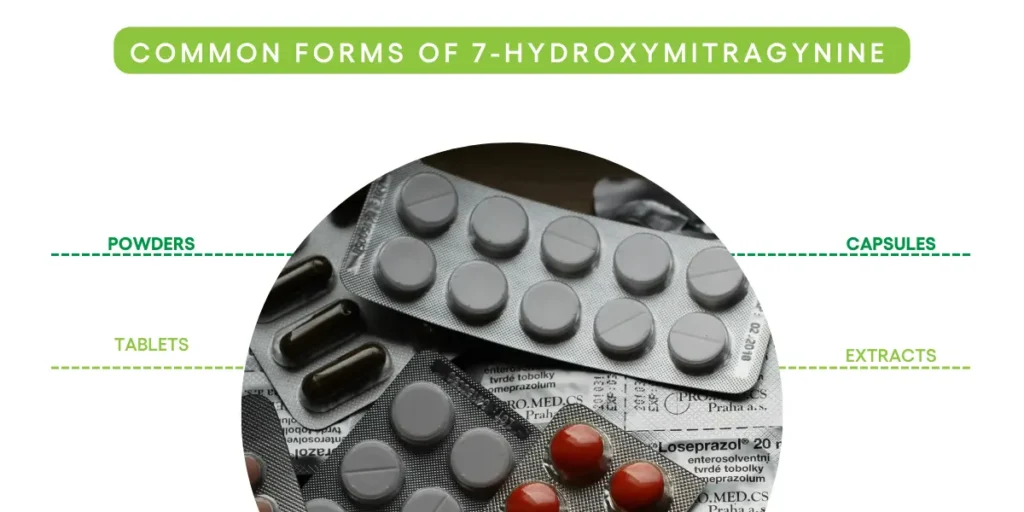
What Forms Does 7-OH Come in?
7-Hydroxymitragynin can be found sold in numerous different forms, including:
- Powders
- Capsules
- Liquid extracts
- Tablets (chewable or sublingual)
- Gummies
- Shots
Additionally, there are some products that are especially advertised as containing quantities 7-OH, further diversifying the many different ways it can be found.
Signs of 7-OH Addiction
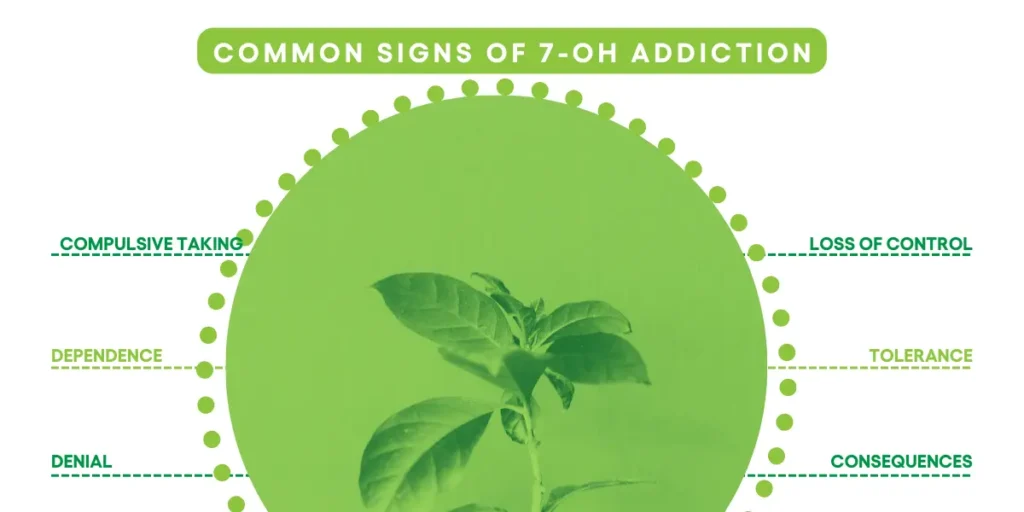
It’s important to be able to recognize the signs of an addiction to 7-OH. Symptoms include:
- Inability to reduce 7-OH intake
- Inability to quit taking 7-OH
- Needing higher doses of 7-Hydroxymitragynine to achieve a similar effect
- Irritability or anxiety without 7-OH
- Experiencing physical and mental withdrawal symptoms when not using 7-OH
If you or a loved one are currently experiencing 7-OH addiction, it’s important to know that help is available. As Southeastern Recovery Center, we help treat addiction in individuals from all over North Carolina.
7-OH Withdrawal Symptoms
7-OH withdrawal symptoms are noted to follow a known timeline that is similar to those associated with traditional opioids. This makes sense, seeing as 7-OH also has an impact on opioid receptors in the brain and body – which contributes to how addictive the substance can be.
7-OH withdrawal symptoms include:
- Muscle aches and stiffness
- Amplified irritability and anxiety
- Insomnia
- Nausea or vomiting
- Cravings for 7-OH, Kratom, or similar substances
- Sweating and chills
7-OH has gained a reputation for being used to help individuals self medicate for withdrawal symptoms for other drugs. Unfortunately, users who don’t realize how dangerous 7-OH is on its own may be trading one type of drug addiction for another.
How Long Will 7-OH Withdrawal Symptoms Last?
Once an individual commits to stopping their usage of 7-Hydroxymitragynine, they may be at risk of experiencing withdrawal symptoms. The duration of these withdrawal symptoms will depend on:
- Frequency of 7-Hydroxymitragynine use, as well as dosage and duration
- Potency of used 7-OH products
- Individual metabolism
- Body and brain composition
Most individuals will experience the full range of 7-Hydroxymitragynine withdrawal symptoms over the course of a week or two. However, it’s possible that an individual might suffer from post-acute withdrawal syndrome, which will result in lingering issues over the course of a few weeks, or even months.
Because of the variation in 7-OH withdrawal symptoms potentially leading to relapse, it’s important to consider seeking out medical help with beating 7-OH addiction.
The Dangers of 7-Hydroxymitragynine (7-OH)
Right now, 7-Hydroxymitragynine (7-OH) is at a point where consumers are either unaware of or misjudging what the drug is. This ignorance to its addictive properties and conflation with the more natural Kratom make 7-OH one of the more dangerous drugs that consumers still have access to today. Colorful packaging and misleading labeling only further contributes to confusion as to what 7-Hydroxymitragynine is.
As awareness continues to spread, we can expect to see more pushback and efforts towards regulating access to this powerful, opioid-like substance–as should be expected to prevent the spreading of substance use disorders.
Frequently Asked Questions About 7-OH
What is 7-OH?
7-OH is 7-Hydroxymitragynine, an extracted form of kratom that is more potent than its herbal counterpart.
What is 7-OH used for?
7-OH is used for relieving pain, anxiety, and symptoms of mental health disorders. However, most of these uses are done without medical advice, living individuals open to growing the pendant or addicted to the substance.
Is 7-OH the same as kratom?
7-OH is not the same as kratom, because 7-OH is far more potent. 7-OH is noted to be 13 times stronger than morphine and affects an individual’s opioid receptors.
Can you overdose on 7-OH?
Yes, you can overdose on 7-OH. In fact, multiple fatal overdoses have been tied to 7-Hydroxymitragynine. This is why usage of the drug is so dangerous, why the FDA is sounding the alarm on it being illegal to market any drugs containing 7-OH.
What is 7-OH like?
7-OH has been compared to both opioids and morphine, producing a relaxing, pain relieving effect that can help improve moods. This is also another contributor to it being dangerous, as individuals can grow dependent on 7-Hydroxymitragynine to function normally.
Sources
U.S. Food and Drug Administration. FDA’s Recommendation to Schedule 7-Hydroxymitragynine (7-OH). U.S. Department of Health and Human Services, 2025, www.fda.gov/media/187900/download.
U.S. Department of Health and Human Services. “FDA Submits Recommendation to DEA to Schedule 7-Hydroxymitragynine (7-OH) in Schedule I of the Controlled Substances Act.” HHS.gov, 13 June 2025, www.hhs.gov/press-room/fda-7-oh-scheduling-recommendation.html.
Trogdon, Justin. “Legal, Unregulated: Stimulant Kratom Found in 100s of Autopsies.” WRAL, 6 Sept. 2024, www.wral.com/story/legal-unregulated-stimulant-kratom-found-in-100s-of-autopsies/21611979.
North Carolina General Assembly. “Bill Summary: House Bill 468.” North Carolina Legislative Dashboard, 2025, dashboard.ncleg.gov/api/Services/BillSummary/2025/H468-SMRI-11(e1)-v-3.
Crumpler, Eli. “NC House Moves to Regulate Kratom, Ban Synthetic ‘Hydroxy’ Products.” WUNC, 3 June 2025, www.wunc.org/politics/2025-06-03/nc-house-regulate-kratom-ban-synthetic-hydroxy-products.
Singh, Darshan, et al. “The Emergence of 7-Hydroxymitragynine (7-OH) Products: A New Public Health Concern?” Journal of Substance Use, 2025, https://doi.org/10.1080/14659891.2025.2609263.