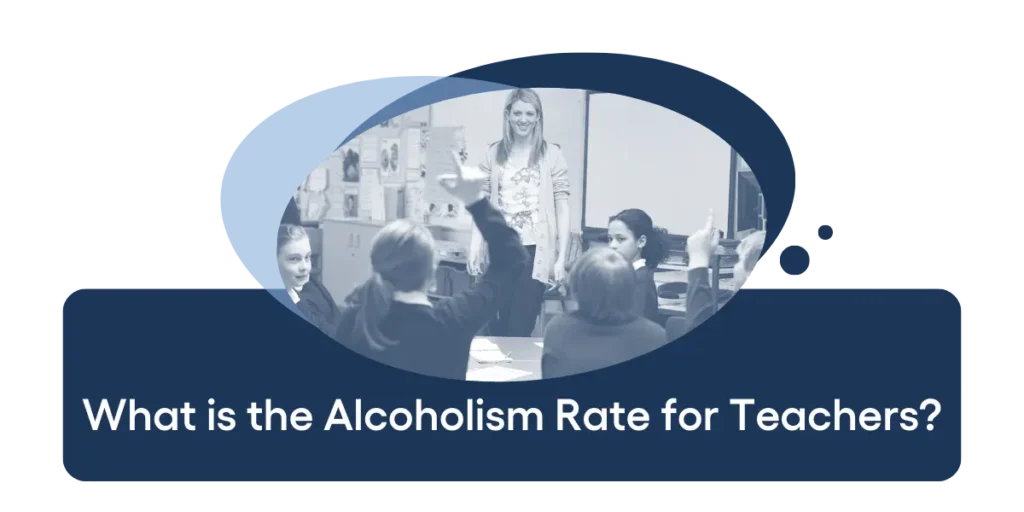
Awareness of the alcoholism rate for teachers is growing, thanks to situations like that of Alena Chabot, the 32-year-old teacher who was accused of being drunk in class. While many people reacted to this teacher’s alleged drinking with ire and rage, others wanted to better understand what exactly could lead to a teacher drinking while on the job.
This attitude of trying to understand the scenarios that lead to substance abuse is one that we at Southeastern Recovery Center greatly encourage. Ultimately, individuals that develop drug and alcohol addiction are victims of a disorder that is extremely hard to break away from. While their behavior while under the influence of alcohol and other drugs can be destructive, an environment of hostility only makes it more likely that they’ll be unable to receive the treatment that they need for substance use disorders and alcoholism. Instead, those of us who want to live in a healthier North Carolina community should foster and spread awareness and understanding.
That is precisely our goal with this post, which will dig into the alcoholism rate for teachers as well as the underlying factors that might lead to the development of an educator’s alcohol use disorder in the first place.
Summary: Even though teachers suffer from alcoholism at a relatively low rate compared to other industries, the current numbers still have negative applications for students in North Carolina and across the United States. Communities should keep in mind ways to help teachers overcome alcoholism in order to better support the education system at large.
Article Preview:
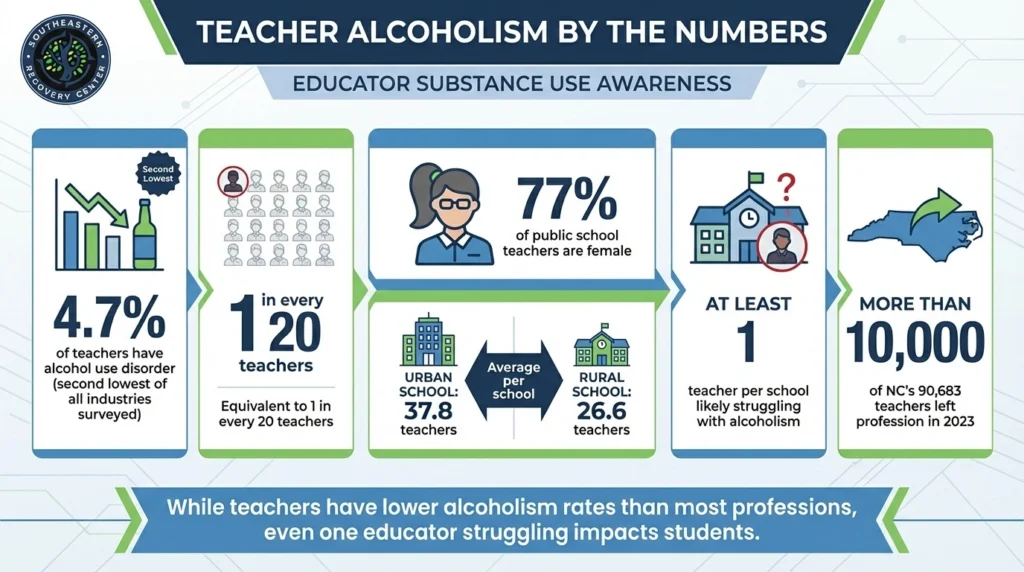
The Alcoholism Rate for Teachers. The alcoholism rate for teachers is 4.7%.
How Do Teachers Develop Alcoholism? Teachers develop alcoholism by falling prey to the stress due to their workloads, low pay, and burnouts, among other factors.
What Are Signs That a Teacher is Suffering From Alcoholism? Signs that a teacher is suffering from alcoholism include yellowish skin, weight fluctuations, and craving alcohol.
What Are the Implications of Teachers Developing Alcohol Addiction (for North Carolina and the U.S. At Large)? Teachers developing alcohol addiction will impede their ability to deliver high-quality work on behalf of their students, and may lead to them being removed from schools which will contribute to the overall teacher shortage North Carolina is currently facing.
How Can I Help a Teacher Suffering From Alcoholism? Researching alcoholism, finding trustworthy alcohol rehab centers in North Carolina, and sharing resources is a way to help a teacher suffering from alcoholism.
FAQs about What is the Alcoholism Rate for Teachers? Get answers to frequently asked questions about alcoholism and teachers.
The Alcoholism Rate for Teachers
According to a survey conducted by the Substance Abuse and Mental Health Services Administration (SAMHSA), the alcoholism rate for teachers is 4.7%. This report was first published in 2015.
Alarmingly, a separate 2024 study that analyzed data from 2015 to 2021 found that binge and heavy drinking among women with and without children increased between 2006 and 2018. This could hint at a dangerous overlap among educators, as 77% of public school teachers are female.
The 4.7% alcoholism rate for teachers is the second lowest among the industries surveyed by the SAMHSA. The highest was mining at 17.5%, while the actual lowest was healthcare and social assistance at 4.4%. Still, a rounded average of one in every 20 teachers suffering from alcoholism can be a cause for concern. Data from the National Center for Education Statistics shows that there are on average 37.8 teachers per school in the city, and 26.6 teachers per school in rural areas. Looking at the data altogether, there may be one teacher silently suffering from alcoholism at every school.
Note: A teacher that suffers from alcoholism may be hesitant to seek out treatment because of potential negative social consequences. Facilities like Southeastern Recovery Center can help provide personalized alcoholism treatment both in-person or virtually, all while maintaining comfort, safety, and privacy for our patients.
How Do Teachers Develop Alcoholism?
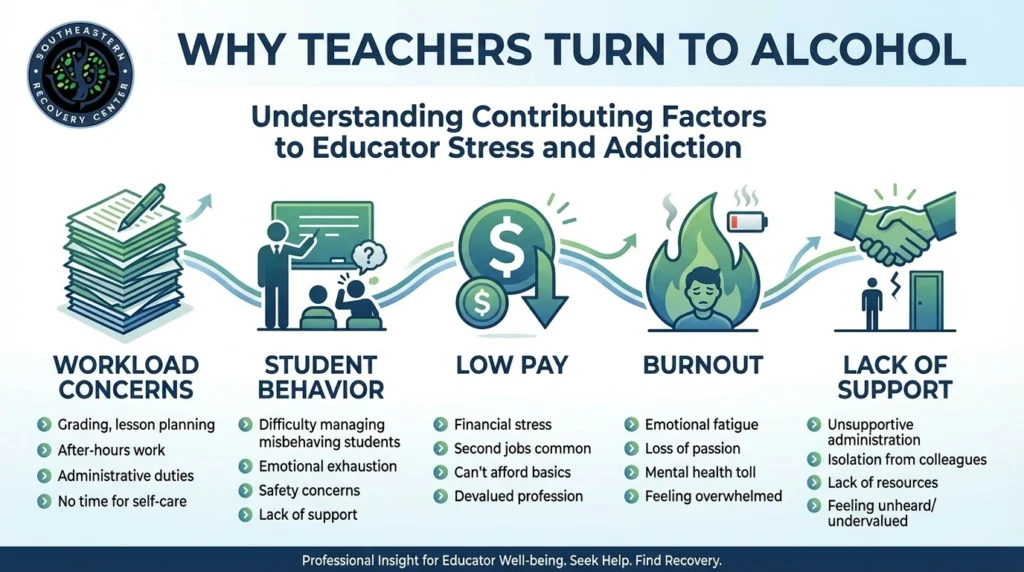
The primary way that a teacher might develop alcoholism is through using alcohol to self medicate for stress relief. Teachers and educators work a stressful job in ways that the general public is still learning to grapple with. Common causes of a teacher stress include:
- Concerns about workload
- Difficulty managing misbehaving students
- Low pay
- Burnout
- Staff shortages
These stressors for teachers are pervasive and all-encompassing. Without a way to alleviate any mental strain, they may turn to alcohol as a way to “take the edge off.” Otherwise, they may drink while at parties or bars similarly seeking escapism away from all the stress associated with working in education.
Additionally, the issue of teacher staff shortages in particular is one that can snowball if the alcoholism rate and teachers goes unaddressed. Situations where teachers are fired due to behavior related to alcoholism will only result in educator shortages growing more severe. In turn, existing teachers will grow more stressed, which will lead to some of them using alcohol to self medicate. Thus will a vicious cycle of alcohol addiction impact more and more teachers across North Carolina and states around the U.S.
What Are Signs That a Teacher is Suffering From Alcoholism?
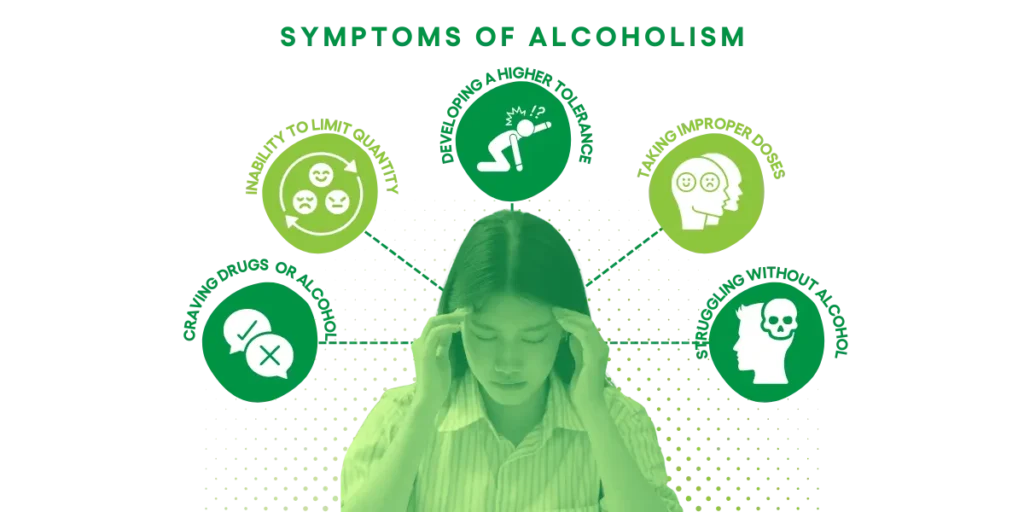
If you or a loved one are a teacher who is not sure if you’re suffering from alcoholism or not, there are some physical and behavioral signs to look out for.
Physical signs of a teacher with alcoholism:
- Alcohol flush (redness in the cheeks)
- Dry skin
- Yellowish skin (related to jaundice)
- Weight fluctuations
Behavioral signs of a teacher with alcoholism:
- Inability to cease alcohol consumption
- Inability to control plan alcohol intake
- Craving alcohol
- Drinking alcohol while at work
- Drinking alcohol and unsafe situations
Teachers who are suffering from alcoholism may have difficulty quitting because of the severity of alcohol withdrawal symptoms. Symptoms such as sweating, nausea, and hallucinations can make it difficult to remain sober, and delirium tremens (DTs) can make alcohol withdrawal downright dangerous. That’s why it’s better to seek out help from medical professionals if a teacher needs to detox from alcoholism. A teacher trying to detox from alcohol at home could be risky.
What Are the Implications of Teachers Developing Alcohol Addiction (for North Carolina and the U.S. At Large)?
The issue of alcoholism rate for teachers is one that concerns all of North Carolina. As we touched on above, teachers suffering from alcoholism can lead to them missing work or outright being removed from the workforce, either because they quit or because they were fired. Either outcome is ultimately a loss, as North Carolina is suffering from a teacher shortage as is. More than 10,000 of North Carolina’s 90,683 teachers left the profession in 2023 due to career changes, dissatisfaction with teaching, relocation to another state, or retirement.
Teacher shortages impact our youth, which in turn impacts our future. If teachers are removed in the middle of the school year, that disrupts learning. If teachers are scarce in general, classrooms will have to have more students, which will limit opportunities for teachers to provide one-on-one support to kids both emotionally and educationally.
We don’t need to lose more teachers to alcoholism, especially not when alcohol use disorder can be treated by medical professionals.
How Can I Help a Teacher Suffering From Alcoholism?
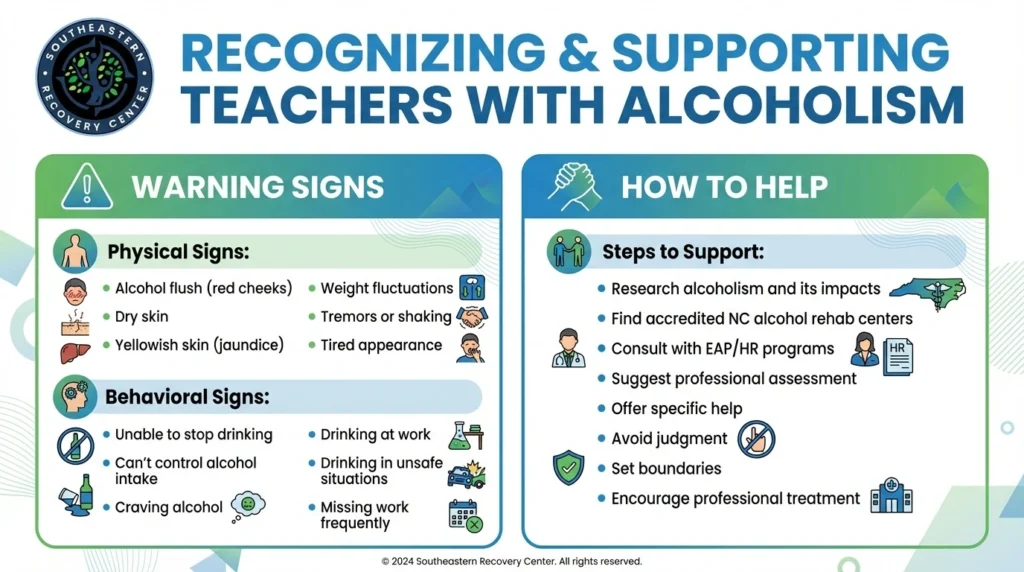
If you or know a teaching suffering from alcoholism, you can help us reduce the alcoholism rate in North Carolina by:
- Researching alcoholism and how it impacts individual behavior
- Finding accredited sources of alcohol addiction rehab in North Carolina
- Starting an open and honest dialogue about the teacher’s use of alcohol
- Making use of any resources provided by an alcohol rehab facility to convince them that treatment is possible uncomfortable
In a worst-case scenario, North Carolina is also an involuntary commitment state, so as a last resort you can also have some involuntarily committed if they present a danger to themselves or others.
FAQs about What is the Alcoholism Rate for Teachers
What is the alcoholism rate for teachers?
The alcoholism rate for teachers is 4.7%.
How high is the alcoholism rate for teachers?
The alcoholism rate for teachers is the second lowest in the industries surveyed by the Substance Abuse and Mental Health Services Administration (SAMHSA). Still, it’s equivalent to one in every 20 teachers suffering from an addiction to alcohol.
Why do teachers develop alcoholism?
Teachers primarily develop alcoholism due to stress around workload, students, and burnout.
Do teachers drink while on the job?
Teachers drinking while on the job is rare, but it does happen. One possible, alleged example is the North Carolinian teacher Alena Chabot who was accused of being under the influence of alcohol early on in the 2025 school year.
Sources:
Bush, Donna, and Rachel Lipari. Substance Use and Substance Use Disorder by Industry National Survey on Drug Use and Health Short Report SUBSTANCE USE and SUBSTANCE USE DISORDER by INDUSTRY AUTHORS. 2015.
National Center for Education Statistics. “Characteristics of Public School Teachers.” Nces.ed.gov, May 2023, nces.ed.gov/programs/coe/indicator/clr/public-school-teachers.
“Status of Education in Rural America.” Nces.ed.gov, nces.ed.gov/pubs2007/ruraled/tables/table3_12.asp.