You do not have to choose a detox setting alone. Our team can help.

Detox at Southeastern Recovery Center: key facts
- Who we are: An outpatient addiction treatment center in Concord, NC, serving Charlotte, Cabarrus County and the surrounding area. We do not provide residential care.
- Outpatient detox: Done in-house at 470 Lake Concord Rd NE, Concord, NC 28025. You come in during the day and sleep at home.
- Inpatient detox: When you need 24/7 medical care, we arrange a bed at a partner detox facility and provide transportation there and back.
- Medication: We prescribe Suboxone (buprenorphine) for opioid use disorder.
- After detox: Partial hospitalization (PHP, Monday to Saturday, 9AM to 4:30PM, typically 30 to 45 days), then intensive outpatient (IOP, 3 days a week), as clinically appropriate.
- Insurance: We’re in-network with BCBS North Carolina, and we also accept Aetna, Cigna, UHC, and all major carriers. We do not accept Medicaid.
- Admissions: Call (704) 452-4985, 24/7.
Drug and alcohol detox is the first step of addiction treatment: stopping alcohol or drugs safely while medical staff watch for and treat withdrawal symptoms. Detox alone is not treatment. It clears the way for therapy and recovery support. At Southeastern Recovery Center, detox leads into our partial hospitalization and outpatient programs.
Withdrawal happens as your body adjusts to less alcohol or another drug. Symptoms range from nausea and poor sleep to serious complications. Your health and withdrawal history guide care.
Read our detox vs. rehab guide.
There are two paths, and we choose the right one with you during your first assessment. If outpatient detox is safe for you, it happens in-house at our Concord center during the day, and you sleep at home. If you need 24/7 medical care, we arrange inpatient detox at a partner facility and provide transportation.
Our medical team monitors withdrawal during daily visits at 470 Lake Concord Rd NE, Concord. Care may include comfort medications and Suboxone induction for opioid clients. Fit depends on a stable home, no severe withdrawal history, moderate use and reliable support, with clinical clearance. See our outpatient detox page for more detail.
For 24/7 medical supervision, we coordinate partner placement in North Carolina, South Carolina, Virginia or Georgia. We handle referral, scheduling, insurance authorization and the medical handoff. Coverage depends on your plan.
We provide transportation to your assigned inpatient detox facility and back to our Concord center. Our team coordinates those arrangements with you.
Our team stays in contact with the partner medical team and plans your return when you are medically cleared.
| Outpatient detox at SERC | Inpatient detox (partner facility) | |
|---|---|---|
| Where | In-house at our Concord center, 470 Lake Concord Rd NE | A partner detox facility in NC, SC, VA or GA |
| Where you sleep | At home | At the facility |
| Supervision | Daily visits; our medical team monitors and manages symptoms | 24/7 medical supervision |
| May fit | Stable home, no history of severe withdrawal, moderate use, reliable support | Heavy daily use, past seizures or DTs, benzodiazepine withdrawal or other medical risks |
| Getting there | You come to the clinic | We arrange placement and provide transportation |
| Next step | PHP or IOP at SERC | Direct handoff back to SERC’s PHP or IOP |
Detoxing at home is not safe for everyone. Alcohol and benzodiazepine withdrawal can cause seizures and, in severe cases, death. Opioid withdrawal can be intensely uncomfortable and can lead back to use. Talk to a clinician before you stop. Call us and we will help you decide what level of support you need.
Our medical director explains who should never detox from alcohol alone:
“Anyone who has any of the symptoms of withdrawal or a history of heavy drinking or a history of seizures, hallucinations, cardiovascular instability definitely needs medical help to cease alcohol consumption safely.”
“At SERC, I strive to identify people who will put themselves at risk by stopping drinking “cold turkey” by themselves.”
David Stern, MD, Medical Director, Southeastern Recovery Center
NIAAA explains that stopping suddenly after prolonged heavy drinking can cause potentially life-threatening withdrawal, including seizures. A supervised outpatient plan is not the same as trying to manage withdrawal at home without medical care.
| Factor | Medical detox | Detoxing at home without medical care |
|---|---|---|
| Clinical supervision | Professionals assess symptoms, vital signs and complications | No planned clinical monitoring |
| Safety during withdrawal | Care is matched to withdrawal risks | Serious symptoms can go unrecognized |
| Medication support | Prescribed and monitored as appropriate | No structured medication management |
| Emergency response | A clinical team plans for complications; inpatient partners provide 24/7 care | Help may be delayed, especially when alone |
| Comfort and stabilization | Support addresses symptoms during early withdrawal | Symptoms can feel overwhelming without support |
| High-risk symptoms | Monitoring for shaking, high blood pressure, hallucinations and DTs | Symptoms may be missed or minimized |
| Return-to-use risk | Support helps address withdrawal distress and cravings | A person may use again to stop discomfort |
| Suitable setting | A clinician chooses outpatient or inpatient care based on risk | Not a substitute for a medical assessment |
| Ongoing treatment | A planned handoff to therapy, medication and aftercare | Withdrawal alone does not address ongoing treatment needs |
| Privacy and convenience | Scheduled visits or an inpatient stay require planning | Familiar surroundings do not make withdrawal safe |
| Goal | Withdrawal management and stabilization before ongoing care | Getting through symptoms without a clinical plan |
If you or someone you love is in crisis, call or text 988. In an emergency, call 911.
Most detox lasts 3 to 10 days, depending on the substance. Alcohol detox typically takes 5 to 7 days, opioid detox 5 to 10 days, and the most acute phase of stimulant withdrawal usually 3 to 5 days. A benzodiazepine taper can take 2 to 4 weeks or longer.
These are general ranges. Your clinician sets your plan based on your health and response to care.
| Substance | Typical duration | Key withdrawal symptoms | Medical approach |
|---|---|---|---|
| Alcohol | 5 to 7 days | Anxiety, sweating, shaking, high blood pressure; possible seizures or delirium tremens (DTs) | A tapered benzodiazepine protocol, anti-seizure medications and comfort medications, as indicated |
| Opioids / fentanyl | 5 to 10 days | Muscle aches, stomach upset, sweating, restless legs and cravings | Suboxone (buprenorphine) started during the detox window. If methadone is the better fit, we refer you to McLeod Centers. |
| Benzodiazepines | 2 to 4 weeks or longer | Anxiety, poor sleep and shaking; abrupt stopping can cause seizures | A slow, medically supervised taper; inpatient care may be needed |
| Stimulants (methamphetamine, cocaine) | 3 to 5 days for the acute phase | Depression, suicidal thinking, cravings, fatigue and sleep changes | Safety monitoring and support for mood and sleep |
Timing varies by substance. The early-hour ranges below mainly describe alcohol withdrawal. They are not a countdown to when it is safe to stop monitoring symptoms.
| Time period | What you may experience |
|---|---|
| Hours 6 to 12 | Early symptoms may include anxiety, sweating, nausea and poor sleep |
| Hours 24 to 48 | Alcohol withdrawal may include shaking, high blood pressure, hallucinations or seizures; opioid symptoms may include muscle aches and stomach upset |
| Days 3 to 5 | Serious alcohol withdrawal, including DTs, can occur; medical monitoring remains important |
| Days 5 to 7 | Acute physical symptoms may ease, while mood and sleep problems continue |
| Weeks 2 to 4 and beyond | Some people continue to have cravings, mood changes, foggy thinking or poor sleep |
Call (704) 452-4985, 24/7, to talk through detox and the next step.
You may need medical detox first if you drink every day, use opioids, benzodiazepines or more than one substance, have had seizures or DTs before, had severe symptoms when you tried to quit, or have other medical conditions. If you’re not sure, our short level-of-care guide or a call to our team can help.
The first two points alone do not establish safety. Medical clearance is essential.
Not sure about your drinking? Take our alcohol quiz. You can also use our drug use self-check. These tools cannot diagnose a condition or establish detox safety. Talk with a clinician.
In 2022, North Carolina’s drug overdose death rate was 41.8 deaths per 100,000 people, well above the national rate of 32.6 (CDC).
We help people from Concord, Kannapolis, Harrisburg, Cabarrus County, Charlotte and the surrounding Mecklenburg County area. Our Concord center is easy to reach from I-85.
The medications depend on the substance. For alcohol, doctors may use a tapered benzodiazepine protocol, anti-seizure medications and comfort medications. For opioids, we prescribe Suboxone (buprenorphine). Benzodiazepines need a slow, supervised taper. For stimulants, care focuses on sleep, mood and safety. Medication continues as needed after detox.
Our medication-assisted treatment page explains ongoing care. SERC offers naltrexone, Vivitrol and acamprosate for alcohol use disorder. These ongoing treatments are different from medicines used to manage acute alcohol withdrawal. Your clinician guides medication choices.
SERC does not dispense methadone. For clients better suited to methadone, we coordinate the referral to McLeod Centers, our referral partner opioid treatment program in Charlotte. Our methadone page explains that referral pathway. Medical supervision is required.
After detox, our clinical team assesses which level of care fits. Many clients move into partial hospitalization (PHP), Monday to Saturday, 9AM to 4:30PM, typically for 30 to 45 days. From there, many step down to intensive outpatient (IOP), 3 days a week, and then virtual IOP when appropriate.
82% of SERC clients who complete detox and transition to our care successfully graduate our PHP. Source: Southeastern Recovery Center outcomes data survey. Results vary from person to person.
If depression or anxiety is part of the picture, our dual diagnosis self-check can help you prepare questions for your clinical team. It is not a diagnosis.
PHP (Partial Hospitalization Program): SERC’s most intensive day-treatment program. Clients receive structured clinical groups Monday–Saturday 9AM–4:30PM, holistic programming (yoga, gym, equine therapy), peer community, and housing support. Full daily schedule available here.
IOP (Intensive Outpatient Program): Three sessions per week plus weekly individual therapy. Groups cover CBT, DBT, Motivational Interviewing, and ACT. Focuses on real-world integration, relapse prevention, and coping skills.
VIOP (Virtual IOP): Identical clinical content to IOP, delivered remotely for your convenience. This allows Southeastern Recovery Center to deliver its services outside of the Charlotte-area, who need flexibility while maintaining recovery support.
Placement in either of these programs ultimately depends on what’s best for your desired outcomes and lifestyles. The level of care that comes after detox varies from person to person, which is why we at Southeastern Recovery Center, personalize treatment.
Post-acute withdrawal syndrome (PAWS) describes symptoms such as mood changes, anxiety, poor sleep, foggy thinking and cravings that may continue or appear after acute withdrawal ends. Symptoms can last weeks or months. They are often discussed after alcohol, opioid or benzodiazepine use. Ongoing care can help address these concerns.
Tell your team about symptoms. Do not assume every change is withdrawal. Our alumni and aftercare program supports ongoing recovery. SERC also offers sober housing help and aftercare placement.
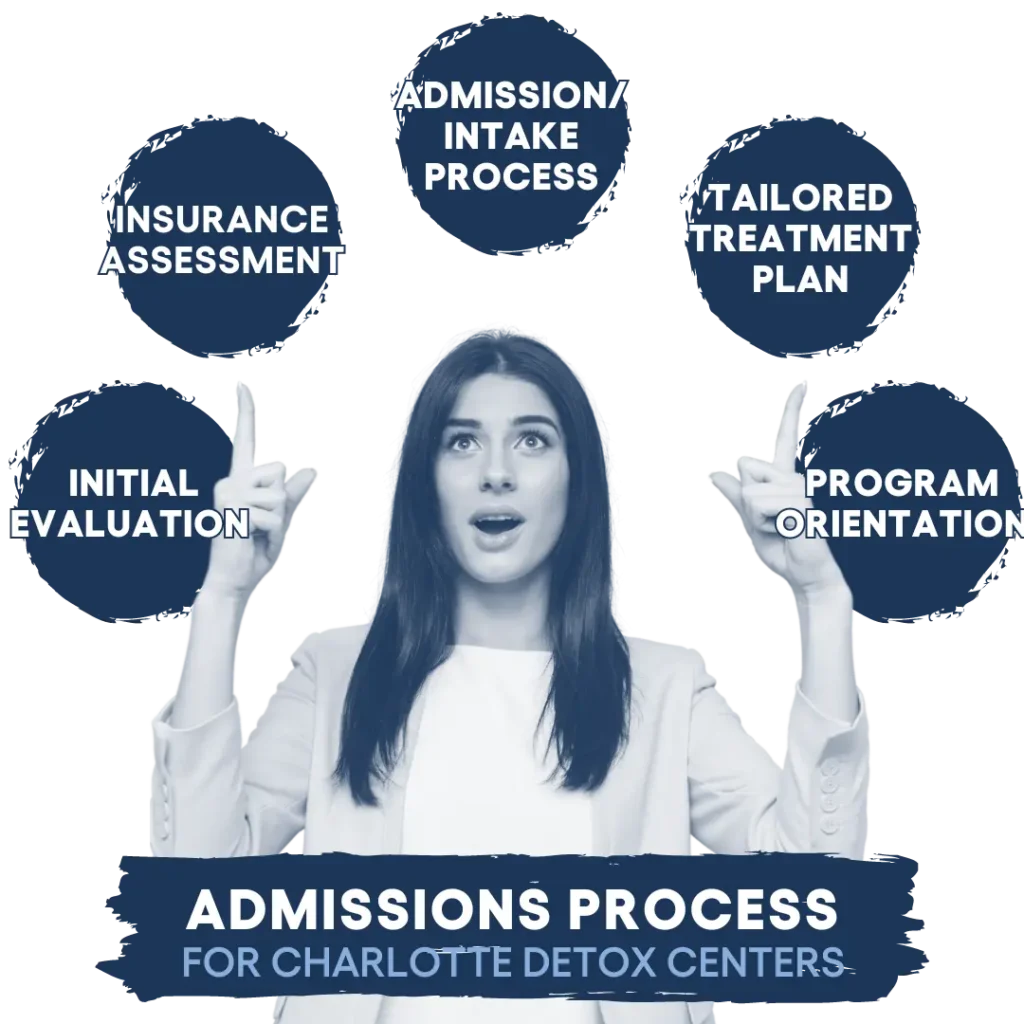
When you call (704) 452-4985, we check your insurance benefits, usually in about 10 minutes, and explain coverage. A 45-minute assessment helps determine whether outpatient detox in Concord or inpatient detox at a partner facility is appropriate. In many cases, same-day admission is available. Your next step depends on your needs.
| Step | What happens | How long | Who handles it |
|---|---|---|---|
| 1. Call us | Call (704) 452-4985, available 24/7, or use the contact form. | A few minutes | You |
| 2. Live insurance check | We verify benefits and explain whether your plan covers treatment. We’re in-network with BCBS North Carolina, and we also accept Aetna, Cigna, UHC, and all major carriers. We do not accept Medicaid. Check your insurance. | About 10 minutes | SERC admissions |
| 3. Assessment | We ask about substance use, health history and past withdrawal to find an appropriate level of care. | About 45 minutes | SERC admissions and clinical team |
| 4. Detox plan | Outpatient detox in-house at our Concord center, or inpatient detox at a partner facility when 24/7 care is needed. | Same-day admission available in many cases | SERC clinical team |
| 5. Getting there | For outpatient care, come to 470 Lake Concord Rd NE, Concord. For inpatient care, we arrange placement and transportation there and back. | Based on your plan | SERC |
| 6. After detox | A direct handoff into PHP or IOP as clinically appropriate. | Based on clinical clearance | SERC clinical team |
In many cases, you can go from your first call to starting care the same day. Benefits verification is not a guarantee of payment; coverage and any out-of-pocket costs depend on your plan.
Our clinical and medical team guides withdrawal care and the transition into outpatient treatment. Rhett Owensby, LCAS (Licensed Clinical Addictions Specialist), leads our outpatient clinical program. Medical Director Dr. David Stern and Natalie Spinella, NP, are part of the medical team overseeing care across SERC programs.
Dr. David Stern, MD, Medical Director. Dr. Stern is board certified in addiction medicine and licensed to practice medicine in North Carolina. He earned his medical degree at Harvard Medical School and has more than 40 years in practice.
Southeastern Recovery Center is accredited by The Joint Commission and licensed by the State of North Carolina. Accreditation involves an independent review of care and safety standards. It is not a promise about any person’s outcome.
I went to Southeastern for rehab, and they were awesome through the whole process. They helped get me into detox first and then brought me back to their program after. The staff really cared and made sure I had everything I needed the entire time. They checked on me while I was in detox and were there waiting for me as soon as I got out to take me back to treatment. I honestly can’t say enough good things about them. I’ve been sober for over two years now thanks to these guys.
Mark T., Southeastern Recovery Center alumnus
Yes. We provide outpatient detox at our Concord center (470 Lake Concord Rd NE, Concord, NC). If you need inpatient medical detox, we arrange partner placement and transportation. See the care comparison above.
The length depends on the substance and your health. See the tables above for typical ranges. A clinician sets your plan. Treatment continues beyond withdrawal.
It can be, especially with alcohol or benzodiazepines. Talk to a clinician before stopping. The medical-versus-home comparison above explains the risks. Do not wait for a routine admissions call in an emergency.
Medication depends on the substance and your health. For opioids, we prescribe buprenorphine (Suboxone). For methadone, we refer you to McLeod Centers. See the medication section for other substances.
Yes, when clinically appropriate. We start Suboxone at our Concord center and may continue it through PHP, IOP, virtual IOP and ongoing care. A medical professional decides when to start it and monitors your response.
Yes. We provide transportation to your assigned inpatient detox facility and back to our Concord center for the next phase of care. Our team coordinates those arrangements with you.
Our team assesses your next level of care and coordinates PHP, IOP or virtual IOP as appropriate. See the after-detox section above for program details and the PHP graduation statistic, cited to the Southeastern Recovery Center outcomes data survey.
Federal law protects treatment records. Ask admissions how consent, permitted disclosures and insurance communications apply to you.
Yes. We’re in-network with BCBS North Carolina, and we also accept Aetna, Cigna, UHC, and all major carriers. We do not accept Medicaid. Call (704) 452-4985 or verify your benefits.
Visit us: outpatient detox location
Southeastern Recovery Center
470 Lake Concord Rd NE, Concord, NC 28025
(704) 452-4985
Get directions
Worried about someone you love? Our family checklist and free self-assessments can help you prepare for a conversation. They do not replace medical care. Contact our team or call (704) 452-4985.